
Customers form impressions within seconds of walking in. In a 1,200-square-foot boutique, there's no room for wasted space or cluttered displays that make the shop feel smaller than it is. This guide covers layout, fixtures, visual merchandising, lighting, and technology ideas built specifically for compact retail footprints.
Key Takeaways
- Layout and traffic flow directly shape how much of your store customers see—and shop
- Vertical merchandising with slatwall systems adds display space without adding square footage
- Lighting and color choices extend dwell time and steer buying decisions
- Durable, modular fixtures cut long-term renovation costs for small retailers on tight budgets
Optimize Your Store Layout and Traffic Flow
Most retail design advice starts with the assumption that shoppers move counterclockwise and gravitate right upon entry. Research on turning bias backs this up: direction of travel changes what shoppers notice.
A study using eye-tracking experiments found that counterclockwise rotation reduced visual attention on endcaps, while clockwise shoppers on longer routes had more fixations overall (ScienceDirect, 2022). How you guide traffic determines what gets seen.
Choosing the Right Layout
Small specialty retailers typically pick from three layout types:
- Grid layout — efficient for high-SKU stores like convenience or hardware shops, but can feel rigid in boutique settings
- Racetrack layout — a defined loop path that exposes shoppers to more merchandise; works well for stores wanting to control the full journey
- Boutique/free-form layout — flexible groupings that feel curated, ideal for apparel, gift, and specialty shops
A modeling study on one-way aisle paths found that directing shoppers along a single path increased distance traveled by 50% and store-area coverage by 67% compared to open, undirected movement (NIH/PMC, 2022). More exposure to merchandise means more chances at unplanned purchases.
Building the Path
Place featured or high-margin items in the first sightline past the entrance. From there, design a path — using fixture placement rather than ropes or signs — that guides shoppers past promotions before reaching the checkout.
In small spaces, aisle width is a hard constraint:
- Too narrow — shoppers feel crowded and rush through
- Too wide — you give up floor space you can't spare
- Right-sized — the store stays intimate without bottlenecking at peak hours
Fixture choice finishes the path. Megawall's L-Unit fixture creates a mid-aisle focal point that directs traffic and supports impulse buys near the register or a key turn.

Maximize Vertical Space with Smart Fixtures and Displays
Small stores can't out-stock big-box competitors on floor space. They can out-merchandise them vertically. Walls that stop at eye level waste display capacity you already pay for.
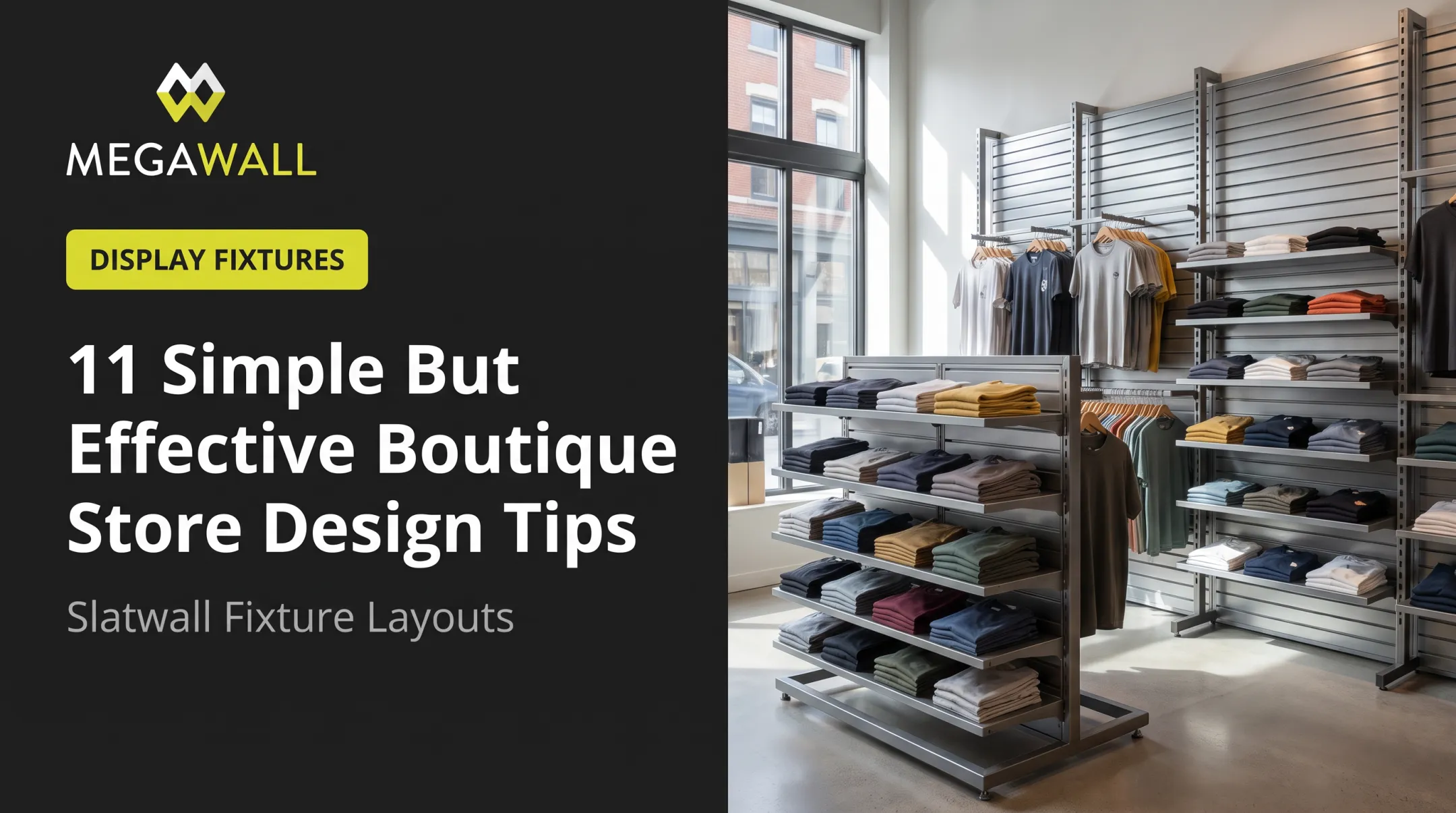
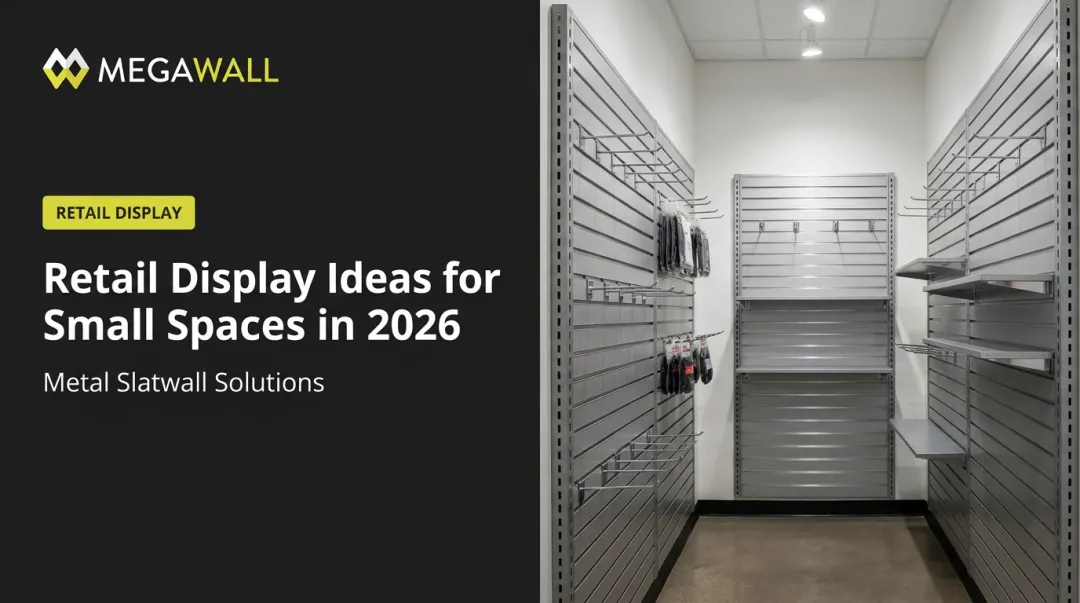
Slatwall systems solve this by turning wall space into flexible display area — hanging hooks, shelves, and tiered bins on the same panel, reconfigured as needed.
Why Material Matters
Standard MDF panels sag, warp, and delaminate over time—especially under heavier merchandise. Megawall's steel and aluminum slatwall systems are built for sustained retail loads:
- Steel and aluminum slatwall each hold over 50 pounds per linear foot
- Aluminum options use more than 50% recycled content and carry LEED certification
- Both resist the warping and delamination that shorten conventional MDF panel life
The Concealed-Fastener Advantage
Visible screws and brackets break up the wall and distract from product. Megawall's hidden-fastener design creates seamless sections up to 8 feet long, so merchandising reads as one continuous surface instead of a patchwork of hardware. Finishes range from raw mill and clear anodize to black, white, and custom powder coats.
Reconfiguring Without Construction
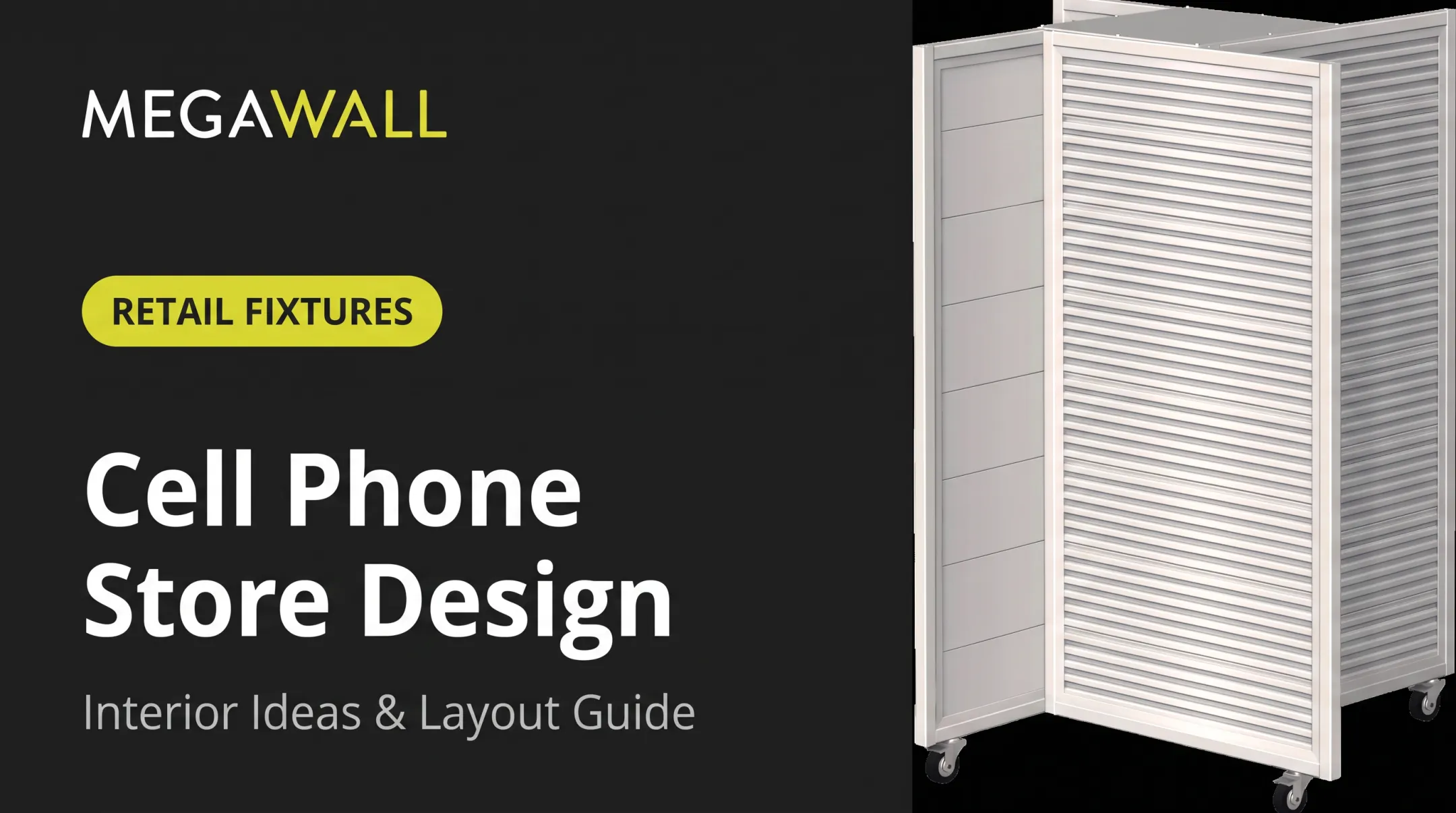
Seasonal changes shouldn't mean new walls. Modular slatwall accessories — hooks, shelves, and brackets — snap into place and swap out as inventory shifts from holiday to spring to back-to-school. Fixtures like the Pinwheel (four vertical display surfaces on casters) and H-Frame (four sprawling sides, also mobile) let you rearrange the entire floor without a contractor.

That flexibility only pays off if the fixtures last. For small retailers watching capital spend, panels and mobiles that hold their shape for multiple seasons keep renovation costs off the books and vertical capacity working year-round.
Enhance Visual Merchandising and Store Aesthetics
Visual merchandising research consistently links display structure to purchase intention. A review of retail display studies found that angled racks and similar structures boost product exposure and purchase intention. Color, lighting, and props also rank as major merchandising drivers (ScienceDirect, 2022).
Here are two display tactics that put those findings to work on a small-store floor.
The Pyramid Principle
Group products with a tall or bold item at the center, tapering outward. This creates a natural focal point that pulls shoppers' eyes and feet toward it. Place your highest-margin or newest arrivals at the peak.
Color Blocking and Grouping
Organizing merchandise by color or theme does more than look tidy. It signals organization to the shopper's brain, which increases browsing time. A style-coordination experiment found that shoppers in a coordinated-display setting spent significantly more money than those exposed to color-only or texture-only displays (Emerald/Ogle et al., 2013).
Keep displays lean:
- Limit each fixture to one clear "story" (a color, theme, or use case)
- Leave breathing room between groupings
- Rotate stock regularly so shelves never look overstuffed
Cluttered displays make small stores feel smaller. Empty space, used intentionally, does the opposite.

Use Lighting and Color to Influence Shopper Behavior
Lighting shapes how long shoppers stay and whether they engage with staff. A study simulating apparel retail environments tested different color temperatures and brightness levels across 93 participants, finding that light was one of the two essential factors influencing time spent in-store and willingness to engage with staff (ScienceDirect, 2022).
The most preferred combination in that study was cooler, brighter light around 5700K and 500 lux.
Layered Lighting
Three layers work together:
- Ambient lighting: overall store brightness that sets the baseline mood
- Task lighting: bright, functional light near registers or fitting rooms
- Accent lighting: spotlights on featured products or focal displays
Megawall's V-Wall system accommodates customer-supplied LED strip lighting, letting retailers highlight shelved merchandise directly within the fixture rather than relying on overhead fixtures alone.
Color Psychology
Color sets the emotional tone of the space:
- Warm tones (amber, soft yellow): cozy and inviting, a strong fit for home goods or gift shops
- Cool tones: crisp and modern, better for tech, beauty, or fashion-forward retail
A separate study on color and lighting in retail spaces found that warm color tone and colored light received more positive impression scores, with space perception mainly driven by color choice (ScienceDirect, 2016).

Create Flexible, Multi-Purpose Layouts for Small Spaces
Small stores need multi-purpose fixtures that earn their floor space. Movable units and reconfigurable displays let you pivot inventory without knocking down walls.
Megawall’s mobile fixtures are built for exactly that:
- H-Frame — four display sides, mounted on wheels for quick relocation
- Pinwheel — four vertical surfaces designed for tight quarters, also caster-mounted
Both let you rework the entire floor plan for a seasonal reset in an afternoon rather than a weekend.
The Illusion of Space
Mirrors, open sightlines, and light-toned fixtures visually expand a room. A mirror at the back of a narrow store can make it feel twice as deep. White-finished or light-toned slatwall reflects more light than dark finishes, keeping the space feeling open.
Define Zones Without Walls
Small stores still need distinct sections — new arrivals, sale items, accessories. Use flooring changes, area rugs, or signage to mark zones instead of physical dividers. This keeps sightlines open while still guiding customers intuitively through categories.
Incorporate Technology and Modern Touches
Technology in small stores should reduce friction, not add complexity.
- Interactive touchscreens or QR codes let shoppers explore additional colors, sizes, or product details without needing extra floor stock on display
- Self-checkout and mobile payment options cut congestion at a single register
- BOPIS (buy online, pick up in-store) counters work even in tight footprints when placed near the entrance, keeping pickup traffic separate from browsing traffic
That expectation is already mainstream: 86% of U.S. adults have used self-checkout (eMarketer, 2025). None of this needs a full tech overhaul—a single tablet kiosk or a dedicated pickup shelf near the door often works in under 500 square feet.
Frequently Asked Questions
How can I improve my retail store?
Start with layout optimization, since it costs little and directly affects what customers see. Then upgrade fixtures for vertical merchandising and refresh visual displays. These three changes deliver the fastest visible impact.
What are the best layout designs for retail stores?
Grid layouts suit high-SKU stores like hardware shops. Racetrack layouts work well for stores wanting to guide the full customer journey. Boutique or free-form layouts fit apparel and gift stores wanting a curated feel.
What are the latest trends in retail store design?
Experiential retail, sustainable materials like recycled-content aluminum, and flexible modular fixtures are shaping current store design. Retailers are also leaning into warm, textured materials and smart, energy-efficient lighting.
What is the most important factor when redesigning a small retail space?
Understanding customer flow and needs should guide every decision, from fixture placement to lighting. Design choices that don't account for how people actually move through the space tend to underperform.
How can I make the most of vertical space in my shop?
Tall shelving, slatwall systems, and hanging displays turn wall space into merchandising space. Megawall's Pinwheel fixture and aluminum slatwall systems are built specifically for tight-quarters vertical display.
Can redesigning my retail space really impact my sales?
Yes. Improved layout, lighting, and visual merchandising all influence how long customers browse and how much they notice, which directly affects purchase decisions and basket size.