
The catch? A standard wall-mounted frame only shows one face. The back gets pressed flush against drywall, hidden forever. Displaying art or signage that's meant to be seen from both sides requires different hardware and a different way of thinking about placement.
This guide covers the mounting methods that actually work, where to place double-sided pieces for maximum impact, and how retailers use double-sided merchandising systems to get more selling space out of the same footprint.
Key Takeaways
- Double-sided art must be suspended or freestanding—flush mounting hides one side
- Ceiling drops, room dividers, and walk-around freestanding displays are the primary placement methods
- Double-sided slatwall merchandises both aisle directions without adding floor space
- Choose cables, rods, or display systems rated to keep the piece safe and stable
What Is Double-Sided Art and Why Display It This Way?
Double-sided art has meaningful visual content on both faces, not a finished front and a blank backing. That changes how the piece needs to be shown. Common formats include:
- Float or sandwich frames with glazing on both sides
- Suspended glass or clear acrylic panels
- Freestanding panels or room-divider displays
- Museum-style walk-around vitrines
- Two-sided hanging banners or retail signage
The Courtauld's 2022 exhibition of Parmigianino's double-sided drawings is a useful reference. Curators built a custom plinth with glazing on each face so visitors could walk around and study both sides up close.
The Philadelphia Museum of Art takes a similar approach with a Duchamp canvas, housing it in a walk-around vitrine rather than a wall frame.
Why go through the trouble? Two-sided display gives a piece two approach directions instead of one. In a home, that means a divider works as art from the living room and the dining room. In a retail setting, one fixture faces two aisle directions instead of needing two separate displays.
One caveat: no verified study proves double-sided signage doubles engagement or sales compared to single-sided. What is well documented is that in-store displays drive purchase decisions broadly.
POPAI research shows 76% of grocery purchase decisions are made in-store, with brand purchases up sharply when that brand's display is present. Double-sided formats add exposure opportunity. They don't automatically add conversion.
Best Methods to Mount and Display Double-Sided Art
Floating and Float Frames
Float frames use glazing on both sides with spacers holding the artwork away from the glass. This is the standard approach for smaller, gallery-style pieces. Conservators recommend acid-free matboard spacers, and for paper works, reversible Japanese-paper hinges with wheat-starch paste rather than permanent adhesive.
Ceiling Suspension
Cables, rods, and hooks let art hang mid-air, common in galleries and open floor plans. Manufacturers don't publish one universal weight rating for ceiling systems: capacity depends on the specific hanger, cable, and ceiling attachment together. For example, some cable-and-hanger combinations top out around 30-45 lb, while wall-mounted rail systems can rate much higher. Always confirm the full system's rating, not just the cable.
Freestanding and Room-Divider Displays
These allow full walk-around viewing and work well as space dividers between open-concept zones. In retail, this is where engineered fixtures earn their keep. Megawall's T-Frame is a two-sided freestanding display, while the H-Frame and Pinwheel offer four merchandising surfaces from a single footprint — useful when floor space is tight but you still need visibility from every direction.

Adhesive Mounting: When It Works (and When It Doesn't)
Double-sided tape can secure lightweight paper art in a float mount, but it's not a structural solution. Conservation guidance is blunt here: avoid ordinary pressure-sensitive tape on valuable paper art. It's difficult to remove and can permanently disfigure the piece. For anything with real weight or value, mechanical hardware wins.
Matching Hardware to Weight
Before mounting anything heavier than a poster:
- Weigh the piece and check the hanger's rated capacity for that exact weight
- Confirm the ceiling or wall substrate can support the load, not just the hook
- Add a stabilizer for tall or wide pieces prone to sway or lean
- Leave clearance: both faces need open sightlines and walking space around them

Where to Display Double-Sided Art: Creative Placement Ideas
The best spots let people naturally approach from both directions:
- Room dividers between open-concept living and dining areas, or between office zones
- Entryways where guests see one face coming in and the other leaving
- Near staircases, provided the piece doesn't interfere with handrails, head clearance, or stair width
- Windows, where natural light hits both faces at different times of day
Wherever you place the piece, plan for foot traffic on both sides. If your space includes accessible routes, keep at least 36 inches of clear walking width around the display. That measurement is the ADA baseline for accessible routes, with limited 32-inch exceptions at specific points.
For wall-facing art paired with furniture, the 2/3 rule still applies: the piece should span roughly two-thirds the width of the sofa, console, or display unit beneath it.
A suspended, double-sided work has no furniture baseline. Size it to the room and the walking path instead.
Retail & Commercial Applications: Merchandising with Double-Sided Displays
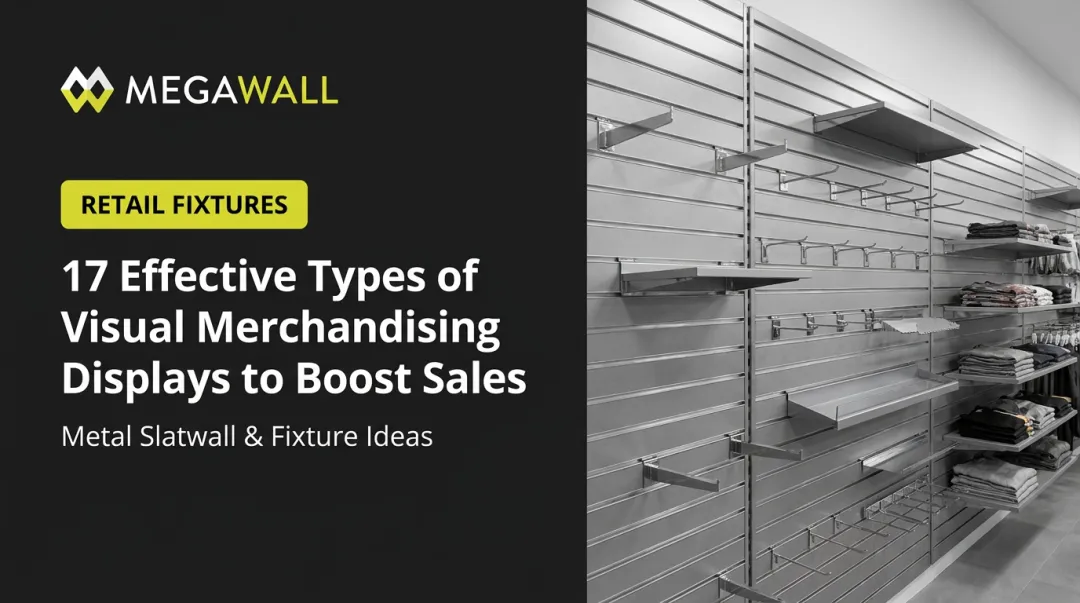
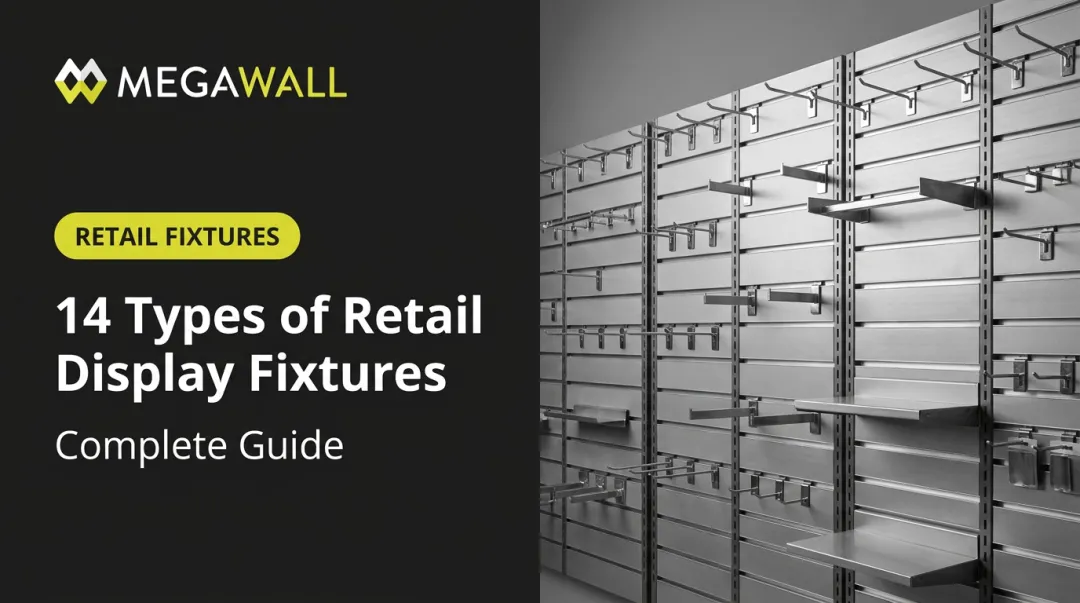
Retailers have been solving this problem for decades. Double-sided slatwall and gondola retrofit systems let a single fixture merchandise product visible from both aisle directions, without adding a single square foot of floor space.
A few ways this shows up on the sales floor:
- Aisle-facing gondola retrofits. Megawall's NuPanel drops into standard 36- or 48-inch gondolas as two-sided modular sections (heights 12, 24, and 36 inches) on 1-inch anodized aluminum slatwall.
- Freestanding aisle fixtures. T-Unit and similar two-sided fixtures work as standalone aisle displays when a full gondola retrofit isn't practical.
- Seasonal rotations. Swap promotional signage on double-sided panels without reconfiguring the whole fixture.

Why Panel Material Matters
Not all slatwall is built the same. Conventional MDF panels can loosen, sag, or wear out faster in high-traffic commercial settings.
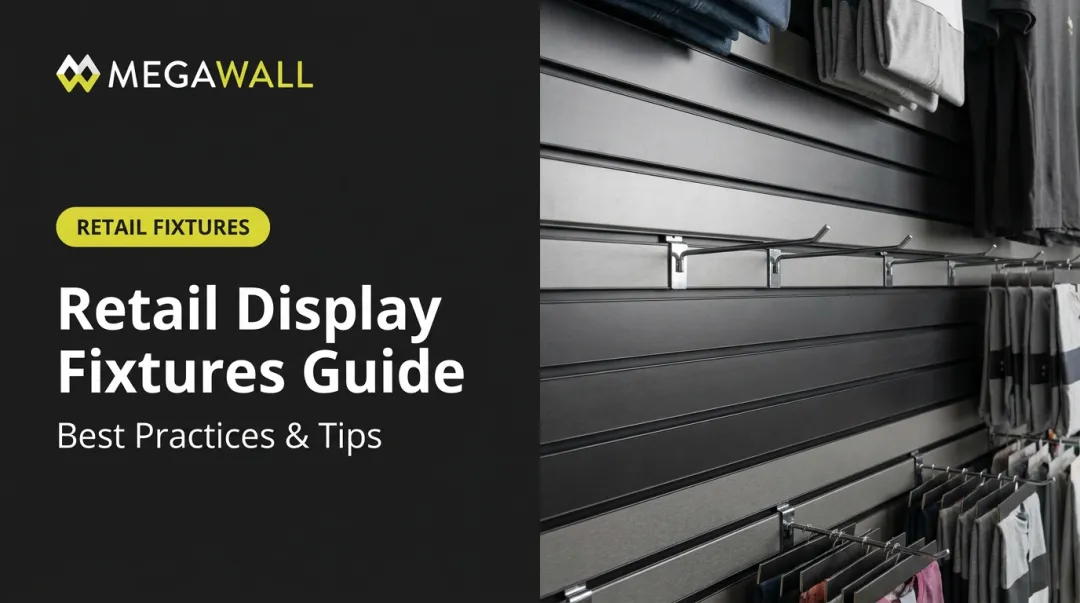
Megawall's steel slatwall uses heavy-gauge steel with 3-inch on-center spacing and concealed fasteners, holding over 50 pounds per linear foot. That capacity supports heavier accessories and double-sided fixtures without visible hardware. Hidden fasteners also keep sections seamless for runs up to 8 feet, so the display looks finished from every angle.
Aluminum slatwall, also rated above 50 pounds per linear foot, comes in double-sided 1-inch and 2-inch configurations — a lighter option for retailers who rotate displays frequently and want easier reconfiguration between seasons.

Material choice shows up in real installs. Creative Studio Promotions put Megawall slatwall in their office to display branded merchandise, and co-owner Menda Wright called it "a focal point for all who enter." The panel finish shapes how professional the wall looks, not just what hangs on it.
A 2014 POPAI Mass Merchant Study found 82% of purchase decisions were made in-store. More visible merchandising surfaces, placed where shoppers already are, remain a strong lever for conversion.
Maintenance, Care, and Common Mistakes to Avoid
Double-sided displays stay sharp when cleaning matches each surface and hardware gets checked on a schedule.
Cleaning by material:
- Acrylic — use plastic-specific cleaners only. Household solvents can cause crazing (fine surface cracks), and abrasive cleaners scratch the surface.
- Glass — apply a mild cleaner at the center, wipe outward with a soft, lint-free cloth, then buff dry. Avoid soaking any wood or metal frame edges.
- Metal slatwall — steel and aluminum systems need little upkeep; confirm the finish maker’s guidance before using solvents on powder-coated or anodized surfaces.
Mistakes that show up again and again:
- Using permanent or non-archival tape on paper art instead of reversible hinges
- Skipping the full hardware check — rating the cable but not the ceiling anchor or substrate
- Letting an unstable piece rest directly against glazing, risking pigment transfer
- Ignoring sway on suspended panels; a floor-anchored stabilizer solves this in most cases
- Overloading a double-sided fixture past its rated capacity, causing sag over time
For commercial installations, schedule a quick hardware check each season—or sooner in high-traffic aisles. Frequently swapped displays wear connectors down faster than a static gallery piece ever will.
Frequently Asked Questions
What is the purpose of double-sided posters?
They allow visibility from two directions at once, which works well for room dividers, retail aisle displays, and any hanging application where both sides face open space rather than a wall.
What are some creative ways to display posters?
Float frames, ceiling suspension with cables or rods, floating shelves, and grid-style wall layouts all work well, depending on whether the poster needs one-sided or double-sided visibility.
What is the 2/3 rule for wall art?
Art hung above furniture should be roughly two-thirds the width of that furniture — a sofa, headboard, or console — for visual balance. It applies to wall-facing pieces, not suspended or freestanding displays.
How do you hang art so both sides are visible?
Use suspension methods like ceiling cables, rods, or a freestanding frame. Wall mounting always hides one face, so it's not an option for true double-sided display.
Can double-sided tape safely hold artwork?
Lightweight paper pieces can use archival, reversible mounting methods, but ordinary double-sided tape isn't structural. Anything with real weight needs mechanical hardware rated for that load.
Is double-sided signage effective in retail stores?
Yes, especially paired with a durable display system that keeps both faces looking clean and stable. It maximizes visibility without needing extra floor space, though results depend on placement and sign design, not the two-sided format alone.