
Many retailers struggle with disconnected displays and layouts that don't reinforce each other. In 2012, POPAI found that 76% of grocery shopping decisions were made in-store, and nearly one in six brand purchases happened specifically when that brand had a display present. A 2014 mass-merchant study pushed that figure to 82% of purchase decisions made in-store. The store itself is still where the sale gets decided.
This article covers the core elements of visual merchandising, the store design principles that shape customer flow, how to choose fixtures that hold up under real retail traffic, and the techniques keeping displays fresh season after season.
Key Takeaways
- Visual merchandising and store design work together to guide traffic, highlight products, and close sales
- Color, lighting, space, and fixture choice shape buying psychology at every step
- Durable display systems like steel and aluminum slatwall maximize merchandising space and long-term ROI
- Seasonal display refreshes keep stores current and protect conversion over time
- Layout and fixture decisions should be tested against your specific store's traffic and mission
What Is Visual Merchandising and Why It Matters
Visual merchandising is the practice of presenting products and designing floor displays to attract shoppers and drive sales. A 2022 academic review in the Journal of Retailing frames it plainly: visual merchandising communicates product concepts to customers to optimize sales and profits.
Store design and visual merchandising are related but distinct:
- Store design covers the physical environment — architecture, layout, lighting infrastructure, and flow
- Visual merchandising covers what happens inside that space — product presentation, displays, and signage
They have to align. A beautifully designed store with poor merchandising still underperforms, and the reverse is just as true.
Visual merchandising sits under the broader retail marketing umbrella, tying brand storytelling to the physical shopping experience. Every display choice is a sales decision that guides attention and converts browsers into buyers.
Key Elements of Visual Merchandising
Every strong display comes back to a handful of fundamentals: focal point, color, lighting, space, and product placement.
- Focal point — pulls shoppers toward a specific area
- Color — sets the mood across the display
- Lighting — highlights merchandise and guides the eye
- Space — controls how much a display can hold without feeling crowded
- Placement — determines whether products get noticed at all
The P's of Visual Merchandising
Those fundamentals sit inside a wider trade framework often called the four P's:
- Product — what's being offered
- Placement — where shoppers encounter it
- Pricing — how the offer is positioned economically
- Promotion — how it's communicated
Some retailers add a fifth P, People, accounting for staff interaction and customer experience around the display.
The 5 R's of Retailing
The American Marketing Association's five-rights concept covers the planning side. It is less about display aesthetics and more about availability:
- Right merchandise
- Right place
- Right time
- Right quantities
- Right price
When those five rights line up, the product is physically there when the shopper is ready to buy.

Store Design Principles That Create Powerful Retail Spaces
Layout Types and Customer Flow
How you route foot traffic changes what shoppers see and buy. Three common layouts:
- Grid: standard supermarket and big-box layout; easy to navigate, but rigid and less experiential
- Racetrack/loop: a prescribed path that exposes shoppers to a controlled merchandise sequence
- Free-flow: diagonal, scattered fixture arrangements that encourage browsing and let retailers use displays as "speed bumps" to slow traffic
None of these has a universally documented dwell-time advantage. The right choice depends on your store's mission, not a one-size-fits-all formula. Once the path is set, lighting and zoning decide what shoppers notice along it—and which fixtures carry that story.
Lighting, Zones, and Decompression
Lighting does double duty: it sets ambiance and directs attention to specific merchandise. Poorly lit sections get skipped; well-lit focal displays get browsed.
Apply two spatial rules after the entrance:
- Decompression zone: keep the first stretch open and uncluttered; shoppers are still transitioning from the parking lot and are not ready for your best merchandise
- Category zoning: group related products together so navigation stays intuitive and cross-sells feel natural (hiking boots beside trail socks, for example)
Modular slatwall, gondola retrofits, and freestanding frames make those zones easy to reconfigure without a full rebuild—useful when seasons or adjacencies change.

A Real-World Example
Target's 2022 remodel report is instructive here. After completing its 1,000th store remodel, the company reported a 2-4% sales bump in updated stores during the first year. The report does not isolate one variable, yet the lift shows cohesive store design pays off at scale.
Choosing the Right Fixtures and Display Systems
Fixtures aren't just furniture. They're structural decisions that affect how much product you can show, how long displays last, and how much rework you'll need every season.
Material choice drives those outcomes:
- Cheap MDF fixtures warp, delaminate, and sag under heavy loads
- Replacement, downtime, and lost merchandising space stack up quickly
- Engineered metal systems hold load ratings season after season without rebuilds
Why Slatwall Systems Hold Up Better
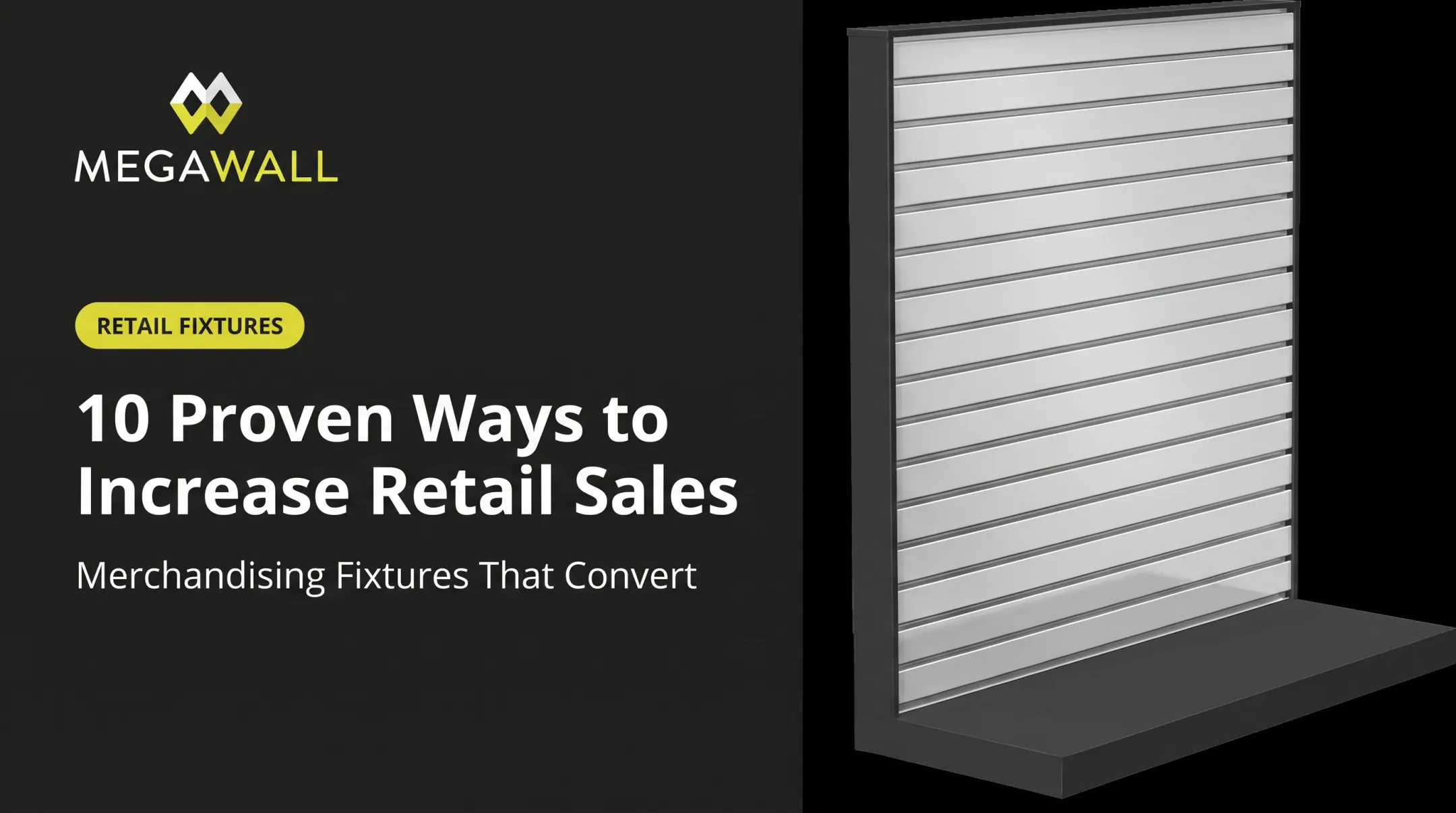
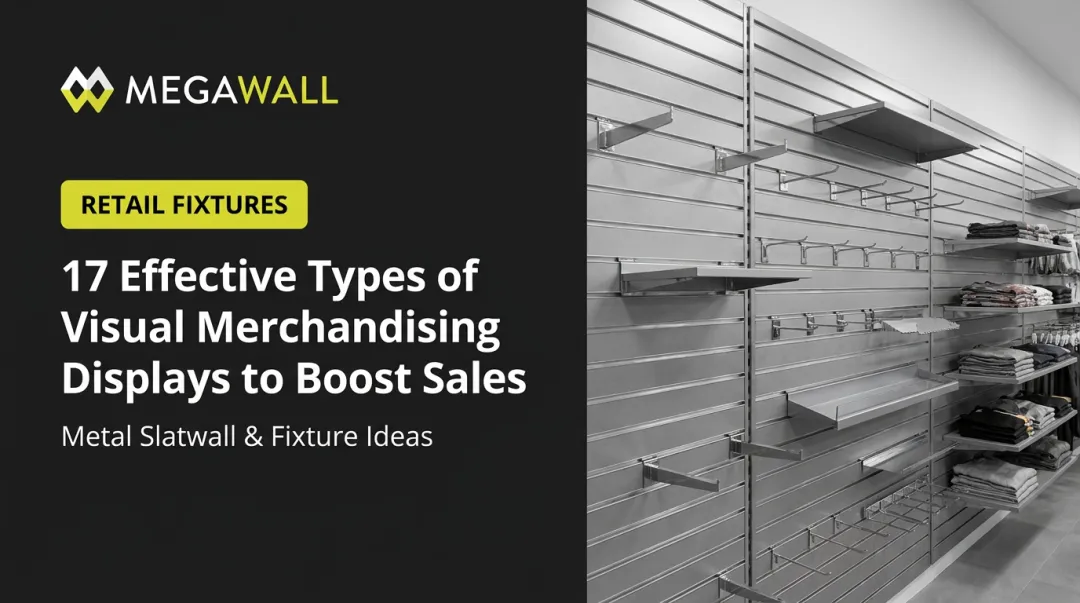
Slatwall remains the backbone of flexible retail display because it adapts to nearly any product category. Megawall's engineered steel and aluminum systems are built for that durability:
- Steel slatwall supports over 50 pounds per linear foot, uses heavy-gauge formed-and-welded construction, and comes in 3-inch on-center spacing
- Aluminum slatwall contains over 50% recycled content, is LEED-certified, and also holds over 50 pounds per linear foot
- Concealed fasteners hide hardware behind the panel profile, creating seamless sections up to 8 feet long
- Panels interlock to form uninterrupted display walls rather than visibly seamed sections
That durability shows up in ROI: a fixture you reconfigure instead of replace keeps merchandising costs down over the life of the store.

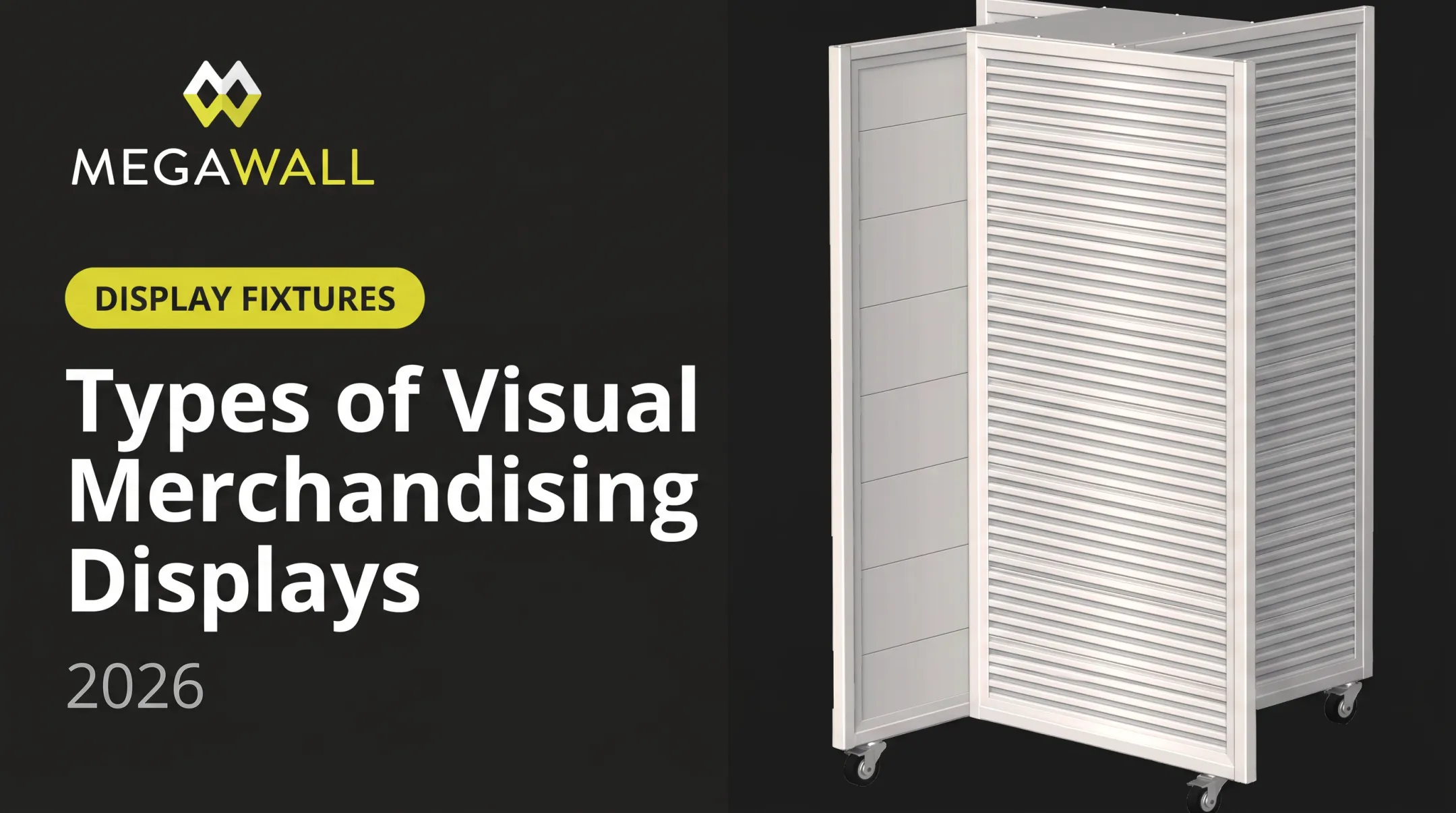
The same logic applies on the sales floor. Modular units like H-Frame, L-Frame, T-Frame, and Pinwheel bring wall-unit strength to movable displays:
- H-Frame — four display sides on wheels, ideal for open floor space and seasonal reconfiguration
- L-Frame — a tall focal-point display that directs traffic toward featured items
- T-Frame — two-sided merchandising with horizontal slatwall for hooks and shelves
- Pinwheel — four vertical surfaces, well suited to tight retail quarters
Retailers upgrading older fixtures without a full remodel can use gondola retrofit systems like NuPanel. These drop into standard 36- or 48-inch gondolas and replace worn pegboard endcaps with anodized aluminum panels, modernizing merchandising space at a lower cost.

Visual Merchandising Techniques and Trends to Drive Sales
Multisensory Merchandising
Touch still matters more than most retailers assume. A 2024 Alvarez & Marsal survey of 2,185 US shoppers found 50% ranked physically interacting with products among their top three reasons for choosing in-store shopping over online. That's a strong argument for accessible, touchable displays rather than locked cases or overcrowded shelves. How those products are arranged decides whether that touch turns into a sale.
Design Theory Basics
Cohesive displays rely on a few consistent principles:
- Balance — symmetry or intentional asymmetry that feels stable, not chaotic
- Contrast — color or size differences that draw the eye to key items
- White space — breathing room around products so nothing gets lost
- Unity — a consistent visual theme tying the whole display together
Refresh Cycles and Emerging Trends
Even well-balanced displays go stale fast. Rotating merchandise seasonally — or at minimum monthly — keeps repeat customers engaged instead of tuning out familiar layouts.
The National Retail Federation notes that retailers are starting to use AI-driven camera analytics to inform store layout changes. In-store retail media networks are also emerging as another layer of shopper communication.
Neither is a guaranteed sales lever yet, but both point toward stores that adjust based on real shopper behavior rather than guesswork.
Frequently Asked Questions
What are the key P's of visual merchandising?
The common framework covers Product, Placement, Pricing, and Promotion, with some retailers adding People as a fifth element. Together they guide how retailers plan and execute merchandising decisions.
What are the key elements of visual merchandising?
Focal point, color, lighting, space, and product placement form the core building blocks. Each one shapes how shoppers notice, approach, and engage with a display.
What are the 5 R's of retailing?
The 5 R's are right product, right place, right time, right quantity, and right price. Use them as a planning checklist to keep merchandise available exactly where and when shoppers need it.
What is the difference between visual merchandising and store design?
Store design refers to the physical environment — architecture, layout, and infrastructure. Visual merchandising is the product presentation that happens within that space, including displays, signage, and fixtures.
How often should retail displays be refreshed?
Most retailers refresh displays monthly or seasonally to maintain customer interest and reflect new inventory. High-traffic stores may benefit from more frequent rotation.
What type of display fixtures work best for high-traffic retail stores?
Durable steel or aluminum slatwall systems hold up best under frequent merchandise rotation and heavy product loads—often 50+ lbs per linear foot. They resist the warping and delamination common with conventional MDF fixtures.