
A strong display blends seasonal colors, natural textures, and merchandising fixtures that actually hold your product. Miss any one of those elements, and you've got a pretty window that doesn't sell.
This guide covers the design principles, creative concepts, and durable fixture solutions that keep your fall display working hard from harvest season through Halloween and into Thanksgiving.
Key Takeaways
- Balance seasonal theming with clear product visibility — don't let props upstage merchandise
- Warm, earthy colors and natural textures (wood, burlap, hay) instantly signal the season
- Durable, reconfigurable fixtures let you shift from fall to Halloween to Thanksgiving without rebuilding
- Rotate focal elements every 2-3 weeks to keep the display feeling new
Why Fall Window Displays Matter
Visual merchandising drives real outcomes. A 2022 review in the Journal of Business Research found that elements like color, lighting, props, and mannequins influence purchase intention and impulse buying. Window displays are your first shot at that influence, before a shopper even steps inside.
Fall is the on-ramp to the highest-revenue quarter of the year. The National Retail Federation notes that 49% of consumers now start Halloween shopping before October, up from 34% a decade ago, according to NRF's 2026 Halloween retail coverage. Shoppers are showing up early. Your windows need to be ready for them.
Fall doesn't require three separate display builds. A well-planned setup can move through phases:
- Harvest (early September through late September)
- Halloween (late September through early November)
- Thanksgiving (early to late November)
Same base structure, swapped accents. One investment, three seasonal moments.
Core Design Principles for Fall Window Displays
Building Your Palette
Fall's signature colors—rust, ochre, burgundy, forest green, and brown— work best when anchored to your existing brand colors rather than replacing them entirely. Pick one or two seasonal hues and let your brand palette do the rest.
The Three-Layer Display Rule
Every effective window follows the same structure:
- Window layer — vinyls, decals, or signage on the glass itself
- Product layer — mannequins, merchandise, focal items
- Backdrop layer — color washes, scenic elements, or textured panels and fixtures behind the product
Skipping a layer usually means the display looks flat or unfinished. Sturdy wall panels and freestanding fixtures keep the product and backdrop layers stable through the full season.

Textures That Signal Season
Natural materials do a lot of heavy lifting:
- Wood crates and pallets
- Burlap runners or backdrops
- Loose hay or straw bales
- Faux leaves in layered colors
Lighting That Doesn't Fight Your Merchandise
Warm LED bulbs suit fall's palette far better than cool white light. VMSD's retail lighting guidance recommends lighting vertically rather than relying only on downward spots, since downlighting alone can make a window feel dark and uninviting. Keep focal products lit directly, and watch for shadows falling across price tags or key details.
One rule ties every layer together: props support the merchandise, not the other way around.
If a shopper can't tell what you're selling within three seconds, the display has failed.
Creative Fall Window Display Ideas to Try This Season
Rustic Harvest & Wooden Crate Displays
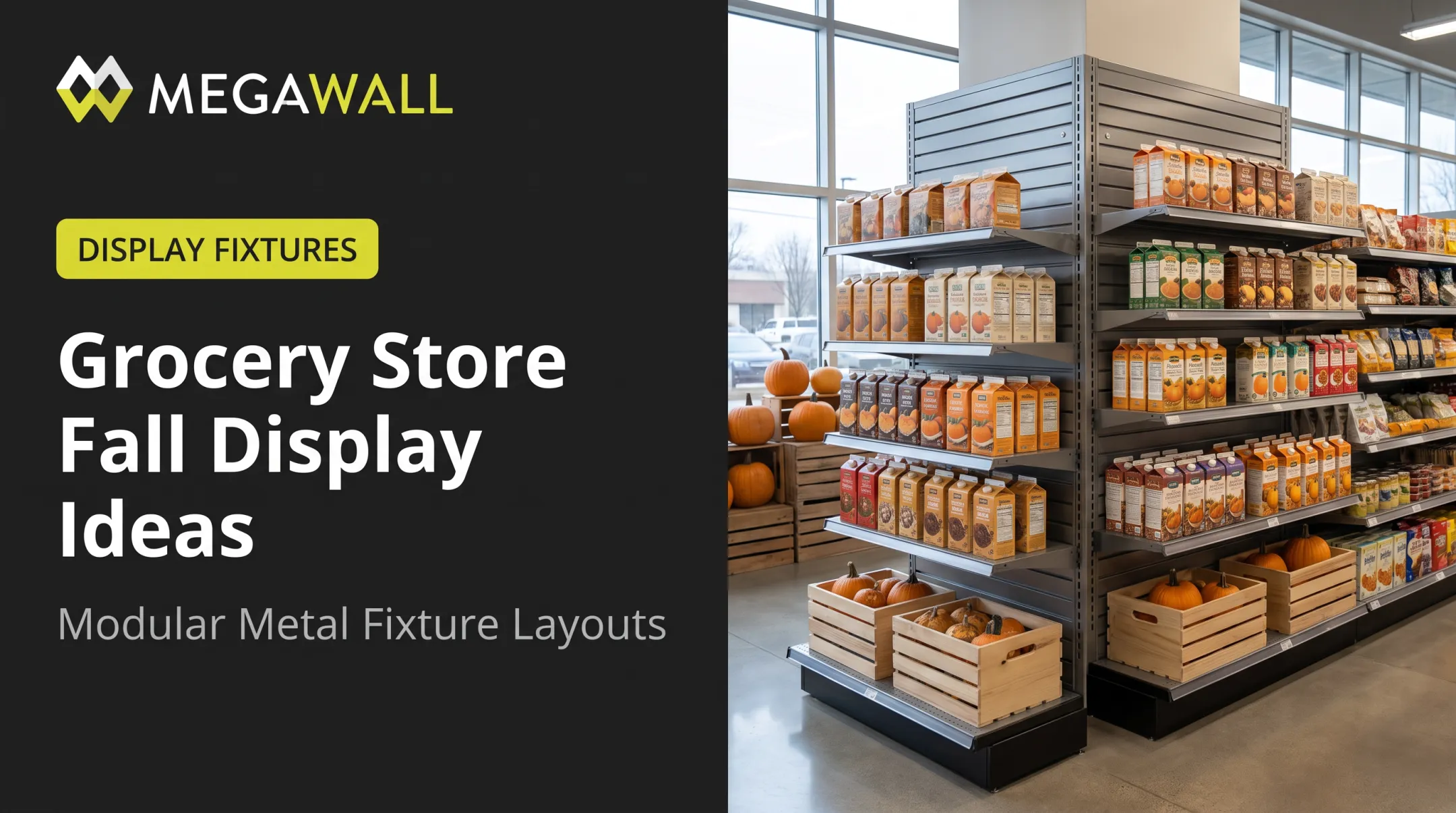
Stack crates in pyramids or staggered heights, then layer pumpkins, gourds, and small hay bales across the tiers. This works especially well for hard goods, home decor, or gift shops needing multiple product tiers at different heights, and modular fixtures like H-Frame or Pinwheel units can anchor the base tier for a sturdier, more flexible reset each season.

Cozy Sweater & Fashion Vignettes
Style mannequins in sweaters, scarves, and boots, then build out a lifestyle scene around them, think ceramic mugs, a folded blanket, a reading chair. Apparel retailers get the most mileage from this approach because it sells a feeling, not just a garment.
Autumn Leaf Backdrops & Paper Props
Faux leaf garlands and dyed paper installations create photo-ready backdrops that shoppers want to share on social media. VMSD's 2026 storefront trend coverage notes a growing shift toward recycled, paper-based materials and modular designs that reduce waste while staying reconfigurable.
Halloween & Thanksgiving Transition Displays
Instead of tearing down your harvest base in October, layer in:
- Spooky accents (spiderwebs, jack-o'-lanterns) over the existing crate-and-hay structure
- A harvest-table centerpiece for Thanksgiving, swapped in once Halloween props come down
- Slatwall accessories or edge trims to quickly refresh signage and pricing without rebuilding the whole scene

Interactive & Story-Driven Scenes
Gratitude walls, QR code promotions, or narrative vignettes (a woodland scene, a picnic setup) invite passersby to stop and engage rather than just glance and walk past.
Merchandising Fall Displays with Durable, Reconfigurable Fixtures
Fall merchandise is heavy. Boots, jackets, and home decor pieces sag on flimsy MDF fixtures within a season, and a sagging display looks worse than no display at all.
That's where the fixture layer behind your props actually matters.
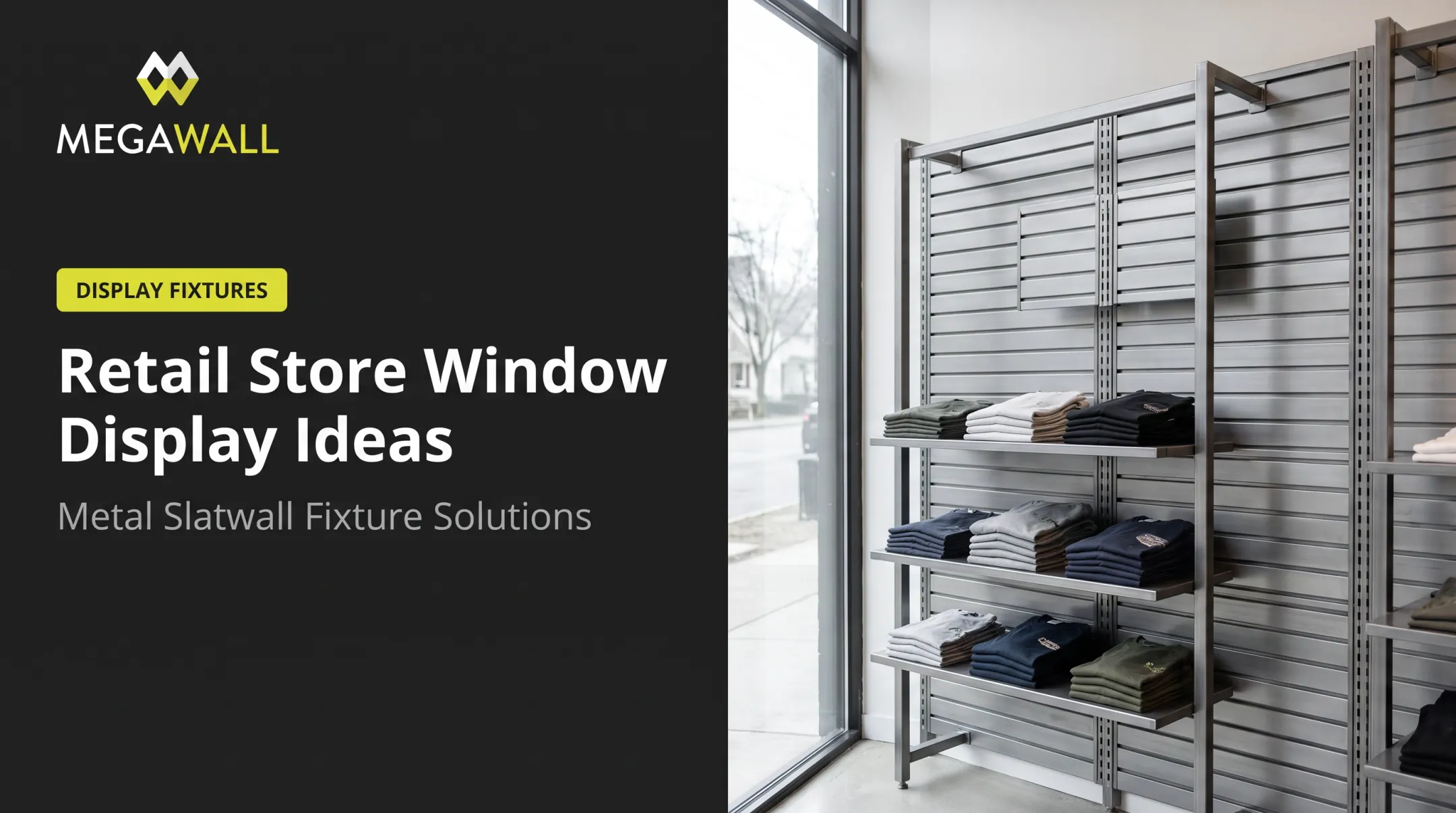
Slatwall systems with concealed fasteners give you a clean, seamless surface for showcasing product against a seasonal backdrop, with no visible screws competing with your styling.
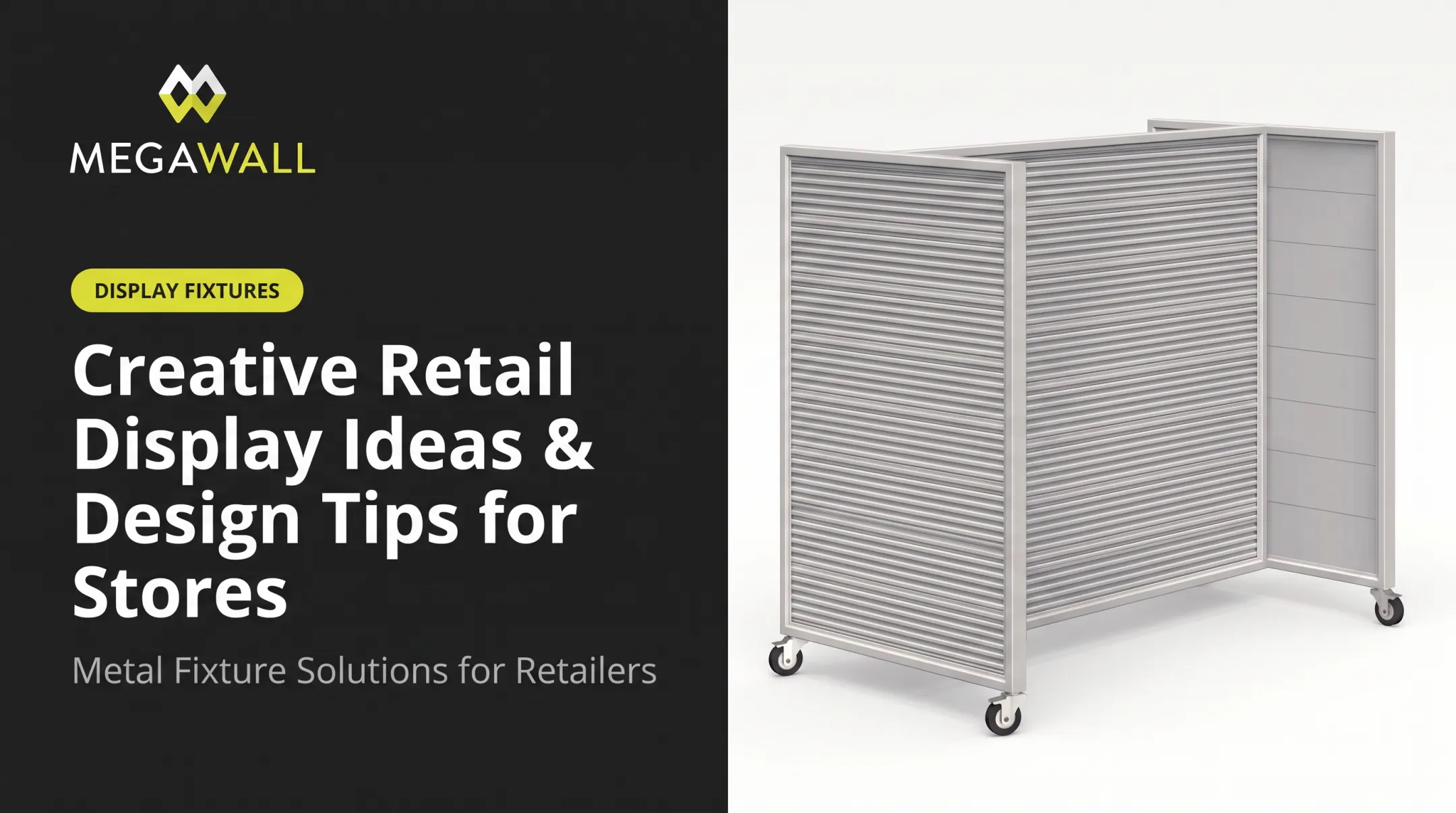
Megawall's steel and aluminum slatwall systems use hidden fasteners to create seamless sections up to 8 feet long. Both materials are rated to hold over 50 pounds per linear foot, enough for a full rack of boots or a run of heavy outerwear.

Modular panels solve the transition problem. Because the underlying slatwall stays fixed, you can swap accessories and styling without new construction each time:
- Shelf brackets and peg hooks for different merchandise
- Seasonal props and backdrop panels
- Accent colors for each campaign
This is the difference between rebuilding your window three times a season and updating it three times a season.
In high-traffic mercantile spaces, choose slatwall documented as fire-code compliant. Confirm requirements with your local authority having jurisdiction, since standards vary by installation and occupancy type.
Tips for Keeping Fall Window Displays Fresh
A display that never changes stops getting noticed, even if it's well-designed. Shoppers tune out static windows; regular refreshes keep foot traffic looking—and give regulars a reason to stop again.
- Build a rotation calendar. Plan featured product and signage swaps every 2-3 weeks through the season.
- Swap accents, not everything. Changing an accent color or a single hero prop refreshes the look without a full teardown.
- Maintain natural props. Leaves fade, wood scuffs, and burlap frays—a quick cleaning pass every couple of weeks keeps the rustic look intentional, not shabby.
- Use flexible fixtures. Modular frames and slatwall make product and prop swaps faster when you refresh on a short cycle.
Frequently Asked Questions
What are the fall decor trends for 2026?
Warm minimalism, sustainable and paper-based materials, and interactive, social-media-friendly elements lead the 2026 fall trends. Expect fewer but stronger visual statements rather than cluttered scenes.
What are some creative fall merchandising ideas?
Combine rustic props like crates and hay with layered seasonal and evergreen product mixes. Pair them with durable fixtures that hold merchandise without sagging.
When should fall window displays go up?
Early September through early October is a safe window, especially with 49% of shoppers now starting Halloween purchases before October, per NRF data.
How often should I change my fall window display?
Every 2-3 weeks keeps the display feeling current and gives repeat passersby a reason to look again.
What fixtures work best for heavier fall merchandise like boots and jackets?
Look for strong, wall-mounted slatwall systems with concealed fasteners. Megawall's steel and aluminum options both hold over 50 pounds per linear foot without visible hardware.
How can I make my fall window display budget-friendly?
Reuse props across seasons and lean on natural materials like wood and burlap that hold up over time. Repurpose existing decor with new accent colors instead of buying new pieces each year.