
Here's the problem: many small and mid-size retailers set up a window display in October and don't touch it again until January. Meanwhile, foot traffic quietly declines because regulars stop noticing a display they've walked past fifty times.
This guide covers the window display types worth knowing, the design principles that actually matter, seasonal ideas you can steal, common mistakes to avoid, and why the fixtures behind your display matter as much as the display itself.
Key Takeaways
- Window displays shape whether shoppers enter; treat them as a marketing channel
- Pair one clear focal point with a cohesive theme and sturdy, reconfigurable fixtures
- Refresh displays every few weeks (by inventory and traffic) to keep regulars engaged
- Fixture quality decides if a display stays sharp all season or sags by week three
What Is a Retail Window Display?
A window display is a curated visual merchandising setup (props, lighting, product, and sometimes signage) arranged to grab attention and communicate what your brand is about. It's part art, part sales strategy.
Think of it as a silent salesperson. It works around the clock, even when your store is closed, and it's often the only "pitch" a passerby gets before deciding whether your store is worth their time.
Why Window Displays Matter for Retail Success
The research on window displays and conversion is more nuanced than most marketing blogs let on. A Cornell study on storefront window transparency found that highly transparent windows were rated more attractive and held attention longer. Lower perceived complexity drove that effect, though the study did not find a significant jump in actual store entries from transparency alone.
The practical takeaway: don't chase a magic conversion percentage. Instead, measure your own results. Track passersby, stops, and entries before and after you change your window, using something as simple as a manual tally or a $50 traffic counter.
What the evidence does support:
- Clear sightlines and low visual complexity hold attention longer
- A focused, uncluttered display outperforms a busy one
- Local measurement beats generic industry benchmarks every time
7 Types of Retail Window Displays
Not every store needs the same window structure. Here's the practical lineup:
- Open displays — No backdrop, so the store interior becomes part of the scene. Works well for lifestyle brands that want shoppers to see activity inside.
- Closed displays — A solid backdrop creates a self-contained stage, ideal for seasonal campaigns or a single strong story.
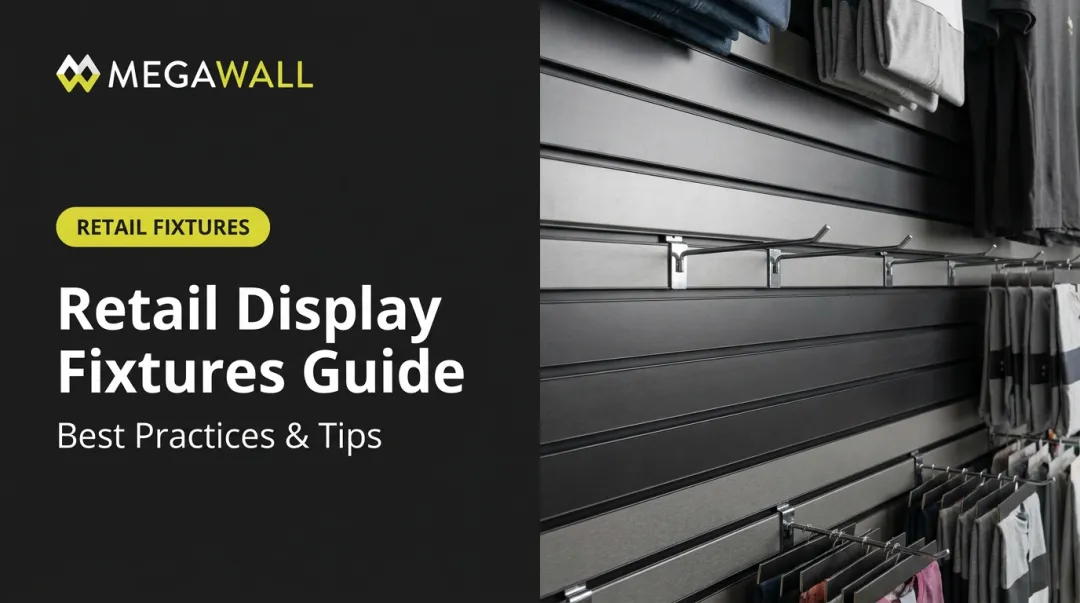
- Semi-closed displays — Partial dividers (like a slatwall panel) balance openness with structure. Cost-effective and modular.
- Elevated displays — Raised platforms bring smaller products to eye level. Great for jewelry, accessories, or compact seasonal goods.
- Corner displays — Built for two street frontages, so the same story reads from either approach. Best suited to high-traffic corner locations.
- Island displays — Free-standing and visible from multiple angles inside larger window bays or open storefronts.
- Shadowbox displays — Small, gallery-style niches for a single hero item or tight collection.

Whichever type you pick, the fixture system underneath determines whether it holds up. A flimsy platform under an "elevated" display sags within weeks. Modular steel slatwall panels, by contrast, hold 50+ lbs per linear foot, keep their shape, and can be reconfigured for the next campaign without rebuilding from scratch.
How to Design an Effective Window Display
Good window design runs on hierarchy, not on packing more product into the glass.
Start With Your Customer, Not Your Inventory
Define who you're speaking to before you touch a single prop. Color palette, scale, and prop choices should all speak to one shopper archetype. A display built for "everyone" usually connects with no one.
Build One Story, One Focal Point
Pick a single theme instead of scattering an assortment of unrelated products. Then create one focal point visible from 10-15 feet away. Everything else should support it, not compete with it.
Practical checklist before opening:
- Limit your palette to 2-3 dominant tones
- Use layered, adjustable lighting so the display reads clearly from the sidewalk
- Walk the display from every approach angle (sidewalk, crosswalk, parked cars) to check sightlines and signage legibility
- Remove any prop that doesn't explain or support the hero product

Seasonal and Category-Specific Window Display Ideas
Seasonal rotation gives you a built-in content calendar. A few starting points:
- Spring/summer: Beach or coastal themes for apparel, footwear, and accessory retailers riding the seasonal shift
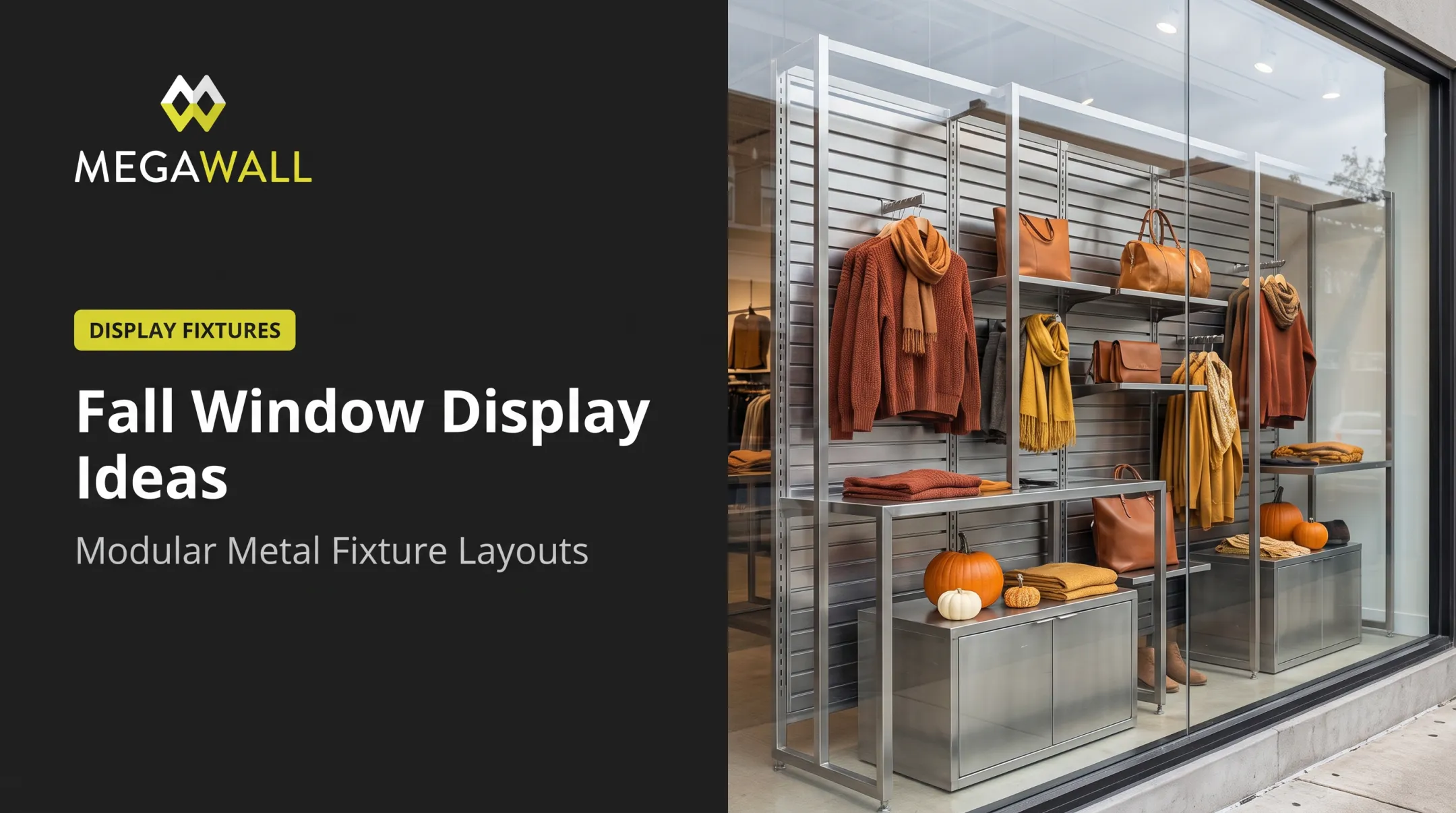
- Fall/harvest: Warm lighting with harvest tones for home goods and general merchandise
- Q4 holiday: Gift-focused bundles tied to your actual inventory cycle — according to the National Retail Federation, U.S. core holiday retail sales hit $994.1 billion in 2024, so this window matters more than any other
- Local/community themes: Local landmarks, sports teams, or community events — especially effective for hardware and general merchandise stores building neighborhood loyalty
- Interactive elements: QR codes or "scan to shop" prompts for tech-forward or younger-skewing audiences
Don't attribute a sales spike purely to your window — but don't ignore that Q4 is when your display earns its keep the most.
Common Window Display Mistakes (and How to Avoid Them)
Three mistakes account for most underperforming windows:
- Overcrowding. A window becomes overflow storage instead of a curated showcase. If you can't identify the hero product in three seconds, you have too much in there.
- Leaving displays up too long. Refresh every 2-4 weeks, then tighten or stretch that window using foot traffic and inventory cycle. Stale displays stop earning a second look.
- Unstable or flimsy fixtures. Backdrops that sag under product weight, panels that warp, or platforms that wobble look messy and can damage merchandise.
Retailers underestimate this one most. A strong seasonal concept fails fast if the structure can't hold it—so use weight-rated fixtures that stay rigid through repeated resets.
Building Displays That Hold Up: The Role of Durable Merchandising Fixtures
Every eye-catching window display sits on a structural system — shelving, panels, platforms — that has to support real product weight without warping, sagging, or looking cheap by week two.
This is where fixture material actually matters. Megawall's steel and aluminum slatwall systems are built to anchor elevated platforms, layered shelving, and rotating seasonal displays while keeping a clean, seamless look thanks to hidden fasteners across sections up to 8 feet long.
Specs that matter for window work:
- Both steel and aluminum slatwall systems support over 50 lbs per linear foot — enough for heavier seasonal props, not just lightweight signage
- Steel resists warping, breaking, or delamination through repeated seasonal changes, which matters if you're rotating displays every few weeks
- Aluminum slatwall includes over 50% recycled content and is LEED-certified, a relevant detail if sustainability is part of your brand story
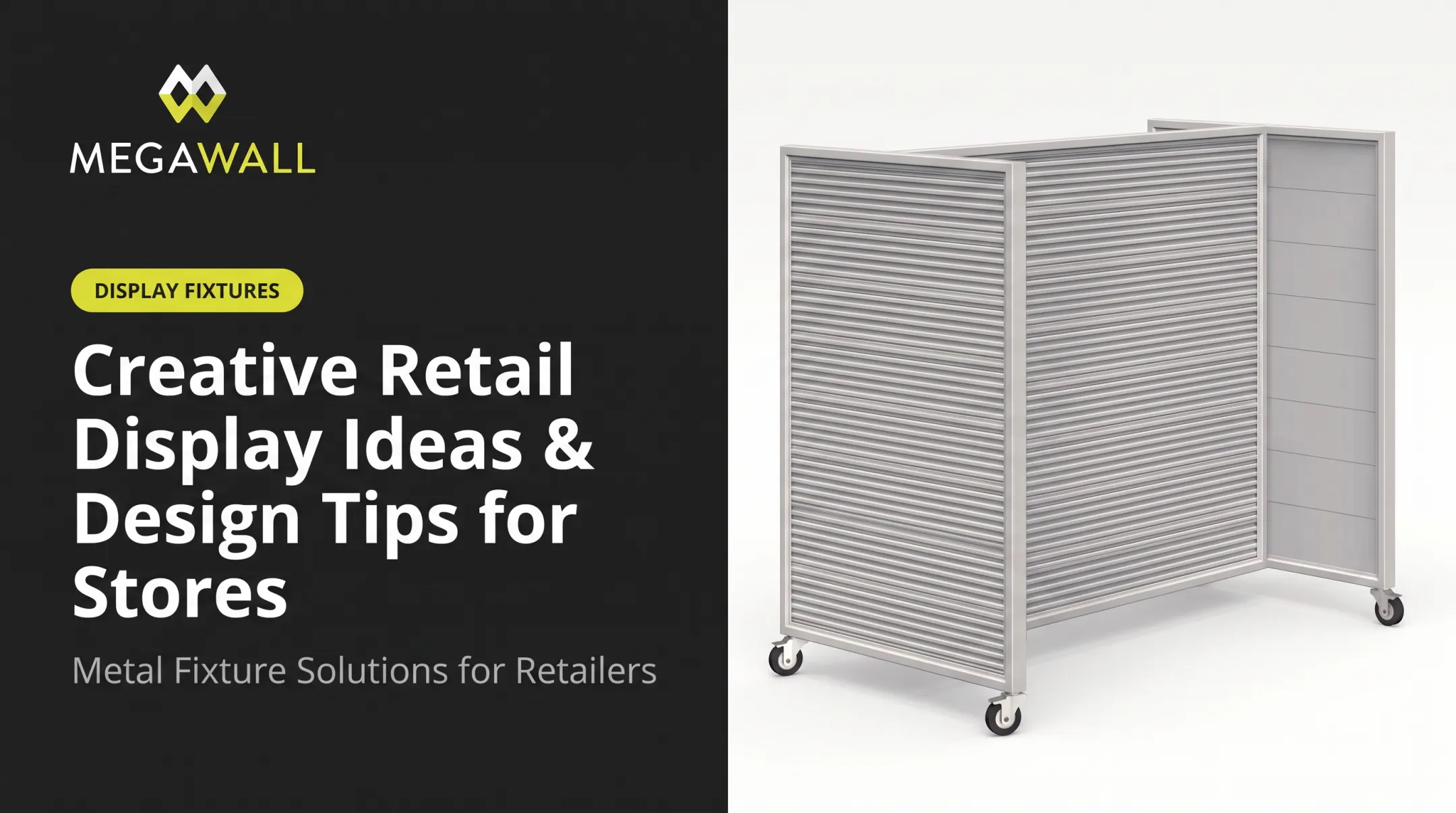
- Modular H-Frame, L-Frame, T-Frame, and Pinwheel fixtures reconfigure window and in-store layouts without a full rebuild

Wrong fixtures undermine an otherwise strong display. A sagging panel or wobbly platform tells shoppers something about your store before they even walk in.
Frequently Asked Questions
How much do transparent LED screens for retail window displays cost?
Vendor pricing varies widely, often $30–$120 per square foot depending on transparency, resolution, and technology, and that's typically before installation. Get a full turnkey quote based on your exact screen dimensions before budgeting.
What is the best window display for retail?
There's no universal "best". It depends on your store size, product category, and location. A jewelry store benefits from an elevated or shadowbox setup, while a large corner location suits an island display.
How do retailers use window displays?
Retailers use them for brand storytelling, seasonal promotion, driving foot traffic, and showcasing bestsellers. A well-executed window does all four at once without looking cluttered.
What is a window display in retail?
It's a curated visual setup of props, lighting, and product placed in a storefront window to attract attention and communicate what your brand offers—acting as a silent salesperson around the clock.
What are the 7 types of window displays?
Open, closed, semi-closed, elevated, corner, island, and shadowbox. Each suits different store sizes, product categories, and sightline needs.
What are some window display trends?
Interactive and AR elements, sustainable and recyclable materials, and frequent thematic rotation tied to seasons are the current trends worth testing, though adoption should be measured against your own traffic data, not assumed.