
Many retailers struggle to turn that traffic into actual revenue. Discounts alone don't cut it anymore — 47% of shoppers say they've noticed higher prices on holiday items, and 34% say retailers are discounting less than before, per Deloitte's 2025 survey.
Winning Black Friday takes more than a sale sign. It requires tight merchandising, stocked shelves, and a store layout that can handle the crush without falling apart. This guide covers the marketing tactics, in-store setup, inventory prep, and digital moves retailers need heading into the biggest shopping weekend of the year.
Key Takeaways
- Combine targeted marketing, smart store layout, and reliable inventory tracking for the strongest results
- Durable display fixtures and clear wayfinding help you handle heavy traffic without losing sales per square foot
- Personalization, urgency messaging, and BOPIS/QR code options drive higher conversion across channels
- Cyber Monday promotion and loyalty sign-ups extend your sales window well past one weekend
Plan Your Black Friday Marketing Strategy
Set specific targets before you touch a single ad. Vague goals like "sell more" won't tell you what worked. Define:
- Revenue targets by category or store location
- Email and SMS sign-up goals
- Loyalty program enrollment numbers
Once goals are set, segment your audience. Not every customer needs the same discount. VIP or loyalty members might get early access; price-sensitive shoppers get a deeper discount on a specific item. This protects your margins while still creating urgency for the segments that need a push.
With targets and segments locked in, shift to the weeks before the sale—when shoppers are already deciding where to spend.
Build Anticipation Pre-Black Friday
Shoppers are already deal-hunting weeks out. 89% of holiday shoppers planned to seek deals this season, and 75% said they'd shop during promotional weeks rather than waiting for the day itself, according to Deloitte. Nearly half planned to add items to a wish list and simply wait for the price to drop.
That means your pre-Black Friday window matters as much as the day itself. Build hype with:
- Teaser emails hinting at doorbusters without revealing prices
- Early-bird specials for email subscribers
- Staggered social posts building toward a reveal
Create Urgency and Drive Conversions
82% of shoppers planned to shop Black Friday through Cyber Monday in 2025, up from 79% the prior year. And 54% specifically cited doorbuster deals as their reason for showing up in person, per Deloitte's BFCM survey.
Tactics that convert browsers into buyers:
- Countdown timers on product pages and email banners
- Scarcity messaging ("only 12 left in stock")
- VIP early access windows for loyalty members
Keep messaging consistent across email, social, and SMS. A shopper who sees the same deal reinforced three different ways is far more likely to act than one who sees a single, isolated post.
In-store, pair that urgency with clear merchandising—doorbusters and featured SKUs should be easy to spot on the floor so the digital promise matches what shoppers see on arrival.
Optimize Your Store Layout and Merchandising for Peak Traffic
A packed store is a lost sale waiting to happen. Congestion at the entrance sends shoppers to a competitor before they've even browsed. Put your best sellers and doorbuster items near entrances and along main aisles, not buried in the back where crowds bottleneck.
Layout decisions directly affect sales and customer satisfaction, as the Forbes Business Council notes. The real test comes when hundreds of shoppers grab merchandise off the same fixture in a single hour.
Fixtures Built for the Rush
Heavy foot traffic means heavy handling. Displays get restocked constantly, shoppers pull items on and off shelves, and cheap MDF fixtures start to sag or crack under that pressure by mid-weekend.
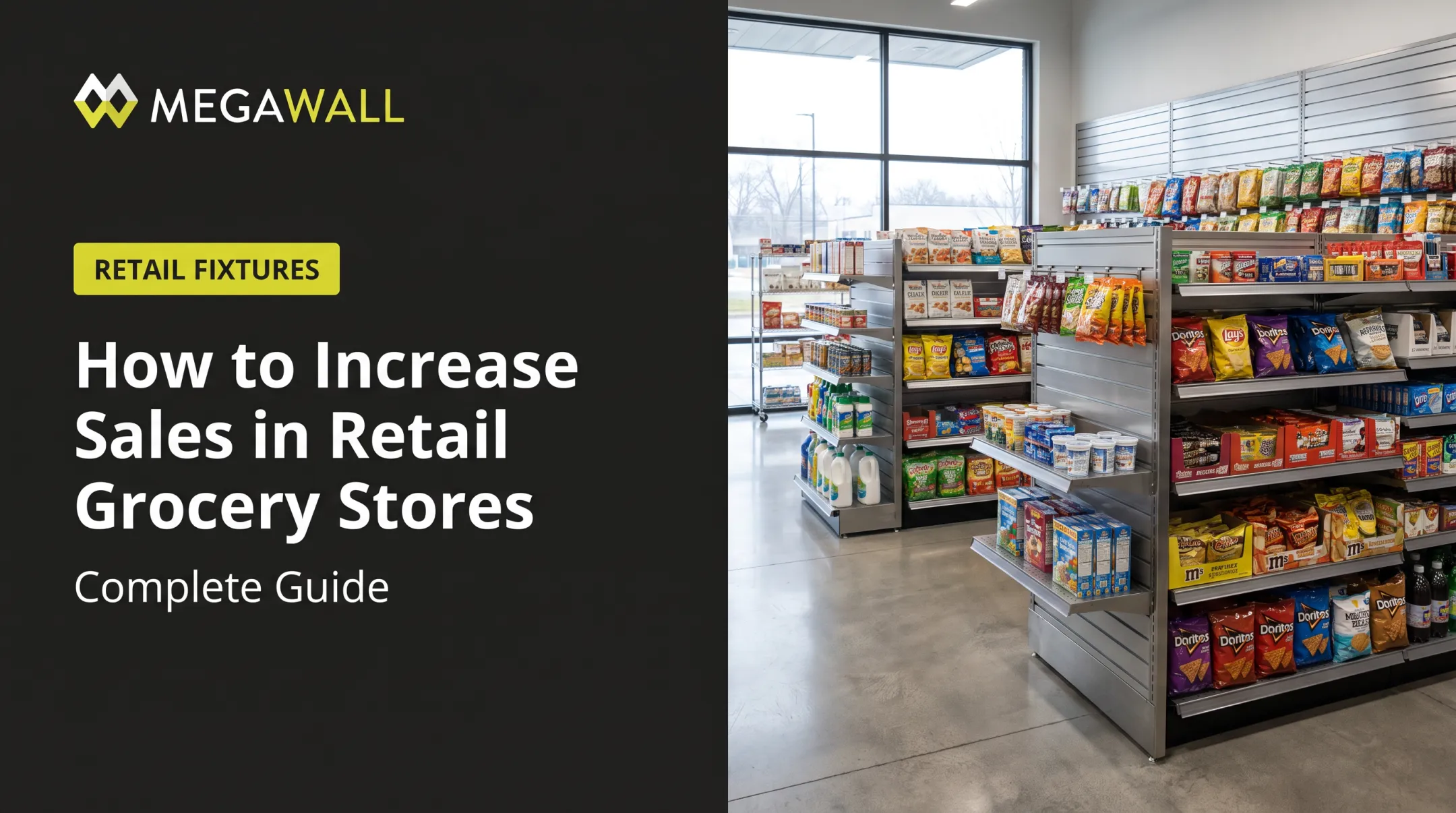
Fixture quality matters under that load. Megawall's steel and aluminum slatwall systems are rated to hold over 50 lbs per linear foot. Steel panels come in 32-square-foot sections (8' x 4' or 4' x 8'), while aluminum systems offer seamless 8-foot sections with hidden fasteners.

That capacity handles heavier seasonal accessories and high-volume restocking without the sagging or breaking that comes with lighter-duty fixtures. Pair strong fixtures with clear wayfinding so shoppers move through the floor instead of clustering in one spot:
- Shelf talkers listing exact discount percentages
- Directional signage pointing to sale zones
- Aisle markers preventing "where is that item" confusion
Spread Popular Items Across Multiple Zones
Don't stack all your doorbusters in one spot. Spreading high-demand products across several display zones prevents crowd pileups at a single fixture. Modular options like H-Frame, L-Frame, T-Frame, and Pinwheel displays let you position the same category in multiple areas:
- H-Frame — four-sided displays for browsing variety
- L-Frame — creates a focal point and guides traffic toward impulse buys
- T-Frame — combines wall-unit strength with a movable footprint
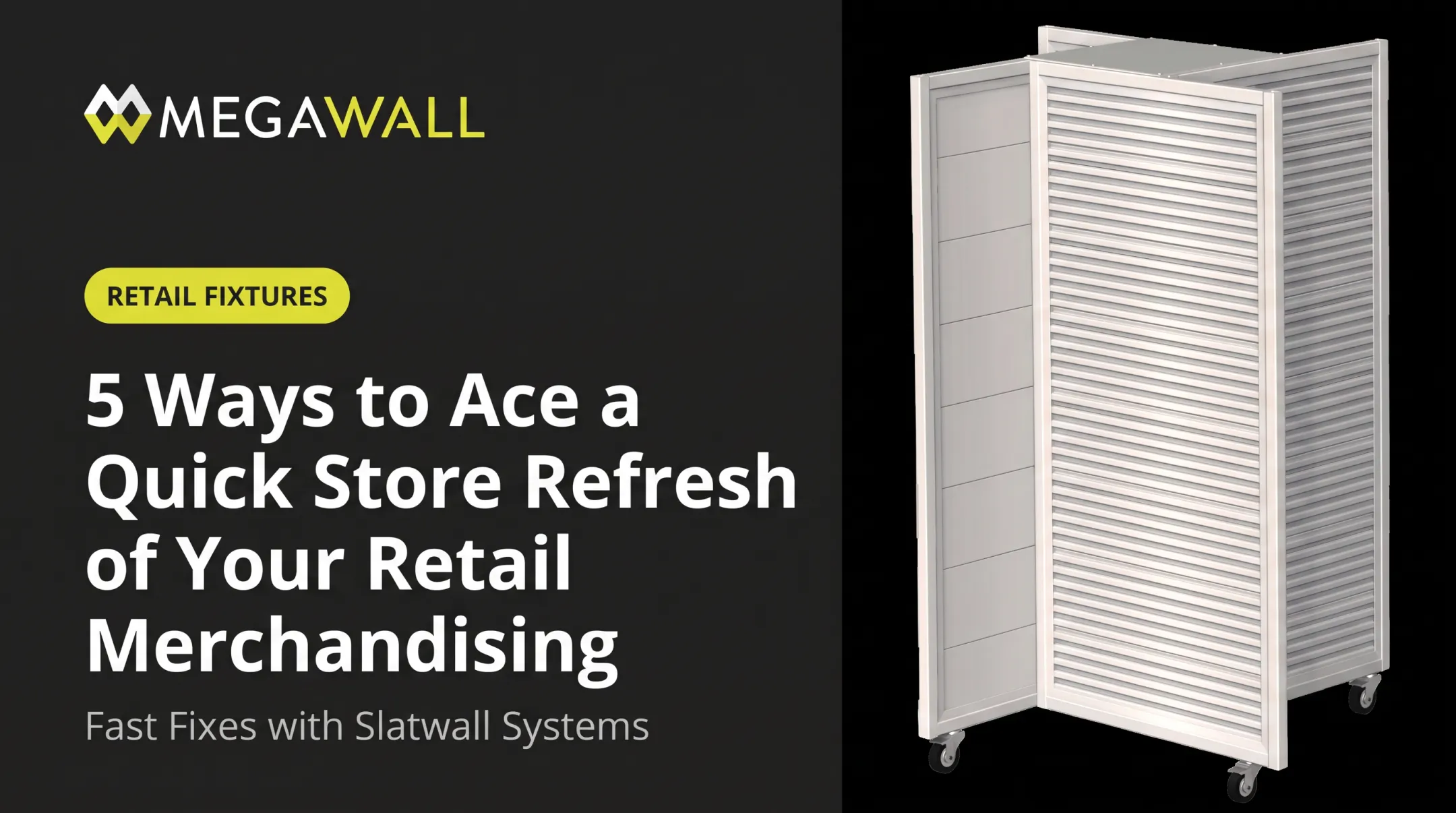
- Pinwheel — four vertical surfaces, ideal for tight floor space

Prepare Inventory and Operations for the Rush
Stockouts kill trust. A shopper who drove out for a doorbuster and finds an empty shelf won't come back easily. Overstocking is just as costly, tying up cash in merchandise that doesn't move.
Forecast based on last year's sales data, adjusted for this year's promotions and category trends.
Real-time inventory tracking (RFID tags or a connected POS system) flags low stock before shelves go empty, giving staff time to restock from the back room instead of scrambling mid-rush.
Restocking speed matters just as much as tracking. Gondola retrofit systems like Megawall's NuPanel drop into standard 36-inch or 48-inch gondolas, letting staff adjust shelving, signage, and inserts without replacing the entire fixture.
Wing panels can be added to endcaps in about a minute using hanger brackets. That speed helps when you need to reconfigure a display zone between Friday morning and the afternoon rush.
Before doors open, brief staff on:
- Product knowledge for top sellers and doorbusters
- Discount details and any exclusions
- Per-customer stock limits, so nobody gets caught explaining a policy on the spot
Strengthen Your Digital and Omnichannel Presence
Mobile isn't optional anymore. 57.5% of US online sales on Cyber Monday came through mobile devices, and nearly 47 million consumers used their phones to browse or buy, according to Adobe Analytics. A slow-loading site or clunky checkout on mobile costs you sales in real time.
Bridge your online and in-store experience with:
- BOPIS (buy online, pick up in-store) — lets customers lock in a deal online and skip shipping delays
- QR codes on in-store signage — link shoppers to extended online inventory or reviews
- Multi-payment POS — accepts multiple payment types and cuts checkout friction during peak hours

Curbside pickup made up 17.5% of online orders among retailers offering it last holiday season, per Adobe — proof that flexible fulfillment pays off when traffic spikes.
Extend the Sales Window with Cyber Monday and Loyalty Follow-Up
Black Friday foot traffic feeds Cyber Monday. Treat the weekend as a bridge, not a finish line. Cyber Monday alone generated $14.25 billion in US online sales in 2025, up 7.1% year over year, with Cyber Week hitting $44.2 billion total, according to Adobe. Use in-store signage or printed vouchers to point Black Friday shoppers toward Monday's online deals. That keeps them engaged instead of losing them to a competitor's email blast. Loyalty programs are worth pushing hard during this window. Per Deloitte's 2025 loyalty survey:
- 72% of members say the program makes them more likely to spend with that brand
- 56% say it increases how much they spend
- Members join eight programs on average but actively use only five Make enrollment fast and the first-purchase reward obvious, or you'll lose them to a competing program.
Frequently Asked Questions
What are effective Black Friday marketing strategies for retailers?
A mix of personalized offers, targeted ads, urgency tactics like countdown timers, and consistent messaging across email, social, and SMS drives the best results. Segmenting your audience protects margins while still creating urgency.
What is the most sold item on Black Friday?
Electronics traditionally lead, though clothing and accessories (51%), toys (32%), and gift cards (26%) also rank high, per NRF data. Check current-year category trends before finalizing stock levels.
What are good Black Friday slogan ideas for retailers?
Slogans should emphasize urgency and value: "Biggest Deals of the Year" or "Doorbusters Await." Tailor the tone to match your brand voice, whether playful or straightforward.
How far in advance should retailers prepare for Black Friday?
Start marketing, inventory planning, and store layout prep at least 6-8 weeks ahead. Deloitte's data shows the shopping season starting earlier each year, so waiting until November puts you behind.
Should small retailers compete with big-box Black Friday deals?
Focus on a handful of well-executed offers instead of trying to match big-box discount depth. With 67 million shoppers considering Small Business Saturday, local appeal can outweigh raw discount size.
How can retailers reduce checkout and queue frustration on Black Friday?
Clear signage, queue barriers, and a fast POS system that accepts multiple payment types all speed up transactions and cut down on crowd frustration during peak hours.