
Shoppers gravitate toward what's new. When displays look the same for months on end, customers stop noticing them, and staff stop caring about them too. A quick refresh, done right, can reignite interest without a single construction permit.
This post covers five practical ways to refresh your retail merchandising fast, using tactics that focus on presentation, not renovation.
Key Takeaways
- A refresh changes layout, color, lighting, and product presentation, not the building itself
- Moving existing fixtures and regrouping products can lift sales within days
- Reconfigurable, durable display systems make repeated refreshes faster and cheaper
- Every refresh should tie to a clear goal: new products, better flow, or clearing stagnant stock
What Is a Retail Store Refresh?
A retail store refresh is a set of cosmetic and merchandising updates meant to modernize a store's look and improve the shopping experience. No walls come down. No contractors move in for weeks.
This is different from a full remodel or build-out. Refreshes are faster, cheaper, and can usually happen while the store stays open.
Chain Store Age recommends refreshing high-traffic areas roughly every three years, and saving full remodels for every five to seven years, often tied to lease renewals or brand changes.
Common triggers for a refresh include:
- A seasonal change (spring cleaning, holiday shift)
- A section that's stopped selling
- A new product launch that needs a spotlight
- Staff and customers who've simply grown tired of the same layout
Way 1: Use Color and Focal Points to Draw the Eye
Without a clear focal point, shoppers' eyes wander. They walk past merchandise that could've been a top seller, simply because nothing told them where to look.
Strategic color placement fixes this. A single bold accent piece near the entrance, paired with coordinated accessories, creates a visual anchor that pulls attention before a customer even decides where to walk.
Strategic color placement fixes this. A single bold accent piece near the entrance, paired with coordinated accessories, creates a visual anchor that pulls attention before a customer even decides where to walk.
Build the focal point fast:
- One bold accent near the entrance or aisle end
- Neutral, complementary products around it
- Contrast over clutter—less volume, stronger pull
A Simple Focal-Point Example
Picture a seasonal display near your storefront: a bright orange or red centerpiece surrounded by neutral, complementary products. That contrast does the work.
Research on retail environments confirms that color and lighting shape shoppers' impressions of a space. Shoppers rate chromatic displays more positively than flat, uniform ones, according to a 2016 study published in the Journal of Environmental Psychology.
Systems like Megawall's V-Wall, with slip-in acrylic or glass shelving, or WaveWall's interchangeable aluminum profiles, support that kind of high-contrast presentation in high-traffic zones. You don't need new construction—just one well-placed statement fixture and a plan for what surrounds it.

Way 2: Upgrade Lighting to Set the Mood and Highlight Product
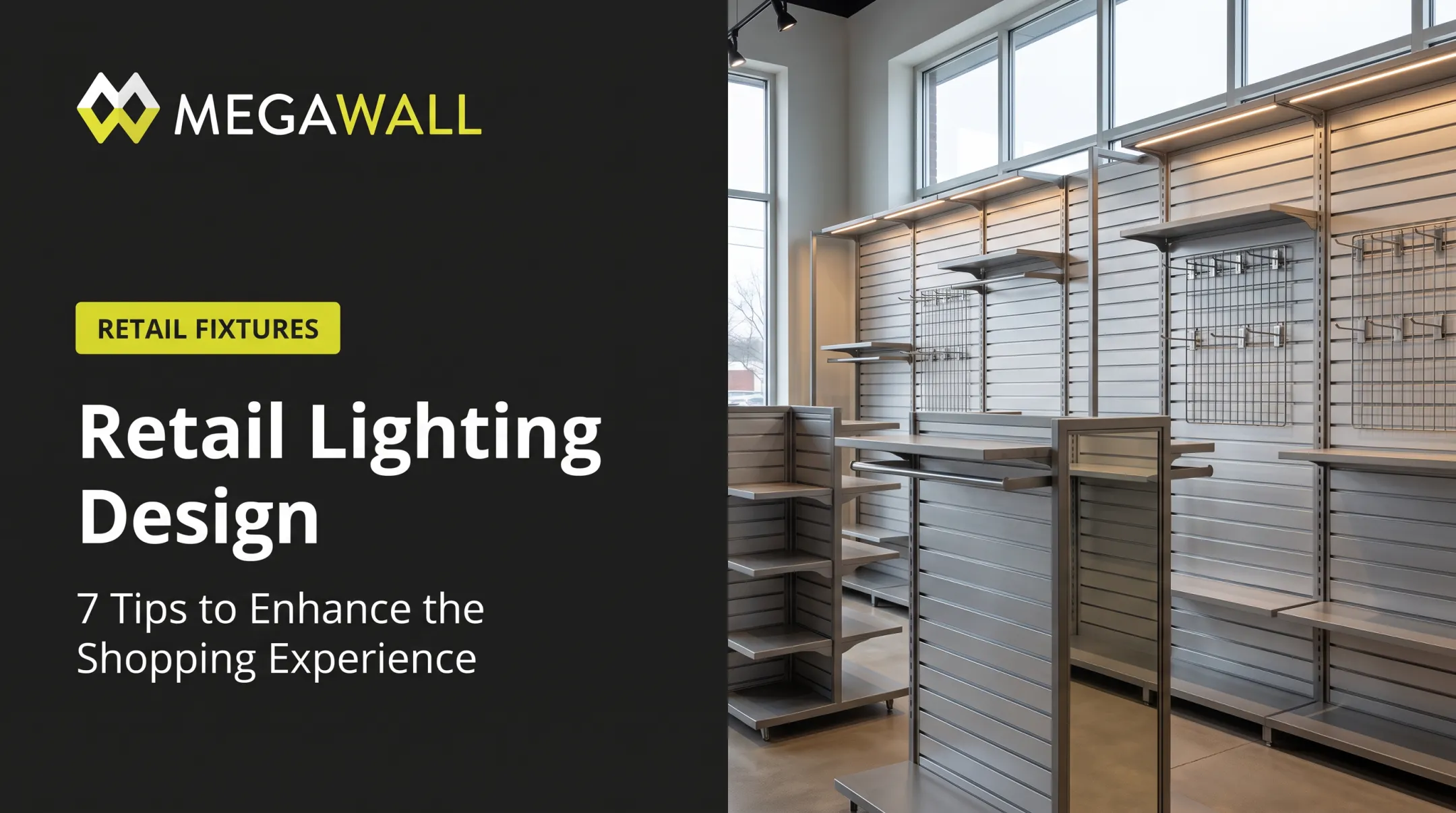
Lighting shapes how long shoppers linger and how they feel about your store. It's one of the cheapest refresh levers available, and one of the most overlooked.
Start with the basics:
- Replace burnt-out or under-powered bulbs immediately—they signal neglect faster than almost anything else
- Group your brightest lighting over feature displays and new arrivals
- Match color temperature to mood: warmer tones for cozy, considered-purchase categories, cooler tones for crisp, modern product lines
Research backs up the mood connection. Studies on in-store lighting show that brighter environments encourage shoppers to examine and handle more merchandise. That shift in attention and emotional response is well documented, even when the exact sales lift is harder to pin down.
What This Looks Like in Practice
A dim corner with faded signage tells customers "we forgot about this section." Bright, focused light on the same shelf, with a clean product story, does the opposite. Since Megawall's fixtures are compatible with customer-supplied LED lighting, this pairs easily with a fixture reset in the same afternoon.

Way 3: Reconfigure Fixtures and Displays for a New Story
Moving what you already own is the fastest, cheapest refresh tactic available. No new purchase orders, no waiting on freight, just a fresh arrangement that tells a better story.
Group complementary or considered-purchase items together. For example, separate phone cases from the general accessories wall and place them directly beside the phones they fit. That small regrouping turns a random accessory bin into an obvious, logical pairing.
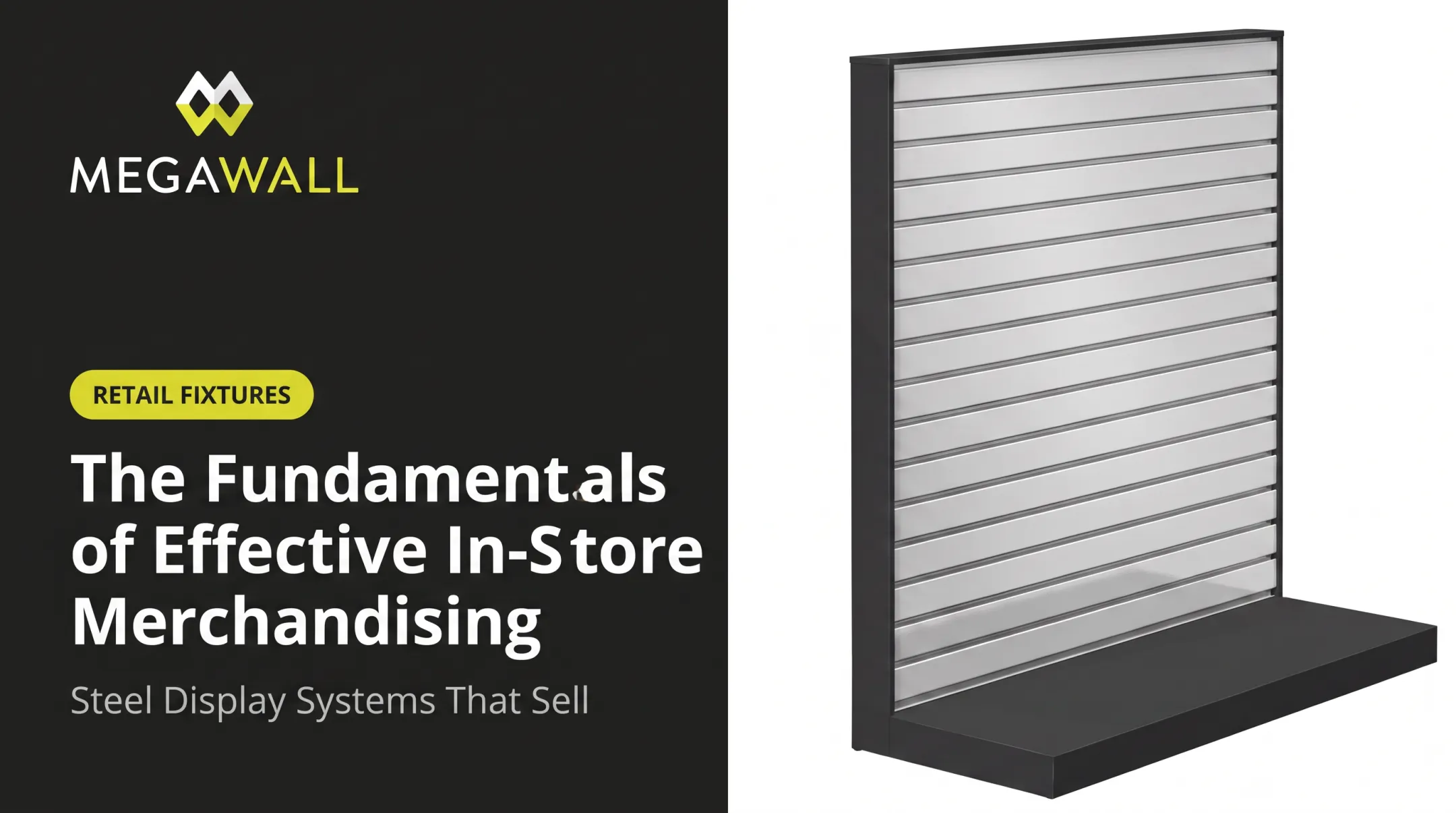
Durability matters here. If you're rearranging fixtures every few months, MDF panels chip, sag, and delaminate. Metal slatwall doesn't. Megawall's steel slatwall supports over 50 pounds per linear foot, holding heavier accessories and shelving through repeated resets without warping.
A few features make repeated reconfiguration easier:
- Hidden fasteners create a clean, uninterrupted look with no visible screws to work around
- 8-foot panel sections (including standard 96-inch aluminum runs) reduce the number of pieces needed per wall
- Flexible slat spacing (1 to 3 inches on center for aluminum, 3 inches for steel) accommodates different bracket and hook configurations
- NuPanel retrofit panels drop 1-inch aluminum Megawall panels onto existing gondola uprights, refreshing old shelving without replacing the structural unit

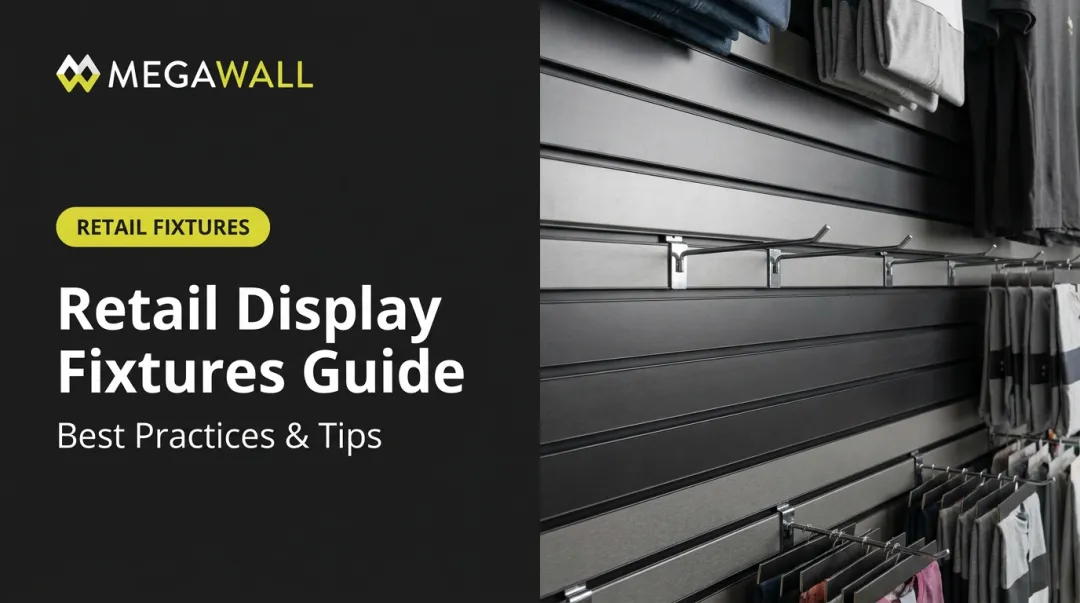
For freestanding flexibility, modular H-Frame, L-Frame, T-Frame, and Pinwheel fixtures roll into new positions. Use them to redirect traffic flow or spotlight seasonal inventory without committing to a permanent build.
Way 4: Place Add-Ons and Impulse Items Where They Actually Sell
Impulse items don't belong at the entrance. Shoppers haven't committed to anything yet, so their guard is up. Place add-ons near checkout or at the natural end of a shopping journey instead, where a purchase decision has already been made.
Psychology explains why. Once a customer says "yes" to a purchase, they're more open to a small additional yes. That pattern is backed by classic compliance research from Freedman and Fraser's 1966 foot-in-the-door study.
What makes a good impulse item:
- Familiar and instantly recognizable (no explanation needed)
- Low-priced relative to the primary purchase
- Small enough to fit near a checkout counter or endcap
Avoid placing "considered purchase" items, like anything requiring a sales pitch, in impulse zones. A shopper deciding between two premium jackets won't be swayed by a nearby product that needs its own explanation. Save the explaining for main aisles, and let the checkout zone stay simple and fast.
Way 5: Edit Down Overcrowded Displays
Too much merchandise crammed onto one fixture doesn't look abundant. It looks like it isn't selling. Overcrowded walls overwhelm shoppers and bury your bestsellers under products nobody's chosen yet.
Edit by subtraction. Reduce overstocked displays by a third to two-thirds so top sellers get breathing room instead of competing with slow movers.
Fast edits that clear visual noise:
- Pull slow movers off prime fixtures into secondary space or backstock
- Leave intentional gaps so bestsellers read as featured, not buried
- Limit each wall section to one hero SKU plus a tight supporting set
Choice-overload research shows large assortments can lead to deferred decisions and lower purchase rates, particularly when shoppers aren't already in a positive mindset. A cluttered wall adds friction at exactly the moment you want a quick decision.

Keep your entryway and decompression zone especially simple. Customers need a moment to adjust to the store before they're ready to process dense product choices. A clean first impression sets the tone for everything that follows.
Frequently Asked Questions
What is a retail store refresh?
A retail store refresh is a cosmetic and merchandising update focused on layout, color, lighting, and product presentation. It modernizes a store's look and improves customer experience without major construction.
How long does a quick store refresh typically take?
Most refreshes take anywhere from a few hours to a few days, especially when completed overnight or rolled out in phases across sections.
How is a store refresh different from a store reset or remodel?
A refresh is cosmetic, while a reset rearranges product placement or planograms and a remodel involves structural changes to the space. Each serves a different scale of update.
How often should retailers refresh their merchandising?
Aim for seasonal or quarterly merchandising refreshes, or whenever sales in a specific section start to stagnate. Fuller fixture and layout updates in high-traffic areas often make sense every few years.
What's the most cost-effective way to refresh a store?
Rearranging existing fixtures, improving lighting, and investing in durable, reconfigurable display systems typically cost far less than buying entirely new fixtures.
Can a store refresh happen while the store stays open?
Yes. Most refreshes are designed to minimize disruption, with work done during off-hours or completed in phases so daily operations continue uninterrupted.