
As physical stores compete harder against e-commerce, the type of display you choose matters more than ever in 2026. Shoppers expect stores to feel worth visiting. This article breaks down the main types of visual merchandising displays, how they differ, and how to pick the right one for your floor.
TL;DR
- Visual merchandising displays present and highlight products so shoppers notice them and buy in-store
- Core types: window, slatwall/gondola, end cap, POP/counter, and mannequin or digital displays
- Each type has a job: draw foot traffic, organize stock, spark impulse buys, or show styling
- Pick by store layout, product type, budget, and how durable the fixture must be
- Durable options such as slatwall systems stretch floor-plan efficiency and long-term ROI
What Is a Visual Merchandising Display and Why Does It Matter?
A visual merchandising display is any strategically placed fixture, shelving unit, or signage zone used to present products and guide shopper behavior. Think of it as a silent salesperson. It influences purchase decisions long before a customer approaches an associate.
The numbers back this up. POPAI's Shopper Engagement Study found that 76% of purchase decisions were made in-store, and nearly 1 in 6 brand purchases happened specifically because a display for that brand was present. The same research found 57% of shoppers ended up spending more than they'd planned.
Skip the strategy, and here's what happens:
- Cluttered aisles that hide bestsellers
- Poor product visibility that kills discovery
- Lost impulse sales at checkout and end caps
- Weak seasonal sell-through when resets are sloppy
Effective displays aren't decoration. They're a direct line to conversion rate and floor-space ROI.
Types of Visual Merchandising Displays
Display types differ by placement, purpose, product category, and store layout. Most retailers don't rely on just one. They layer several types across the floor plan.
Window Displays
Window displays use mannequins, props, and lighting to attract passersby and tell a brand story before they ever step inside.
- How it differs: Built for outside-in visibility, not in-aisle browsing
- Best for: Seasonal collections, luxury goods, flagship stores, promotional storytelling
- Strengths: Drives foot traffic and shapes brand perception before entry
- Limitations: Needs frequent refreshing, skilled design work, and shows limited product volume A 2016 peer-reviewed study found that more creative store windows had a clear advantage in converting passersby into shoppers. Creativity, not just visibility, is what pulls people in.

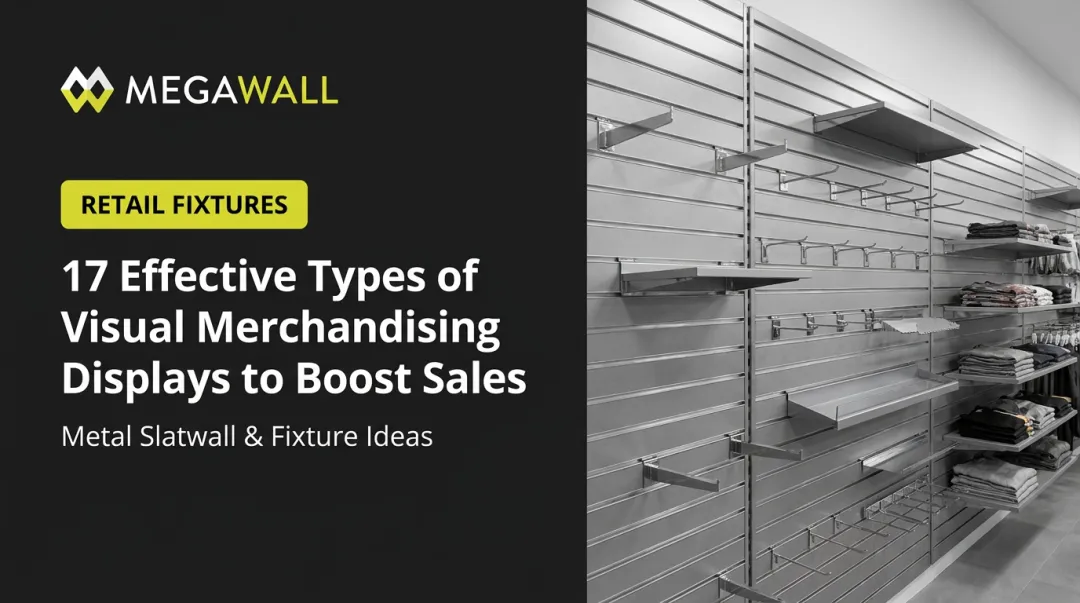
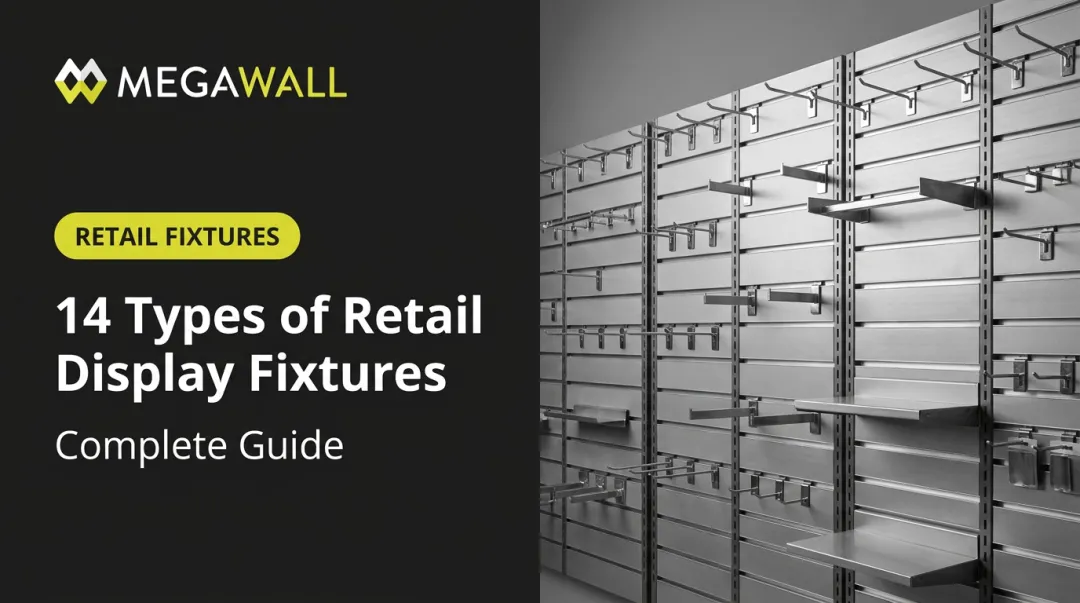
Slatwall and Gondola Wall Displays
Slatwall and gondola systems are modular, wall-mounted or freestanding shelving structures built to organize large volumes of product using hooks, shelves, or panels.
- How it differs: Built for durability and high weight capacity, unlike temporary or lightweight fixtures
- Best for: Hardware stores, sporting goods, general merchandise, and any retailer needing frequent resets
- Strengths: Maximizes vertical space, supports heavy loads, gives a seamless, high-end look
This is where fixture construction really matters. Megawall manufactures steel and aluminum slatwall systems rated to hold over 50 lbs per linear foot, using concealed fasteners that hide hardware entirely.
Steel slatwall ships in 32-square-foot interlocking sections (8' × 4' or 4' × 8'). Aluminum sections run up to 8 feet with 1", 1.5", or 3" hidden-fastener spacing, creating uninterrupted display walls with no visible screws.
For retailers modernizing existing gondolas without a full teardown, NuPanel retrofit systems swap out pegboard for anodized aluminum slatwall panels sized for standard 36" or 48" gondolas.
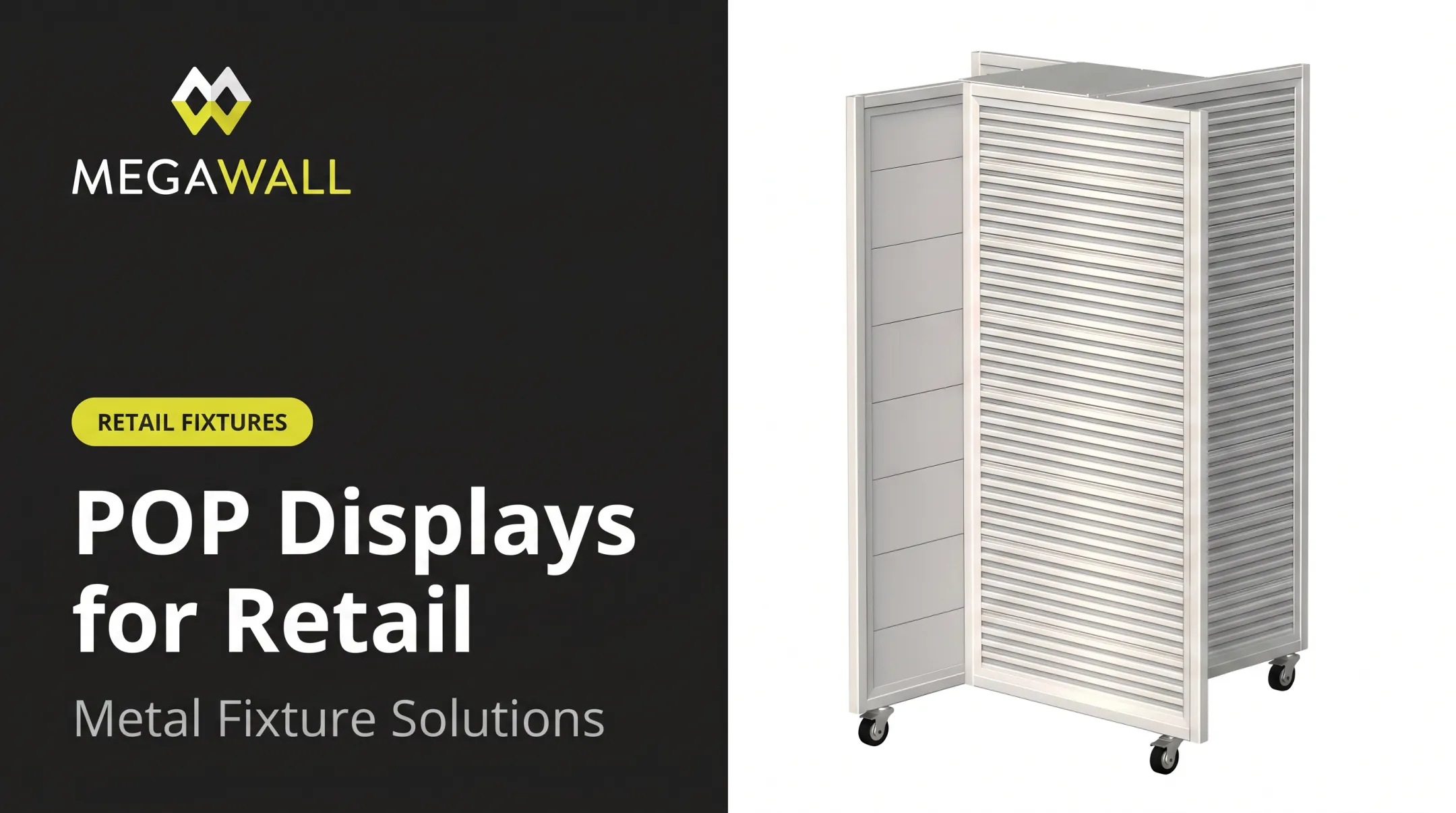
Megawall also offers modular H-Frame, L-Frame, T-Frame, and Pinwheel fixtures, each suited to different floor situations:
Fixture Best Use H-Frame Four-sided display, maximizes floor space L-Frame Focal-point display, guides traffic T-Frame Two-sided, wall strength with modular flexibility Pinwheel Tight spaces, mobile with casters - Limitations: Higher upfront cost than basic shelving, though durability and a longer replacement cycle typically offset it over time.

End Cap Displays
End caps sit at the ends of aisles and catch shoppers as they pass. No standalone fixture is required, since they use the existing gondola structure.
- How it differs: Uses existing gondola ends for high-visibility placement without a separate fixture
- Best for: Grocery, convenience, and general retail promotions
- Strengths: High foot-traffic exposure drives impulse buys
- Limitations: Works best in short promotional windows; overuse dulls shopper attention A 2022 Journal of Retailing study measuring six display locations found front end caps had the strongest effect on category purchase incidence at 0.434, ahead of rear end caps (0.353) and shelf displays (0.346). The same study modeled an average 11.15% revenue increase from optimized display allocation, a strong signal to prioritize end cap real estate wisely.

POP (Point-of-Purchase) and Counter Displays
These compact displays sit near checkout, built for grab-and-go, low-cost items.
- How it differs: Small footprint, checkout proximity vs. larger aisle fixtures
- Best for: Accessories, convenience items, cross-sells
- Strengths: Captures last-minute decisions with minimal space NACS's 2023 research of over 6,500 convenience shoppers found 20.1% left the store with an unplanned purchase, and 40% of Americans buy single-serve candy weekly. A well-placed counter display still earns its keep.
Mannequin and Digital Displays
Mannequins show apparel fit and styling; digital screens or kiosks pull shoppers in with interactive content.
- How it differs: Focused on demonstration and engagement, not shelf storage
- Best for: Apparel (mannequins), electronics and tech stores (digital)
- Strengths: Builds an experiential feel that extends dwell time
- Limitations: Mannequins need frequent restyling; digital setups carry higher install and upkeep costs Studies on mannequin design found humanized heads raised purchase intention for the apparel on them, while expert shoppers responded better to abstract forms. Field research on digital displays showed sales lifts mainly in hypermarkets, so store format matters as much as the tech itself.

How to Choose the Right Type of Visual Merchandising Display
The right display depends on your product, goals, and physical space—not on short-lived trends. Weigh these factors:
- Store layout — available floor and wall space, traffic flow
- Product category — weight, size, and how it needs to be presented
- Reset frequency — how often you rotate seasonal or promotional merchandise
- Budget — upfront cost vs. long-term durability and replacement cycles
- Fire code compliance — fixtures should meet local safety standards, including load-bearing requirements
- Maintenance — ease of cleaning and reconfiguration over the fixture's lifespan
Megawall designs its slatwall systems to meet fire codes while holding over 50 lbs per linear foot. That mix matters when you stock heavier categories like tools, sporting goods, or bulk seasonal products.
Common Mistakes to Avoid When Selecting Displays
- Chasing flashy tech. A heavy digital setup often underperforms a well-placed gondola or slatwall system for the same budget.
- Ignoring weight capacity. Undersized shelving sags fast under real inventory loads, forcing early replacement.
- Buying on price alone. MDF fixtures are cheaper upfront but prone to warping, breaking, and delamination over time. Steel and aluminum systems cost more initially but last longer and stay easier to clean.
Conclusion
Visual merchandising displays guide shopper behavior in ways most customers never consciously register. Window displays sell a story. Slatwall and gondola systems carry the weight of daily merchandising. End caps and POP displays catch impulse decisions. Mannequins and digital screens add experience. Knowing how each display type works helps retailers protect the customer experience and get stronger long-term fixture ROI.
Frequently Asked Questions
What are the four types of merchandising?
Four common categories are product merchandising, visual merchandising, digital merchandising, and promotional merchandising. Each governs a different piece of how products are presented and sold.
What are five types of merchandise?
Retailers typically classify merchandise as convenience goods, shopping goods, specialty goods, staple goods, and impulse goods, grouped by how much effort and consideration a shopper puts into buying them.
What is the most effective type of visual merchandising display for small stores?
Flexible, space-saving options like slatwall panels or modular gondola systems work best. They maximize vertical space without requiring a large fixture footprint.
How often should retail displays be changed?
General displays are often refreshed every 4-6 weeks, with window displays changed more frequently (every 2-4 weeks) to match seasonal and promotional cycles.
What materials are best for durable retail displays?
Steel and aluminum fixtures outperform MDF in weight capacity, durability, and long-term maintenance. MDF is more prone to warping, breaking, and delamination over time.
Do visual merchandising displays need to meet safety codes?
Yes. Commercial fixtures should meet applicable fire codes and load-bearing safety standards, and aisles must stay clear per OSHA regulations.