
Off-the-shelf brackets often can't keep up. They're built for average conditions, not your specific load requirements, mounting constraints, or finish standards. Many retailers struggle to find hardware that fits a nonstandard shelf depth or matches a store's aesthetic.
This guide covers bracket types, the fabrication process, material choices, and how to pick a fabricator that won't leave you waiting.
Key Takeaways
- Custom brackets solve load, dimension, and mounting problems standard hardware cannot
- Steel, aluminum, and stainless steel match different strength and environment needs
- Cutting, bending, punching, and welding make up the core fabrication sequence
- In-house design and engineering reduce cost and shorten lead time
What Is a Custom Bracket and Why Fabrication Matters
A bracket is an intermediate structural component—it connects, supports, or reinforces two surfaces or structures. That's different from a fastener, which simply joins two parts together. A bracket carries load between them.
Standard brackets work fine until they don't. You need custom fabrication when a project demands a specific load capacity, unusual spacing, or a finish that off-the-shelf catalogs don't stock.
Industries that regularly need custom brackets include:
- Retail display and merchandising
- Construction and architectural applications
- Electronics and equipment mounting
- Automotive assembly
- Industrial equipment and racking
Retail is a particularly demanding use case. A shelf bracket has to hold merchandise weight, fit a specific slatwall or panel spacing, and look presentable to shoppers. Standard brackets rarely check all three boxes at once.
Common Types of Custom Brackets
Bracket geometry determines how it handles load and where it fits. Here are the five configurations you'll encounter most often:
- L-brackets: A single 90-degree bend. The simplest and most common option for mounting shelves or panels to a vertical surface.
- Z-brackets: A double bend creates offset, parallel flanges—useful when you need to mount two surfaces at different levels or clear an obstruction.
- U-channel brackets: Longer spans that distribute load across parallel surfaces. Common in shelving and racking systems where a single point of contact isn't enough.
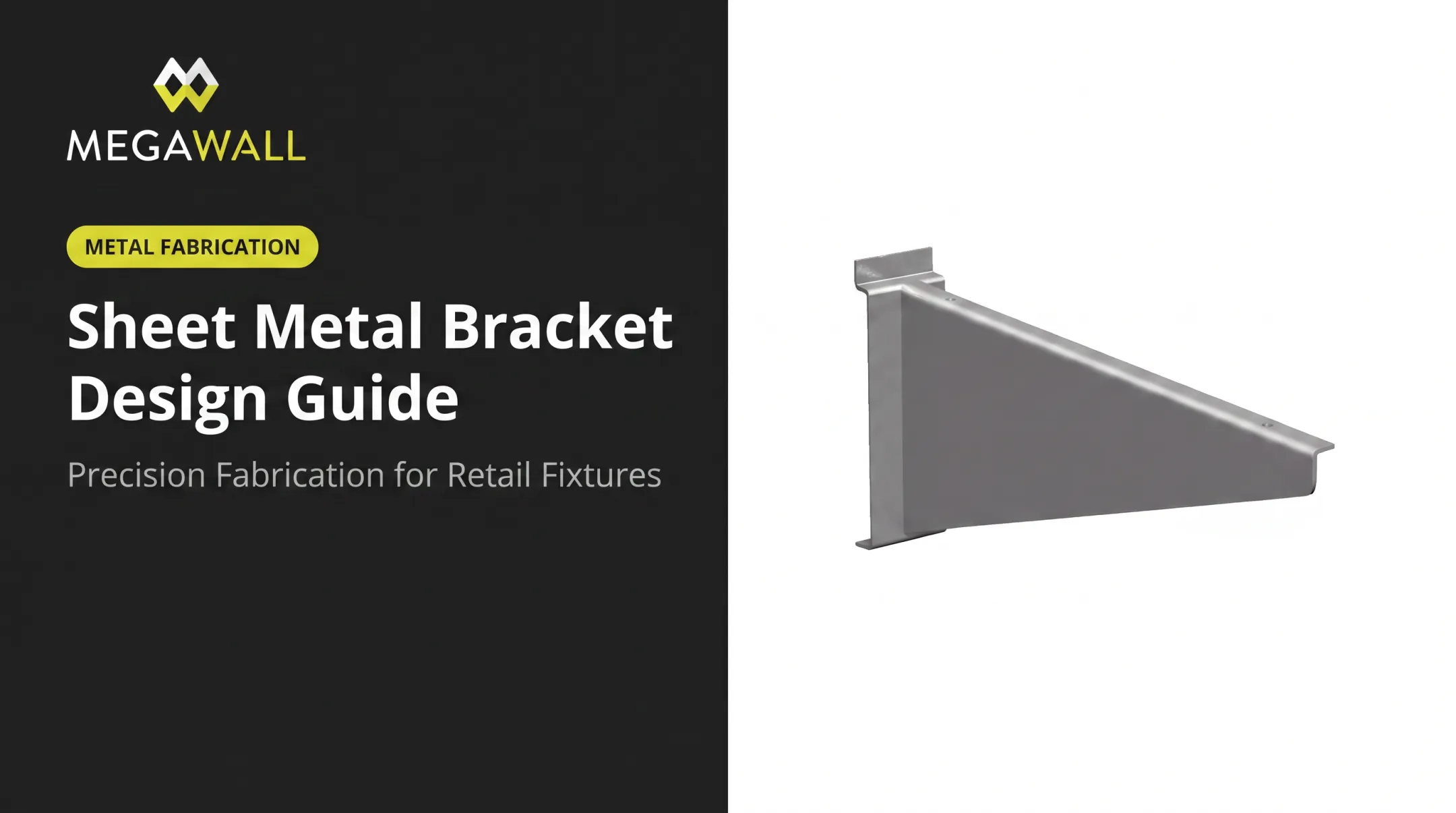
- Gusset brackets: Reinforced with a triangular support section, built for heavier structural loads where a plain L-shape would flex too much.
- Concealed-fastener brackets: Hide the fastening hardware entirely for a clean, seamless look while still holding structural weight.

Concealed Fasteners in Retail Display
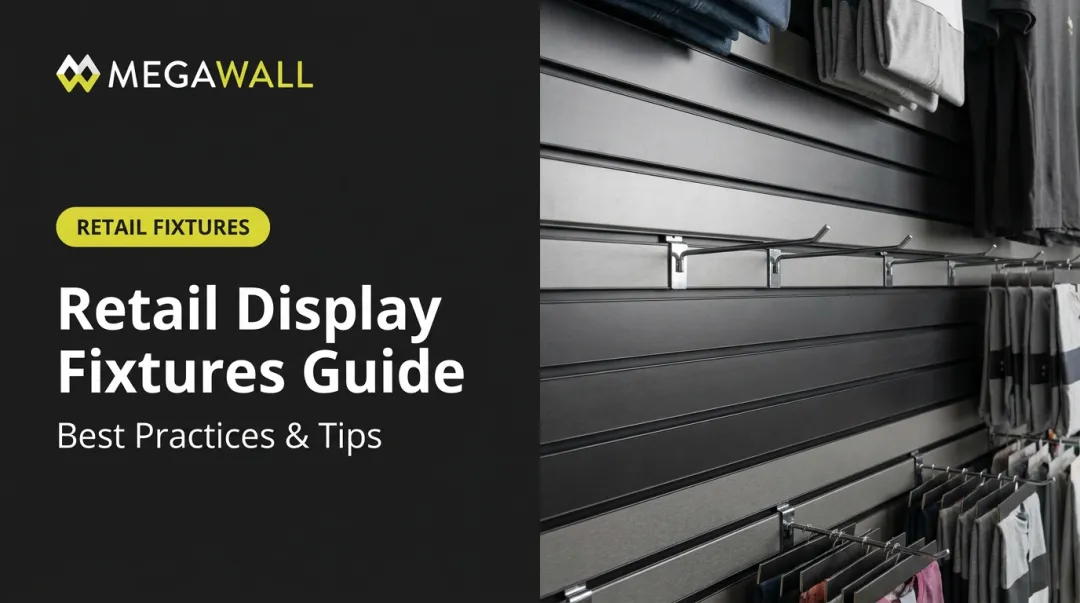
Concealed-fastener systems matter most where appearance counts as much as strength. Megawall's patented wall display systems use hidden fasteners paired with interlocking sections, creating a continuous surface with no visible screws or brackets.
The company's aluminum slatwall applies this across 1-inch, 1½-inch, and 3-inch spacing configurations, holding a seamless look across standard 96-inch (8-foot) sections. That mix of load capacity and clean sightlines is what custom bracket engineering is built to deliver.

The Custom Bracket Fabrication Process
Bracket fabrication follows a clear sequence, and the choices at each step directly affect cost and turnaround.
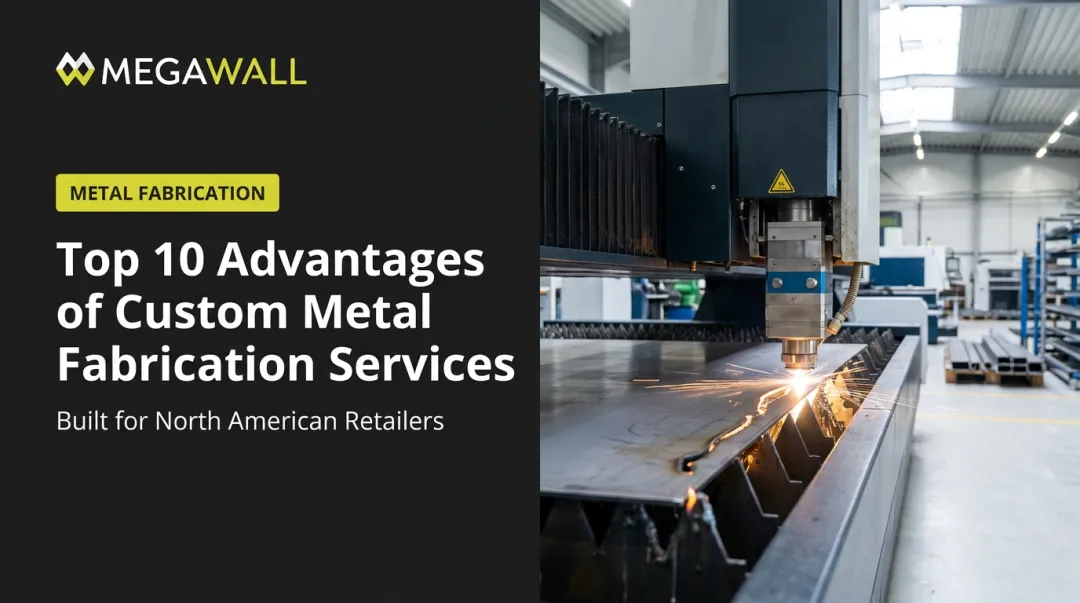
- Cutting: Laser cutting shapes flat sheet metal into precise patterns before any forming happens. Fiber lasers deliver tight tolerances on both steel and aluminum stock.
- Bending/forming: A press brake creates the bracket's core angles. Consistent bend radii across a design, rather than a different radius for every bend, keep tooling costs down.
- Punching: Operators add mounting holes at this stage. Hole placement matters more than most people assume.
- Welding: Welders join gussets or reinforcing sections here, typically with MIG, TIG, or spot welding depending on the material and joint type.
- Finishing: Powder coating, anodizing, or plating is applied for corrosion resistance and appearance.

Why Hole Placement Affects Cost and Lead Time
Design guidance recommends keeping holes at least 2.5 times material thickness plus bend radius away from a bend line, with slots requiring even more clearance (Geomiq's sheet metal design guide). Ignore this, and you risk hole distortion during forming: scrapped parts, re-tooling, and delayed delivery.
Planning bend direction consistently across a part, rather than requiring the operator to reorient the sheet for each bend, also shortens production time. Handled well, these details can mean a three-day quote instead of a three-week lead time.
Choosing the Best Material for Your Bracket
Material selection comes down to four factors: load, budget, appearance, and environment. Here's how the three main options stack up:
| Material | Strengths | Best For |
|---|---|---|
| Steel | High strength, high load capacity | Heavy-duty shelving, structural brackets |
| Aluminum | Lightweight, corrosion-resistant, recyclable | Display fixtures, sustainability-focused projects |
| Stainless steel | Superior corrosion resistance | Outdoor, food service, high-moisture environments |

Steel remains the go-to for heavy loads and painted or powder-coated finishes that match store fixtures. The same heavy-gauge approach behind Megawall's steel slatwall—rated at over 50 lbs per linear foot, formed and welded with hidden fasteners—is what you want in structural and shelf brackets that cannot sag.
Aluminum is the lighter, often lower-installed-weight option for typical retail display loads, with a clean modern look that suits customer-facing fixtures. Megawall's aluminum slatwall is made from more than 50% recycled content and is LEED-certified. That recycled content and certification matter when green building credits or sustainability commitments are part of the project brief.
Stainless steel belongs in outdoor displays, food service fixtures, or any bracket facing constant moisture or chemical exposure. It costs more upfront than standard steel or aluminum, but corrosion resistance and a finished appearance without extra coating usually pay off over the fixture's lifespan.
Don't just pick a material name off a spec sheet—confirm grade and thickness. A generic "aluminum bracket" claim means little without knowing the alloy and temper behind it.
Design Considerations for Custom Brackets
Smart design decisions upfront prevent expensive rework later.
- Minimize bend count and match flange proportions; every extra bend adds tooling time and cost
- Plan hole placement relative to bends to simplify punching and avoid distortion
- Design for fire code compliance in high-traffic retail environments
- Prioritize cleanability with smooth surfaces and corrosion-resistant finishes
Megawall's slatwall systems, for example, meet fire codes and stay easy to clean and maintain, qualities that matter as much in a busy retail environment as raw load capacity.
A well-designed custom bracket lasts longer than a generic substitute, which means fewer replacements and better use of merchandising space over time. That durability is a real cost advantage, even when the upfront price is higher.
How to Choose a Custom Bracket Fabricator
Not every fabricator is equipped to handle a full custom bracket project from concept to finished part. Look for these capabilities:
- In-house design and engineering — avoids delays caused by outsourcing drawings or revisions
- Full fabrication under one roof — cutting, bending, punching, welding, and ideally finishing, all in one facility
- Experienced production team — longer average tenure typically means more consistent quality control
- Relevant certifications — LEED certification, for example, matters for sustainability-focused projects
- Track record with retailers or industrial clients — ask for examples of comparable work
A shop that hits those marks looks different in practice. Megawall, for example, has operated for 21 years in Comstock Park, Michigan, with 25-plus employees averaging 12.5 years of tenure inside a 45,000 square foot facility.

The team handles laser cutting, press brake forming, MIG/TIG/spot welding, and in-house design consultation under one roof, from prototype runs through large-scale production. Custom fixture programs in H-Frame, L-Frame, T-Frame, and Pinwheel configurations show that same range beyond standard catalog parts.
When vetting a fabricator, ask directly about drawing revision control, first-article inspection, and whether finishing happens on-site or gets outsourced. Those process answers usually tell you more than brochure specs alone.
Frequently Asked Questions
Where can I get custom metal brackets?
Work with a metal fabricator that handles design, cutting, bending, and finishing in-house. For retail or industrial use, choose a manufacturer experienced with your load ratings and finish requirements.
What is the best metal for making brackets?
Steel offers the highest strength for heavy loads. Aluminum works best when weight and corrosion resistance matter most. Stainless steel suits harsh, outdoor, or food-service environments.
How much weight can a custom bracket hold?
It depends on material, thickness, and design. There's no universal number. As a reference point, Megawall's steel slatwall systems hold over 50 lbs per linear foot, while capacity still varies by bracket geometry and gauge.
How long does custom bracket fabrication take?
Turnaround varies with design complexity, order volume, and finishing requirements. Simple cut-and-bend work can take days; welded, tooled, or finished programs often take a few weeks.
Can custom brackets be made without a CAD drawing?
Many fabricators can reverse-engineer a bracket from samples, photos, or sketches. If you don't have CAD files, ask whether they can build from those reference materials.
What finishes are available for custom metal brackets?
Common options include powder coating for durable scratch and corrosion resistance, anodizing for aluminum, and plating for cost-effective steel protection. Each suits different environments and budgets.