
Too many phone stores waste that window. Cluttered accessory walls, flat lighting, and flimsy MDF fixtures make even the newest devices look generic. The result: shoppers browse, feel nothing, and leave.
This guide breaks down layout planning, fixture materials, lighting, design styles, and small-store strategies — everything you need to build a store that earns a second look and a sale.
Key Takeaways
- Clear paths from entrance to checkout keep demo phones and accessories in the spotlight
- Steel and aluminum slatwall outperform MDF on weight capacity, appearance, and lifespan
- Lighting, color, and materials that match your brand make the store feel intentional to your target customer
- Small stores gain floor space with vertical displays and modular, reconfigurable fixtures
Planning Your Cell Phone Store Layout
Before picking fixtures or paint colors, map function first. A workable plan separates distinct zones: entry, hero device discovery, hands-on demo, accessory browsing, and checkout/service — with an unobstructed route connecting all of them.
Megawall plans layouts around a balance of wall-mounted and floor-based displays, whether you're refreshing an existing footprint or building from scratch. The point is practical: use fixtures to free up floor space, guide traffic naturally, and spotlight seasonal or promotional products without a full remodel.
Essential Layout Zones
Every high-performing phone store layout includes these four zones:
- Entrance/window display — eye-catching product staging that pulls foot traffic in before they've even opened the door
- Device demo area — hands-on stations with charging access so shoppers can actually test phones
- Accessory/case merchandising — typically wall-mounted slatwall to keep the floor open while maximizing product density
- Checkout/POS counter — visible from most of the store but never blocking the primary walking path
What Is the Best Layout for a Retail Store?
There's no single "best" layout — it depends on store size and goals. That said, most successful phone stores lean toward a racetrack or grid layout, exposing customers to more product before they reach checkout. A 2022 retail modeling study found one-way loop traffic increased shopper travel distance by 50% and area covered by 67% compared to free browsing (PMC study on aisle configuration) — though the researchers noted this measures exposure, not confirmed sales lift.

Two non-negotiables regardless of layout style:
- Keep walkways at least 36 inches wide — this matches the ADA's minimum for accessible routes, and anything narrower feels cramped
- Avoid dead-end aisles — they create visual bottlenecks and give shoppers an easy excuse to turn around and leave
Choosing the Right Display Fixtures & Materials
Fixture materials drive durability, load capacity, and how premium the sales floor looks. For cell phone stores, metal slatwall should carry the merchandising load; wood, glass, and acrylic work best as accents—not primary walls.
| Material | Role in a phone store | Best use |
|---|---|---|
| Steel/aluminum slatwall | Primary fixture system | Accessory walls, hooks, shelving, high-traffic zones |
| Glass | Accent / showcase | Premium device or case displays |
| Acrylic | Accent / lightweight demos | Small accessory risers |
| Wood | Warmth only | Seating nooks, non-load-bearing accents |
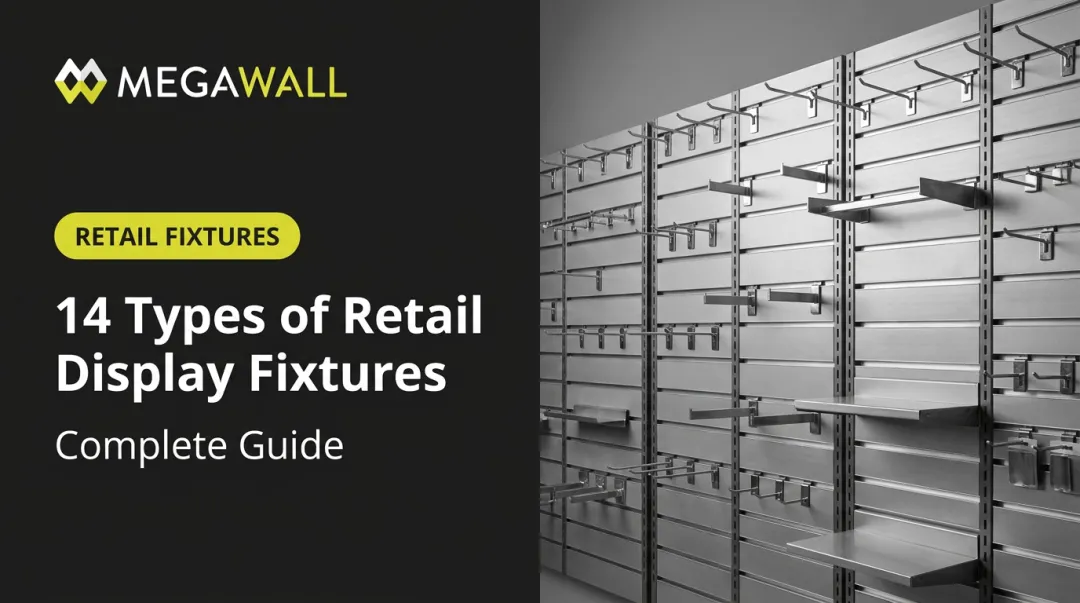
Steel slatwall outperforms standard MDF on strength and wear. Megawall steel slatwall is rated at over 50 pounds per linear foot—enough for accessory walls packed with hooks, shelves, and brackets under daily handling.

Why Concealed Fasteners Matter
Megawall's patented concealed-fastener design hides hardware behind the panel for a clean run across long walls. Aluminum hidden-fastener spacing is available in 1", 1.5", and 3" centers, with seamless sections up to 8 feet on select systems. Unlike visible-screw MDF, the face stays smooth and easier to keep looking new.
That same wall has to change with phone launches and seasonal SKUs. Adjustable slatwall shelves, heavy-duty brackets (12", 14", 16", and 18"), and swappable hooks let retailers reconfigure an accessory wall in an afternoon—no rebuild.
Key setup advantages:
- Load capacity over 50 lb per linear foot on steel slatwall
- Concealed fasteners for uninterrupted wall runs up to 8 feet
- Modular shelves, brackets, and hooks for same-day resets
Popular Cell Phone Store Design Styles
Your design style should reflect your brand promise, not just current trends. Four approaches dominate the category:
- Modern/minimalist — glossy surfaces, geometric lines, white or neutral palettes; think Apple's black shelving, wood floors, and Corian counters
- Industrial — exposed brick, metal-pipe fixtures, bold structural lines that skew toward younger shoppers
- Natural/wood-accent — warm veneer tones for a premium-but-approachable feel
- Interactive/tech-forward — AR/VR demo zones and touchscreen comparison tables, echoing Samsung's flagship "digital playground" concept
For retailers chasing a modern or minimalist look, designer aluminum systems like Megawall's V-Wall and WaveWall fit naturally:
- V-Wall embeds into drywall with a raw mill finish and accepts slip-in acrylic or glass shelving
- WaveWall uses 6-inch slotted aluminum profiles with hidden fasteners for a sculptural, contemporary wall
Both come in standard finishes with custom color options so walls match brand colors exactly.

Apple standardized its store systems decades ago; T-Mobile's Experience Stores instead built named zones like Launchpad and Fast Lane to separate quick transactions from browsing (IA case study). Rather than copying either aesthetic, pick a role your space needs to play and design toward it.
Lighting, Color, and Ambiance Tips
In a phone store, lighting directly shapes what shoppers touch and how long they stay. A field study tracking 2,367 shoppers found that adding display-specific lighting produced measurable behavioral shifts in time spent and items picked up (Summers & Hebert study).
Use a layered approach:
- Ambient lighting keeps the whole space navigable and product colors accurate
- Accent/spotlighting draws the eye to hero devices or featured bundles
- Task lighting at demo counters supports close comparison and setup conversations

Color matters, but not in isolation. A study of 653 shoppers found that store color and product color interact, so a neutral palette that flatters one phone case might clash with another (ScienceDirect color study).
Neutral tones read as trustworthy for business-focused stores, while bold accents work better for youth-oriented brands.
A small seating nook with soft, warm lighting also pays off. It signals "stay and ask questions" rather than "grab and go," which helps stores that rely on service and activation conversations, not just walk-in sales.
Small Cell Phone Store Design Tips
Compact footprints don't have to feel cramped. Small-format retail stores run roughly 75% smaller than standard locations, according to industry reporting, and succeed through curated assortments and easier navigation rather than sheer square footage (VMSD).
Practical moves for tight spaces:
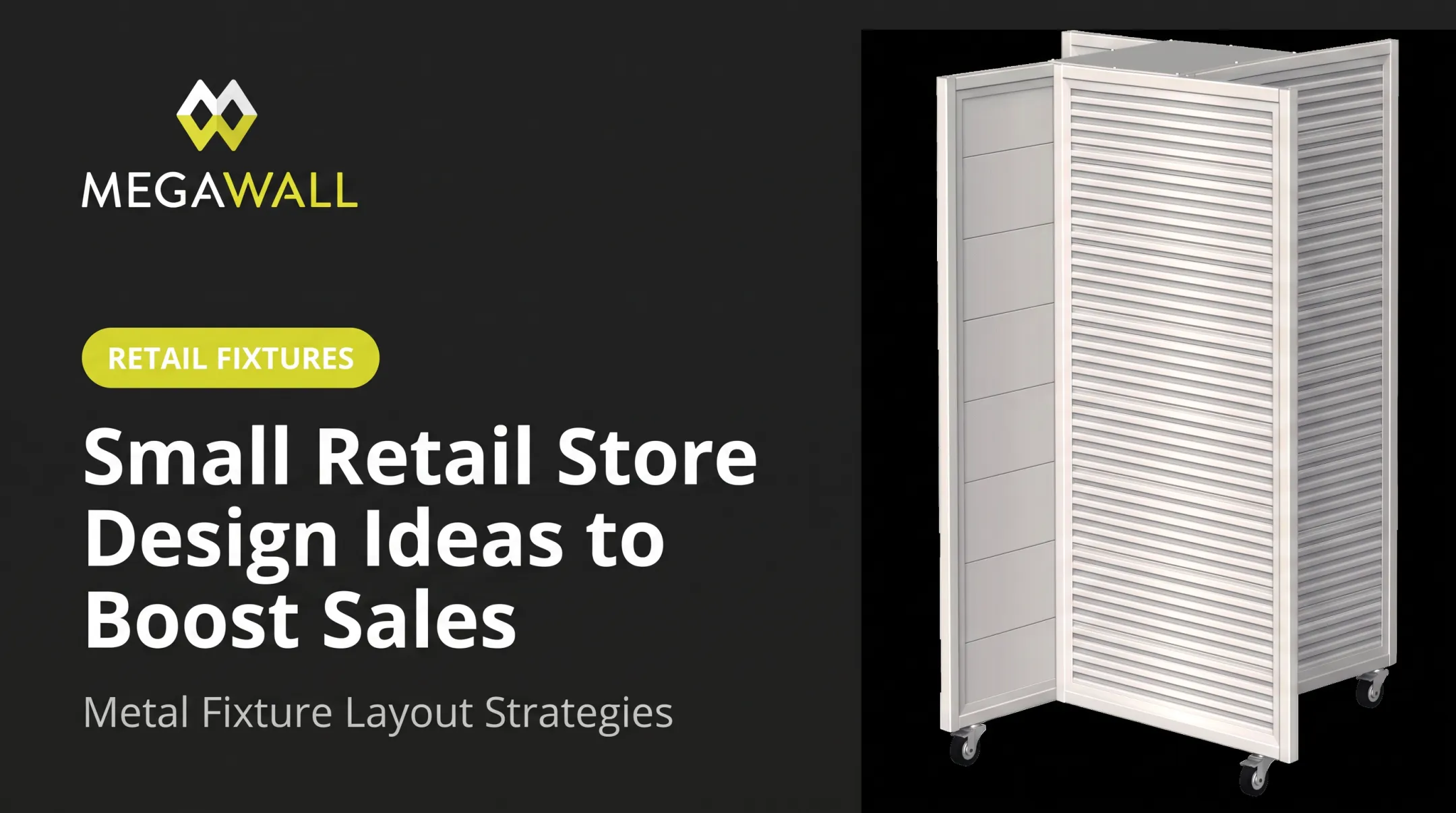
- Go vertical. Wall-mounted slatwall or shelving multiplies merchandising space without eating into floor area. Megawall's Pinwheel fixture offers four vertical display surfaces on casters, so you can reconfigure tight quarters without a full teardown.
- Combine storage and display. Under-counter drawers or slatwall with built-in storage keep small footprints from feeling cluttered.
- Keep the palette light. Pale colors and glass or mirrored surfaces visually expand a compact space, but test for glare on phone screens before committing.
- Retrofit instead of rebuild. If you're already using standard gondolas, Megawall's NuPanel system drops into 36-inch or 48-inch gondola frames without a full fixture replacement.

Frequently Asked Questions
What is the best layout for a retail store?
Most successful phone stores use a racetrack or grid layout to expose shoppers to more product before checkout. Keep walkways at least 36 inches wide and avoid dead-end aisles that push customers toward an early exit.
What is a good slogan for a mobile store?
A good slogan is short, memorable, and true to your brand personality. Tech-forward brands lean on innovation and speed; local shops often emphasize friendliness and connectivity.
How much does it cost to design a cell phone store?
Costs vary by store size, fixture material, and finish quality. Custom slatwall and shelving pricing depends on configuration, dimensions, and customization level. Budgeting for durable fixtures upfront typically reduces long-term replacement costs.
What materials are best for cell phone display cabinets?
Wood offers warmth at a lower price point, glass and acrylic add premium visibility, and steel or aluminum slatwall delivers the highest durability and weight capacity. Steel slatwall systems, for example, can hold over 50 pounds per linear foot.
How can I make a small phone store look bigger?
Use vertical wall displays instead of floor fixtures, stick to a light color palette, and add glass or mirrored surfaces to create visual depth. Modular, mobile fixtures also help you reconfigure space as needed.
How important is lighting in a mobile phone store?
Lighting directly affects mood, highlights featured devices, and can influence how long shoppers linger and what they pick up. Layered lighting (ambient, accent, and task) performs better than a single flat lighting scheme.