
Small and mid-size retailers often feel outgunned here. Big-box chains have visual merchandising teams and seasonal budgets that dwarf what an independent shop can spend. But great display design isn't about budget size. It's about understanding a few core principles and choosing fixtures that let you execute them well.
This guide covers the design fundamentals, the psychology behind where shoppers look and walk, creative display ideas you can try this quarter, and the fixture trends shaping 2026.
Key Takeaways
- Build every display around a focal point, visual balance, a clear story, and breathing room
- Store layout and shopper psychology dictate where displays actually perform
- Modular fixtures like slatwall refresh merchandising fast without renovation costs
- Rotate displays regularly to keep the shopping experience feeling new
Core Principles of Effective Retail Display Design
Focal Points and Composition
Every display needs a hero. That could be a single standout product, a bold sign, or a pop of contrasting color. Without one, the shopper's eye skips over the whole arrangement.
Balance matters just as much:
- Symmetrical arrangements feel formal and polished, suited to jewelry, cosmetics, or premium goods
- Asymmetrical arrangements feel energetic and casual, better for streetwear, outdoor gear, or seasonal impulse displays
- Clear visual hierarchy leads the eye from the hero item to supporting products without competing focal points

Storytelling Through Merchandising
Group complementary products instead of organizing by category alone. A camping display that pairs tents, lanterns, and cookware tells a story a shopper can picture themselves living. That context increases perceived value far more than isolated products on a shelf.
Color, Lighting, and the "Less Is More" Rule
Stick to one main color with two or three accents. Too many competing tones create visual noise.
Layer lighting in three ways:
- Ambient for overall visibility
- Accent to spotlight hero items
- Task lighting near fitting rooms or counters
Research on grocery environments found that store messiness can trigger contamination concerns for shoppers evaluating ingestible products (Journal of Retailing and Consumer Services, 2021). That reduced purchase intent even when nothing was wrong with the goods. The same signal applies outside groceries: a tidy, organized shelf reads as quality control, while an overcrowded one does the opposite.
Material choice matters too. MDF fixtures warp, chip, and delaminate under repeated handling. Steel and aluminum hold their shape and finish for years, which matters if you're resetting displays monthly.
Store Layout and Shopper Psychology
The Decompression Zone and the Power Wall
The first 5-15 feet inside your door is the decompression zone. Shoppers are still adjusting, checking phones, and getting their bearings.
Studies caution against leaving this zone empty. One field study found that adding merchandising elements near an entrance increased what customers purchased (Emerald/IJRDM). Use the space, but keep it low-pressure.
Most shoppers in North America drift right after entering. That wall becomes your power wall: prime real estate for your brand statement or featured merchandise.
Eye Level, Buy Level, and Speed Bumps
The old rule "eye level is buy level" isn't universal. An eye-tracking study found attention skews toward the shopper's right side as they move down an aisle, and middle-shelf placement does not automatically win every category (Journal of Marketing, 2021).
A separate in-store experiment found middle placement beat top and bottom shelves for one grocery product, but that result was specific to the category and store format. Practical takeaway: test placement for your own products rather than assuming one universal rule. Freestanding displays placed mid-aisle also act as speed bumps. They slow shoppers down and pull them into departments they'd otherwise walk past.
Choosing the Right Layout
Match the floor plan to how customers move and how much merchandise you carry:
| Layout | Best For |
|---|---|
| Grid | Supermarkets, drugstores, big-box stores with heavy SKU counts |
| Racetrack/Loop | Stores where browsing and touching product matters |
| Free-flow | Boutiques and smaller-format stores with limited merchandise |

Creative Retail Display Ideas to Try in Your Store
Window Displays and Focal Points
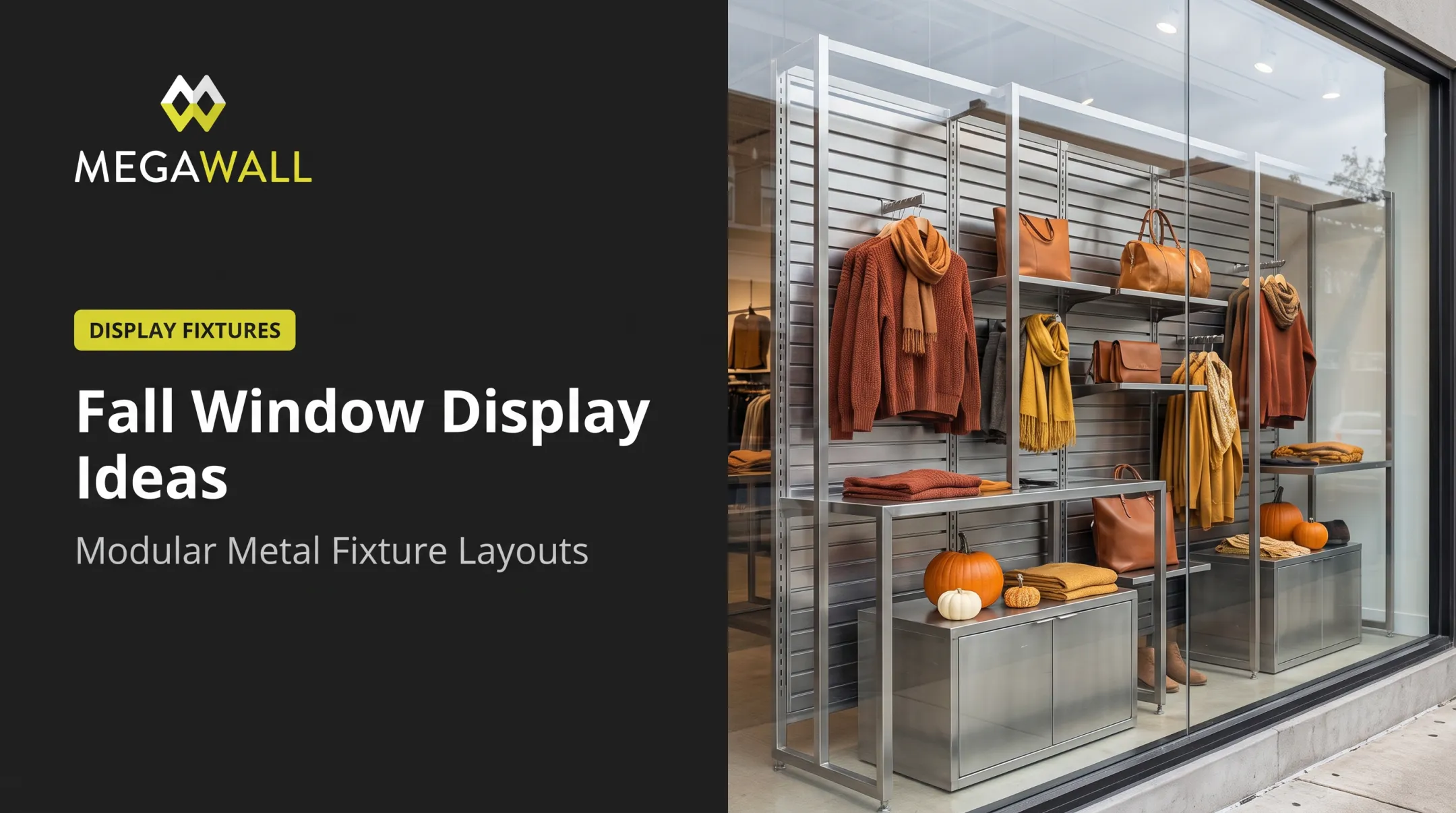
Build one theme per window with a triangular composition: tall item in back, medium in the middle, small in front. That layout directs the eye without extra signage.
Research combining a field study of over 1,800 consumers with an experiment found that more creative windows drew significantly more attention and store entries (Journal of Business Research, 2016). The lift was strongest among infrequent shoppers. Refresh windows seasonally, or monthly if foot traffic is high.
Tiered and Vertical Displays
Stacking merchandise at multiple heights does double duty: it maximizes limited wall footage and gives shoppers wayfinding cues as they scan a department from a distance.
Use vertical tiers to:
- Pull the eye up from floor level into full wall capacity
- Separate categories without adding freestanding fixtures
- Keep high-margin items at easy reach and sight lines
Thematic and Storytelling Backdrops
Build a changeable scene that frames a product zone. A workshop backdrop for tools or a trailhead scene for hiking boots tells shoppers where they are before they read a single tag.
Megawall's V-Wall and WaveWall systems support this kind of build directly. V-Wall embeds into drywall with concealed mounting and accepts acrylic or glass shelves for a floating look. WaveWall uses sculptural aluminum profiles for a branded, contemporary backdrop that stays functional slatwall underneath.

Interactive and Immersive Displays
QR codes and sampling stations increase dwell time. A 2025 Chain Store Age report on Uniqode data found 74% of shoppers were likely to scan a QR code during Black Friday/Cyber Monday shopping, with nearly half of Millennial and Gen Z respondents "very likely" to scan (Chain Store Age, 2025).
Scannability and broken links were the top complaints in that same survey, so test every code on the floor before launch.
Modular and Flexible Fixtures
Interactive moments only pay off if the fixture behind them can change with the calendar. Reconfigurable slatwall lets you swap shelves, hooks, and brackets in minutes instead of rebuilding for every promotion.
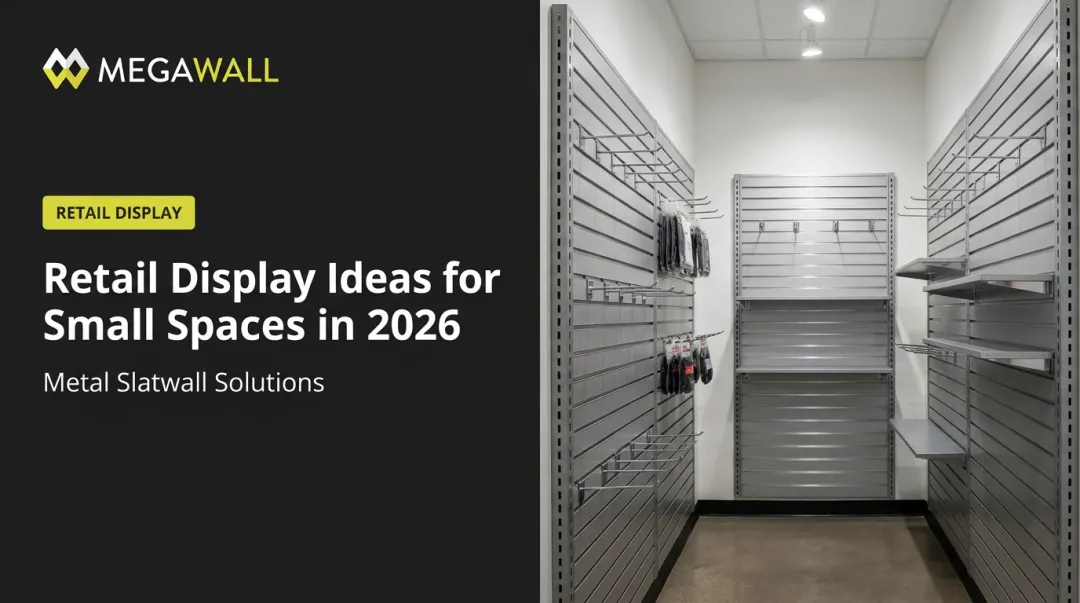
Megawall's steel and aluminum slatwall systems use concealed fasteners that interlock across sections up to 8 feet long. The wall reads as one seamless surface instead of a row of bolted panels. Accessories include:
- High-performance shelving (6" high)
- Medium-duty shelving (3" high)
- Shelf brackets in 12", 14", 16", and 18" lengths
- Peg hooks for vertical merchandising

Swap a shelf bracket for a hook row, and a hardware display becomes a holiday gift-wrap station in the same afternoon.
Types of Retail Displays and Choosing the Right Fixtures
Fixture choice shapes how shoppers move, what they notice, and how much you can merchandise per square foot. Most stores draw from these common display types:
- Slatwall systems: versatile wall systems that accept shelves, hooks, and bins
- Gondola shelving: the backbone of grid-layout stores
- Pegboards: budget-friendly hanging displays
- Freestanding fixtures: H-Frame, L-Frame, T-Frame, and Pinwheel styles for mid-floor merchandising
- Mannequins and countertop displays: apparel and impulse items
- Endcaps: high-visibility aisle-end placement
When evaluating commercial-grade fixtures, look for:
- Weight capacity: can it hold your heaviest merchandise without sagging?
- Ease of cleaning: high-traffic stores need surfaces that wipe down fast
- Fire code compliance: non-negotiable for any permanent fixture
- Appearance longevity: does the finish hold up after years of resets?
Those criteria point quickly to material. Steel slatwall built for commercial use, like Megawall's system rated over 50 pounds per linear foot, holds up better under constant handling than MDF alternatives. That durability matters most for hardware, sporting goods, and general merchandise retailers moving heavy product day after day.
For stores with existing gondola shelving, a retrofit panel system can upgrade the look and function without a full teardown. Megawall's NuPanel drops into 36-inch or 48-inch gondolas using anodized aluminum panels in 12, 24, and 36-inch heights. The gondola's slotted uprights stay accessible for future adjustments.
Retail Display Trends to Watch for 2026
Three fixture shifts are shaping how stores plan displays into 2026.
Sustainability is becoming table stakes. RILA's 2024 Retailer Environmental Roundtable brought together nearly 90 retail representatives and put environmental performance on the standing agenda (RILA, 2024). Aluminum slatwall with over 50% recycled content and LEED certification matches that expectation.
Physical stores still carry the sale—with digital layered on. MIT Sloan projected physical locations would handle the vast majority of North American Q4 2024 retail sales, framing the future as hybrid (MIT Sloan, 2024). Expect more screens and QR-driven storytelling on physical fixtures, not in place of them.
Modular setups cut seasonal reset costs. Retailers want fixtures that pivot fast without new capital spend. That demand is pushing reconfigurable slatwall and retrofit panel systems.
Frequently Asked Questions
How much do retail displays cost?
Costs vary widely based on material, size, and customization — from budget pegboard setups to premium custom slatwall walls. Investing in durable steel or aluminum systems typically reduces long-term replacement costs compared to MDF.
What is the best layout for a retail store?
Grid layouts suit supermarkets and big-box stores with heavy SKU counts. Racetrack/loop layouts work for browsing-heavy retail, while free-flow layouts fit boutiques with smaller assortments.
What are the different types of displays used in retail stores?
Common types include slatwall systems, gondola shelving, pegboards, freestanding units (H-Frame, L-Frame, T-Frame, Pinwheel), and countertop displays. Each suits different merchandise types and floor space.
What are the key elements of visual merchandising?
Key elements include color, lighting, space, focal point, texture, product presentation, and signage. Used together, they set the mood and pull shopper attention to the right products.
What are the key retail display trends for 2026?
Sustainability-driven materials, digital integration like QR codes and screens, and modular, reconfigurable fixtures top the list. Retailers want displays that adapt fast without major capital investment.