
Rent's up. Labor's up. Competition from every direction is up. That means retailers can't just hope for foot traffic anymore — they need to squeeze more revenue out of every square foot and every customer interaction.
This guide covers 10 proven strategies across store design, customer experience, technology, loyalty, and marketing. Some are quick wins. Others are longer-term investments. All of them work together.
Key Takeaways
- Layout and visibility tweaks lift basket size and conversion rates
- In-store experience upgrades paired with data-driven inventory decisions compound sales gains
- Loyalty programs and authentic local branding convert one-time buyers into repeat customers
- Connected online-offline experiences consistently outperform siloed retail channels
Transform Your Store Layout and Visual Merchandising
Way 1: Optimize Product Placement and Store Flow
Where you put products matters. Placing complementary items near each other (think grilling tools next to charcoal) encourages discovery and bigger baskets. Staple items pushed toward the back force customers to walk past everything else first.
A 2022 modeling study found that altering aisle configuration increased distance traveled by up to 50% and store area covered by 67%. A related field study tied a 10% increase in path length to a 16.1% jump in unplanned spending. Longer paths mean more product exposure and more impulse buys.
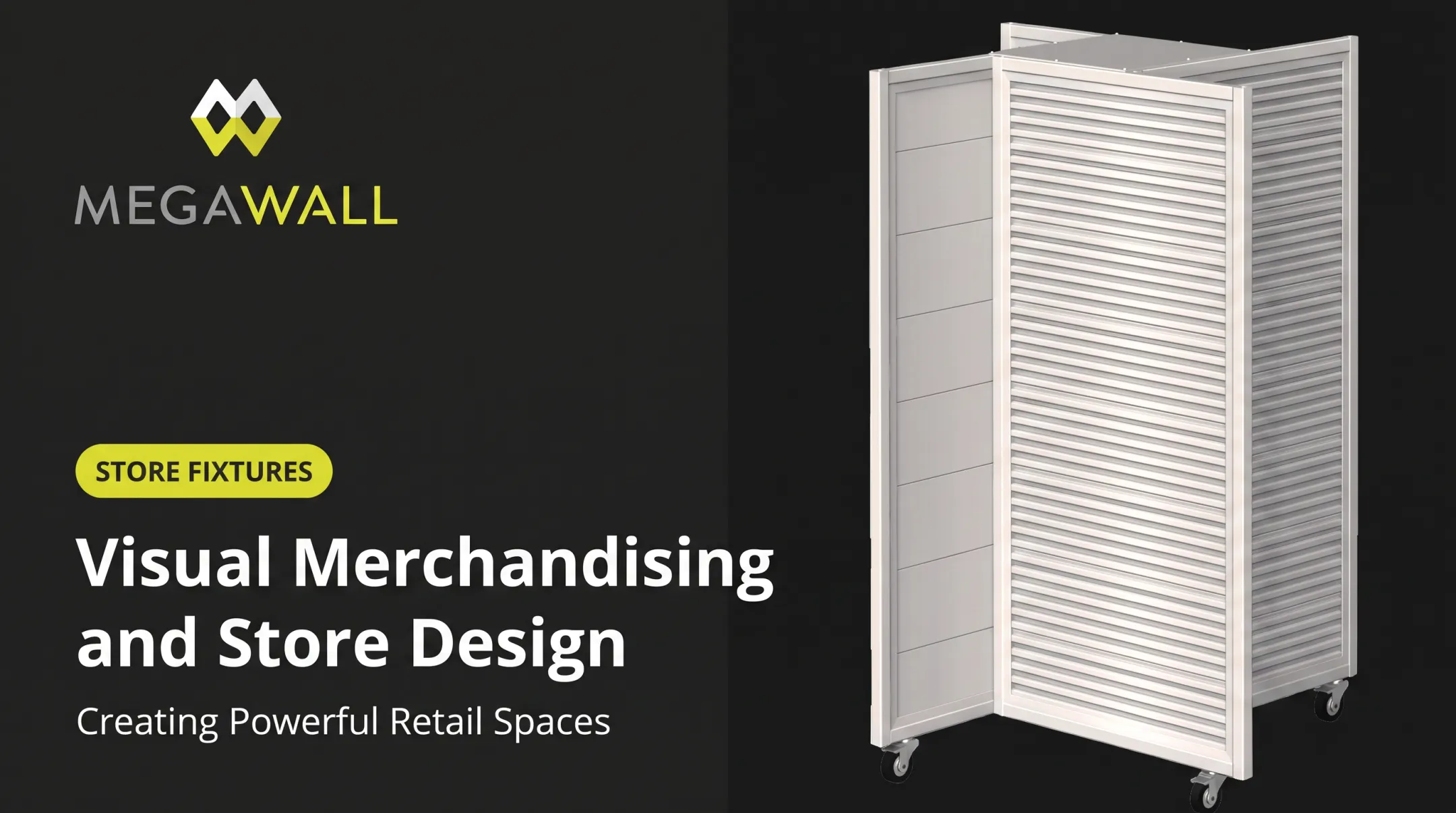
Modular fixtures make this kind of flow planning practical instead of theoretical. Megawall's H-Frame, L-Frame, T-Frame, and Pinwheel display systems are built for exactly this:
- H-Frame: a wheeled, four-sided fixture that's easy to reposition as your layout evolves
- L-Frame: creates a focal point that pulls customer attention toward featured merchandise
- T-Frame: a stable two-sided unit combining wall-unit strength with horizontal slatwall for hooks and shelves
- Pinwheel: four vertical display surfaces that maximize merchandising in tight floor space

Way 2: Invest in Durable, Attractive Display Fixtures
Cutting corners on fixtures costs you sales. Flimsy MDF panels warp, sag, and look tired within a season, which makes even great merchandise look cheap.
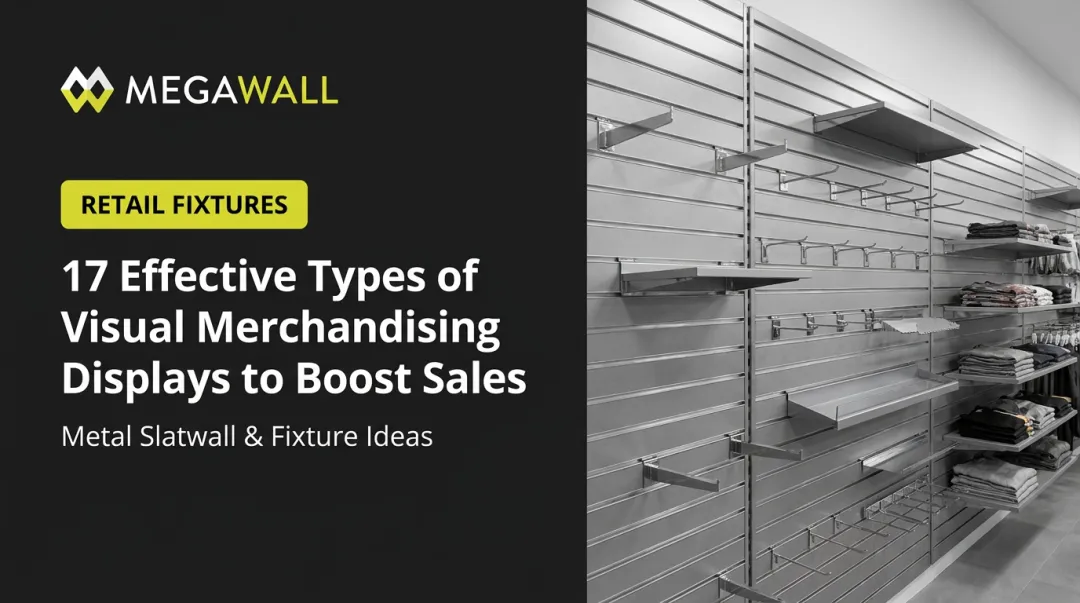
Steel and aluminum slatwall systems hold up where MDF fails. Megawall's slatwall holds over 50 pounds per linear foot, so retailers can merchandise heavier product, shelves, and brackets without worrying about failure. Hidden-fastener construction eliminates visible screws, creating seamless display sections up to 8 feet long. That cleaner look reads as more premium to shoppers browsing the aisle.

As Menda Wright, Co-Owner of Creative Studio Promotions, put it about her Megawall installation: it's "a focal point for all who enter" and creates "a better impression — every time."
Beyond appearance, these systems are:
- Easy to clean and resistant to warping or delamination
- Fire-code compliant for commercial retail spaces
- Built with over 50% recycled content in aluminum versions (LEED-certified)
Lower maintenance means fewer replacement cycles, and that cost savings compounds over years, not just months.
Way 3: Use the Checkout Counter for Impulse Sales
The checkout line is prime real estate. U.S. grocery checkout sales hit $7.8 billion in 2024, up 4.3% year over year, and checkout consistently outranks nearly every other section of the store in profitability. Confections and snacks alone made up nearly half of that.
Merchandising at self-checkout stations made an even bigger difference: stores with self-checkout merchandising saw 51% conversion versus 29% without it, and 121% higher total dollars in that zone. Candy sales jumped 139%, gum and mints 181%.

Low-price, high-margin items near any checkout point, staffed or self-service, consistently drive last-minute add-ons.
Elevate the In-Store Customer Experience
Way 4: Create an Inviting Atmosphere
Shoppers still choose physical stores because they enjoy them. A 2024 Ryder survey found 61% of shoppers shopped in-store specifically for the experience, up 21% from the prior study. That's not a small shift.
Ambiance drives this. A controlled supermarket study found that a congruent scent at high intensity increased time spent in-store, store evaluations, and sales.
Lighting, music, and clean, organized displays work the same way. They lower resistance to lingering, and lingering leads to buying.
Fixtures play a quiet role here too. Fresh, well-finished slatwall and shelving (versus scuffed, sagging MDF) contribute directly to that "well-cared-for" feeling shoppers respond to.
Way 5: Empower Staff with Product Knowledge and Customer Context
Associates who know the product — and know the customer standing in front of them — close more sales. Someone who can say "this pairs well with what you bought last month" isn't guessing. They're recommending.
Build this through:
- Regular product training sessions, not just onboarding
- Role-playing exercises that sharpen upselling and objection handling
- Access to basic purchase history at the point of interaction
Only 9% of shoppers globally report being fully content with today's in-store experience, according to IBM and NRF's 2024 research. Knowledgeable staff close that gap faster than almost any technology investment.
Way 6: Speed Up Checkout and Offer Flexible Payment Options
Long lines kill sales before they happen. A 2024 Waitwhile survey found 80% of consumers avoid businesses when they see a line forming, and nearly 40% simply walk to a competitor or abandon the purchase.
Self-checkout adoption reflects this pressure. 65.7% of shoppers used self-checkout at least half the time for grocery and household purchases in the prior six months. Payment flexibility matters too: mobile wallet use in-store rose to 17% of transactions in 2025.
Fewer friction points at the register mean fewer abandoned carts.
Harness Technology and Data for Smarter Selling
Inventory mistakes are expensive. Globally, out-of-stock situations cost retailers $1.2 trillion and overstock costs another $554 billion, according to IHL Group's 2024 inventory distortion report. POS and inventory software that forecasts demand from sales trends helps avoid both extremes.

Real-time inventory visibility also unlocks options shoppers increasingly expect. In a 2024 back-to-school survey, 43% of shoppers planned to use buy-online-pickup-in-store, up from 34% the year before. Even so, 74% still planned to shop in-store overall.
That same data does more than prevent stockouts:
- Reveals which SKUs are actually driving revenue, not just moving units
- Surfaces customer preference patterns for targeted promotions
- Informs smarter reordering before a bestseller runs dry
- Supports seasonal transitions so retailers can swap merchandise on flexible fixtures instead of rebuilding displays from scratch
Build Loyalty and Drive Repeat Business
Repeat customers cost less to keep than new ones cost to acquire. McKinsey found that top-performing loyalty programs can lift annual revenue from redeeming members by 15% to 25%, driven by more frequent visits and larger baskets.
Active loyalty members spent 10% more than inactive enrollees; redeemers spent 25% more. Capture that lift with a few practical moves:
- Launch tiered loyalty rewards — exclusive discounts and early product access for repeat shoppers
- Create a referral program — turn happy customers into advocates with a simple incentive
- Surface reviews prominently — shoppers read an average of 4.5 reviews before visiting, and 89% say branch-level reviews affect where they shop
Paid tiers amplify the same strategy. McKinsey found paid-loyalty members were 60% more likely to increase spending after subscribing, versus 30% for free-tier members.

Expand Reach Through Marketing and Community
An authentic local story beats a polished corporate one. Shoppers want to feel like they're supporting a business that's actually part of their neighborhood, not a faceless chain.
Local digital presence reinforces that story. In a 2024 Rio SEO survey, 90% of consumers said they use local search daily, and 99% rely on Google platforms for local discovery. Address, hours, and contact info topped the most-searched details, so a well-maintained Google Business Profile is no longer optional.
Practical steps that build local reach:
- Keep your Google Business Profile updated with hours, photos, and accurate contact details
- Post seasonal promotions and events on social media to build local awareness
- Host in-store events tied to community moments such as back-to-school, local sports seasons, and holidays
- Sponsor or participate in local causes that align with your customer base
None of this replaces product or price. It builds the emotional connection that turns a one-time visitor into a regular.
Frequently Asked Questions
How can I increase sales quickly?
Focus on quick wins: run a flash promotion, add impulse items near checkout, and improve product visibility on your best sellers. These changes take days, not months, to implement.
What are some effective sales strategies for retail stores?
Layout optimization, loyalty programs, and ongoing staff training consistently rank among the top strategies. Combine at least two for compounding results.
How can I increase my Units Per Transaction (UPT) in retail?
Bundle complementary products, place impulse items near checkout, and train staff on cross-selling techniques. Small suggestions at the point of sale add up fast.
How do I improve sales skills in retail?
Invest in ongoing product training, not just onboarding. Role-playing exercises and mentorship from top performers sharpen real-world selling skills.
What are the 5 sales techniques?
Upselling, cross-selling, social proof (reviews), urgency or scarcity messaging, and personalization based on customer history are the core five.
What are 5 sales promotion techniques?
Flash sales, loyalty rewards, product bundling, referral discounts, and seasonal promotions tied to community events all drive short-term lift.