
This guide breaks down what POP displays are, the five common formats, realistic cost considerations, mistakes that quietly kill ROI, and how to pick a system that won't need replacing every season. Retailers and store planners will walk away with a practical framework for smarter merchandising decisions.
Key Takeaways
- 82% of purchase decisions happen inside the store, making POP placement a real revenue lever
- Costs vary widely by material: cardboard costs less upfront, metal systems cost more but last longer
- Location matters more than volume: front-end displays drive category purchases, shelf displays drive brand choice
- Durability, fire-code compliance, and clean installation separate professional systems from disposable ones
What Does POP Stand For and What Is a POP Display?
POP stands for Point of Purchase — the physical spot where a shopper decides whether to buy, well before they reach the register. Think of a slatwall endcap loaded with seasonal hardware, or a modular floor unit showcasing sporting goods near the entrance. These displays intercept attention while a customer is still browsing, not paying.
POP vs. POS: what's the difference?
People use these terms interchangeably, but they're not the same thing:
- POP (Point of Purchase): Anywhere in the store that influences the buying decision — aisles, endcaps, entrances, center displays
- POS (Point of Sale): The specific checkout zone where the transaction happens
POP is broader and happens earlier in the shopper's journey. POS is narrower and transactional, as Repsly explains.
That broader POP category covers a wide range of fixtures—from a $58 cardboard floor unit to a patented aluminum slatwall system rated for 50+ pounds per linear foot.
The Five Common Types of POP Displays
Retailers generally work with five practical formats. The right choice depends on the product, the traffic pattern, and how long the display needs to last.
Floor and Free-Standing Displays
These self-supporting units sit in high-traffic zones: entrances, aisle ends, and cross-aisles.
Megawall's modular floor fixtures are built in steel or aluminum slatwall, often on wheels or casters for seasonal resets:
- H-Frame
- L-Frame
- T-Frame
- Pinwheel

Countertop Displays
Compact units placed near registers or service counters for small, impulse-buy items. Shoppers are standing still here, so proximity does the selling.
Wall-Mounted / Slatwall Displays
This format maximizes vertical space without eating into the floor plan.
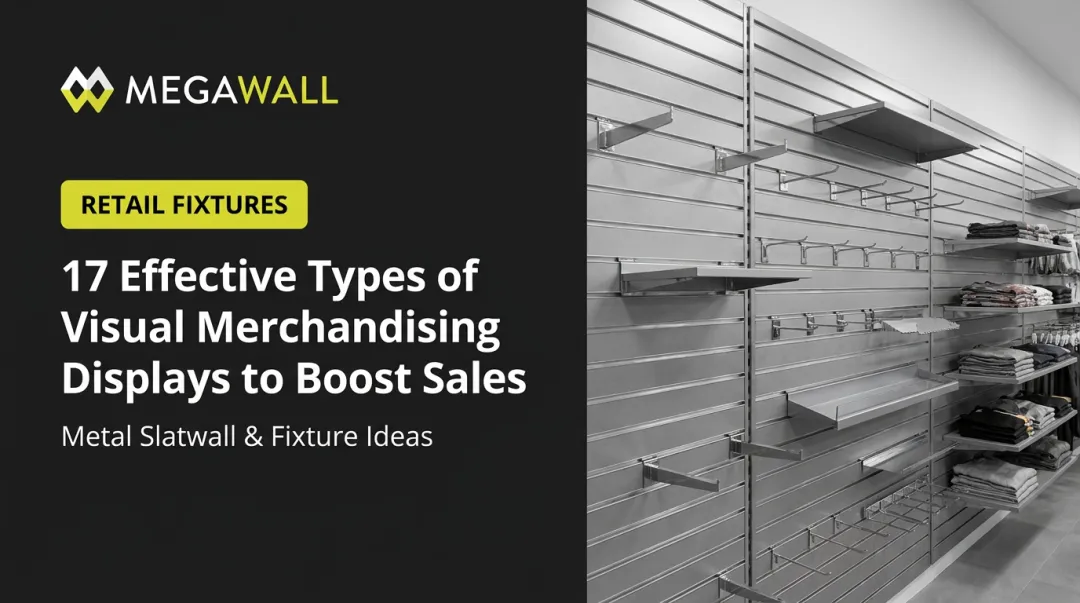
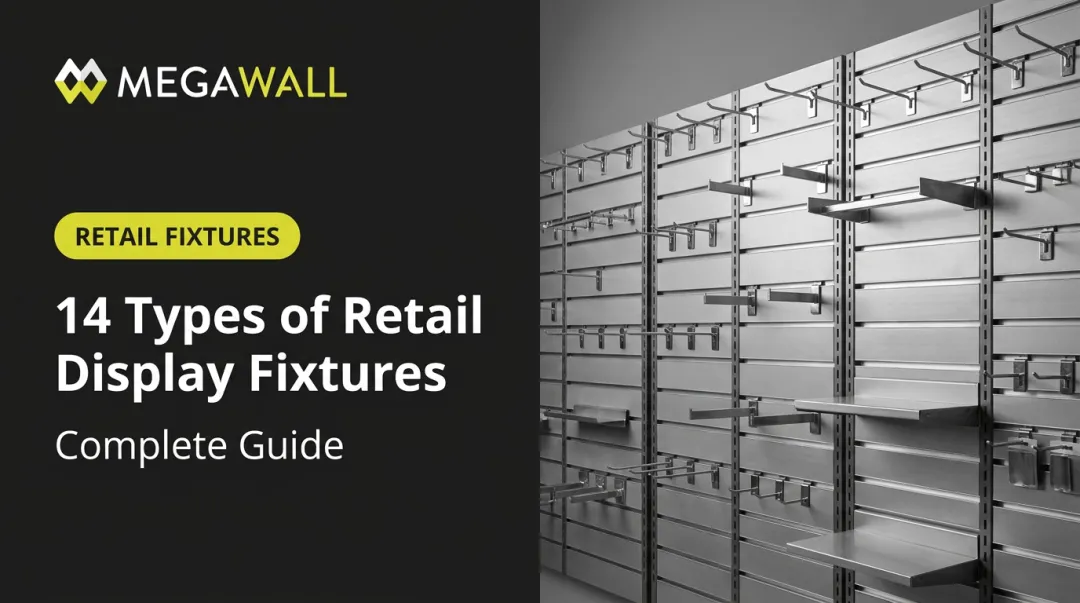
Megawall's steel slatwall uses heavy-gauge, formed-and-welded panels with 3-inch-on-center slat spacing, supporting over 50 pounds per linear foot in standard 32-square-foot sections.
Aluminum slatwall is built for repeated seasonal use, not a single campaign. It comes in five spacing options with flat-back, hidden-fastener, and double-sided styles:
- 1"
- 1⅜"
- 1½"
- 2"
- 3"

Endcap Displays
Positioned at the open end of a gondola aisle, endcaps intercept shoppers before they hit the main planogram.
A 2022 Journal of Retailing study of US grocery scanner data found front-end displays had the strongest effect on category purchases, while shelf displays drove brand choice more. Match the location to the goal: launch a category, or push a specific brand within one.
Megawall's NuPanel system retrofits standard gondolas and replaces worn endcap pegboards with slatwall hardware.
Window and Hanging Displays
Window units build storefront visibility and brand messaging before a shopper walks in. Hanging displays carry that job inside the store, supporting wayfinding and category signage above the aisle.
How Much Do POP Displays Cost?
Pricing depends heavily on material, and there's no universal industry price sheet. Real-world listings still give a useful sense of the range.
| Material | Example Pricing | Notes |
|---|---|---|
| Cardboard/corrugated | $58–$65 per unit | Cheap, disposable, short campaign use |
| Particle board/MDF slatwall | ~$272–$298 per panel | Mid-range, but prone to warping over time |
| Aluminum slatwall inserts | $275–$285 per 8-ft pack | Higher upfront, built for reuse |
| What actually drives the cost: |
- Customization (finish, color, dimensions)
- Order quantity and volume pricing
- Installation and hardware needs
- Material grade (cardboard vs. MDF vs. steel/aluminum) Cardboard wins on sticker price, but it's built for weeks, not years. Shopify's merchandising guidance separates temporary displays (days to weeks) from semi-permanent (three months to a year) and permanent fixtures. Metal slatwall systems like Megawall's fall into that permanent category: higher cost per unit, but you're not reordering every quarter. Calculate cost-per-use over the display's working life, not just the invoice total.

Common Mistakes Retailers Make with POP Displays
Even a well-placed display fails if these basics get ignored:
- Overcrowding the display: Too many SKUs create visual clutter and reduce conversion. There's no universal "max product count," but a focused assortment consistently outperforms a jammed one.
- Using flimsy materials: MDF warps with humidity, chips at the edges, and often fails fire-code requirements—driving frequent replacements and higher long-term cost.
- Ignoring traffic flow: A display facing the wrong direction, blocking sightlines, or sitting in a dead zone won't get noticed no matter how good the product is.
- Skipping seasonal rotation planning: A stale display signals a store that isn't paying attention. Rotate with intent and track results by location and time period.
Choosing the Right POP Display System for Your Store
Picking a system comes down to durability, compliance, and who's actually building it.
Durability and safety come first. Megawall's aluminum slatwall contains over 50% recycled content and is LEED-certified. Both steel and aluminum lines meet fire codes.
Fire compliance still depends on your local occupancy classification, so confirm requirements with your authority having jurisdiction before installing anything at scale, per NFPA occupancy guidance.
Hidden fastener design matters more than it sounds. No visible screws, no exposed hardware, just interlocking panels that create a clean, professional look. Megawall's hidden-fastener styles (like the AHF-1-96 and AHF-15-96 configurations) are built for a seamless finish across sections.
Evaluate the manufacturer, not just the product. Ask about:
- In-house design and engineering support
- Full fabrication capability (laser cutting, welding, forming)
- Custom sizing and finish options
- Sample availability before you commit to a large order
Megawall runs a 45,000-square-foot fabrication facility in Comstock Park, Michigan. The shop handles everything from steel shelving to custom slatwall finishes under one roof, a setup worth comparing against any supplier you're vetting for a long-term wall display program.

Where to Buy Retail Display Cases and POP Fixtures
Big-box wholesalers work fine for standard, off-the-shelf setups — basic panels, standard hooks, quick turnaround. But for custom sizing, higher load capacity, or a rollout across multiple store locations, working directly with a manufacturer makes more sense.
Megawall builds custom aluminum and steel slatwall for multi-store rollouts and higher load needs:
- Custom lengths, colors, and finishes
- Shipping and packaging set up for ready assembly
- F.O.B. shipments unless other terms are arranged
For bulk orders or custom specs, request a quote and samples directly instead of guessing from a catalog price.
Frequently Asked Questions
What is the difference between a POP display and a POS display?
POP (Point of Purchase) covers any spot in the store that influences a buying decision, like aisles or endcaps. POS (Point of Sale) is specifically the checkout transaction zone.
What is an example of a POP display?
Common examples include a slatwall endcap stocked with seasonal hardware and a countertop unit near the register holding small impulse items.
What are the five types of displays?
Retailers most often use these five formats:
- Floor / free-standing
- Countertop
- Wall-mounted / slatwall
- Endcap
- Window / hanging
How much do POP displays cost?
Cardboard units typically cost about $58–$65 each. Metal slatwall and aluminum systems cost more upfront, but they hold heavier loads and last through far more reset cycles.
What are the common mistakes with POP displays?
Overcrowding products, choosing flimsy materials like MDF that warp or crack, and blocking natural traffic paths are the most common misses—and each one cuts impulse sales.
Where can I buy retail display cases?
Big-box wholesalers cover basic, standard setups. For custom sizing and long-term metal systems, specialized manufacturers like Megawall handle bulk orders and custom fabrication directly.