
A line of goods display is a merchandising technique that groups an entire product line (colors, sizes, styles) together in one spot, instead of scattering SKUs across a store. It boosts visibility, simplifies comparison shopping, and opens the door to cross-selling.
This article covers the types of line of goods displays, best practices for building one, the benefits retailers see, and how to choose fixtures that hold up under real store traffic.
Key Takeaways
- Grouping related products together simplifies shopper decisions and lifts basket size
- Organized, visible, code-compliant spacing speeds decisions and keeps aisles safe
- Strong fixture design keeps line of goods displays intact and protects long-term ROI
- Slatwall systems offer the flexibility most retailers need to execute this strategy at scale
What Is a Line of Goods Display?
A line of goods display presents a full product line or category together, rather than splitting SKUs across unrelated shelves. Think of a full run of work gloves — small to XXL, in every colorway — mounted on one wall section instead of buried in three different aisles.
It differs from other common merchandising formats:
- End caps — high-visibility promotional spots at the end of an aisle, often temporary
- Off-shelf displays — standalone units like point-of-purchase cardboard displays, separate from the regular shelving
A line of goods display is the opposite approach: a dedicated, ongoing presentation of an entire product family on the regular fixture run.
Retailers lean on this approach for categories where shoppers naturally compare options: apparel, hardware, seasonal goods, and sporting equipment.
Visual merchandising principles reinforce it. Color-blocking groups inventory by hue to create eye-catching patches, while vertical presentation moves the eye upward and separates one merchandise classification from the next. Both techniques make a full line easier to scan at a glance.

Types of Line of Goods Displays and Fixtures
Wall-Mounted Slatwall Systems
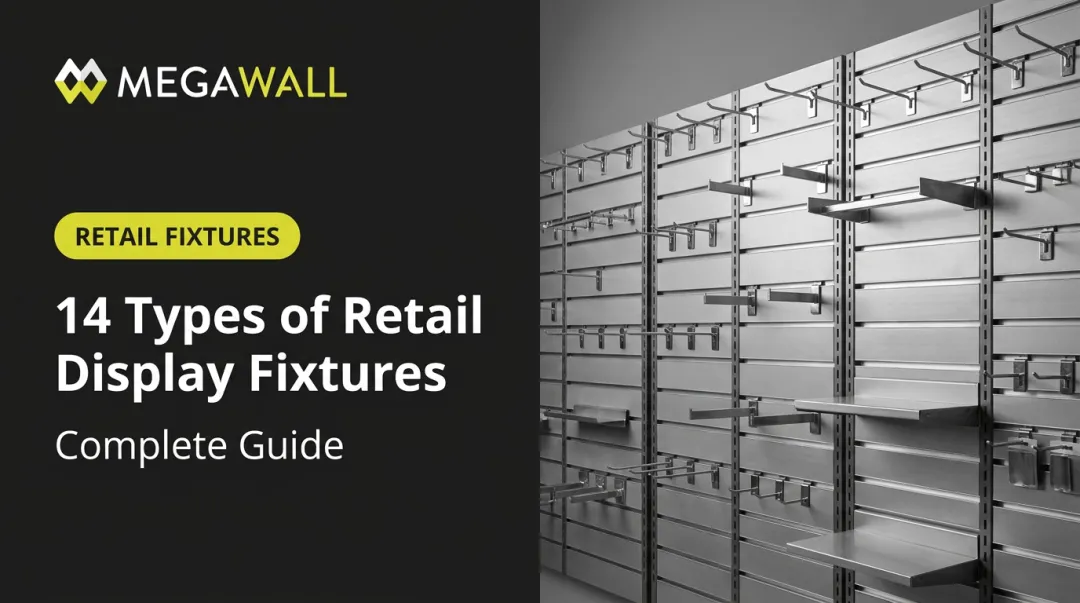
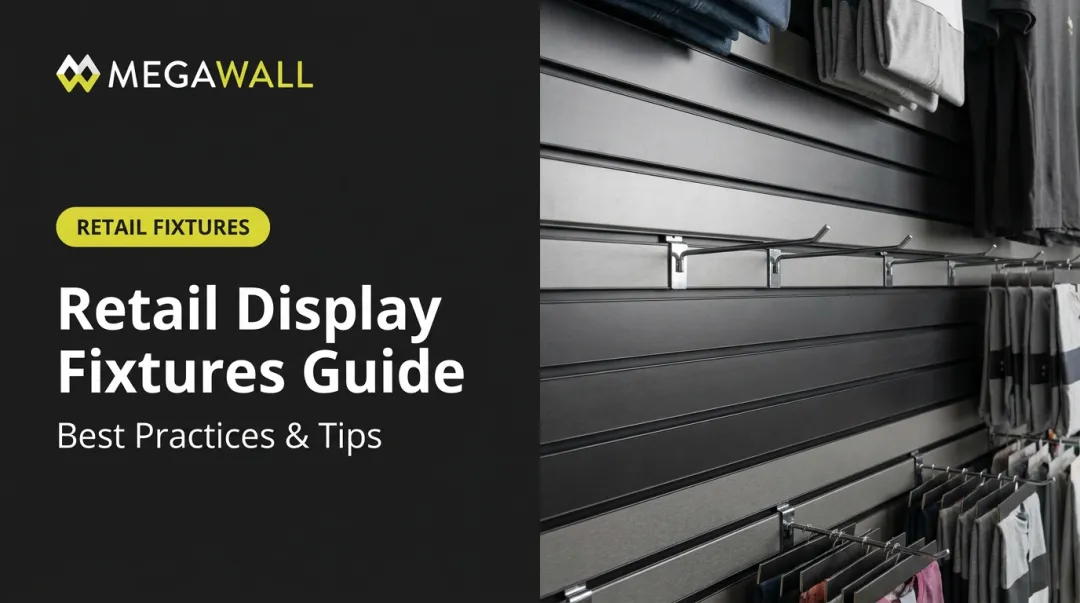
Slatwall panels are the backbone of most line of goods setups. Hooks, shelves, and brackets slot into the same panel, so a retailer can present an entire product line (different sizes, colors, or accessories) on one continuous wall surface.
Megawall's aluminum systems, for example, offer spacing options from 1 inch to 3 inches on center, giving retailers room to fine-tune density based on product size.
Gondola and Shelving Displays
Gondola shelving groups product lines by category with adjustable shelf heights. Retailers who already own gondola fixtures don't need to replace them to modernize. Retrofit panels can drop into existing 36-inch or 48-inch gondola structures, converting flat shelving into flexible slatwall-style surfaces without a full teardown.
Modular and Freestanding Fixtures
Spinner racks and modular units fit large SKU counts of a single line into limited floor space, useful for anything from decals to small hardware. Freestanding fixtures also work well for seasonal or promotional line of goods setups that need to move around the store. Common configurations include:
- H-Frame: four display sides, wheeled for high-capacity product lines
- L-Frame: a tall focal point that draws traffic and encourages impulse buys
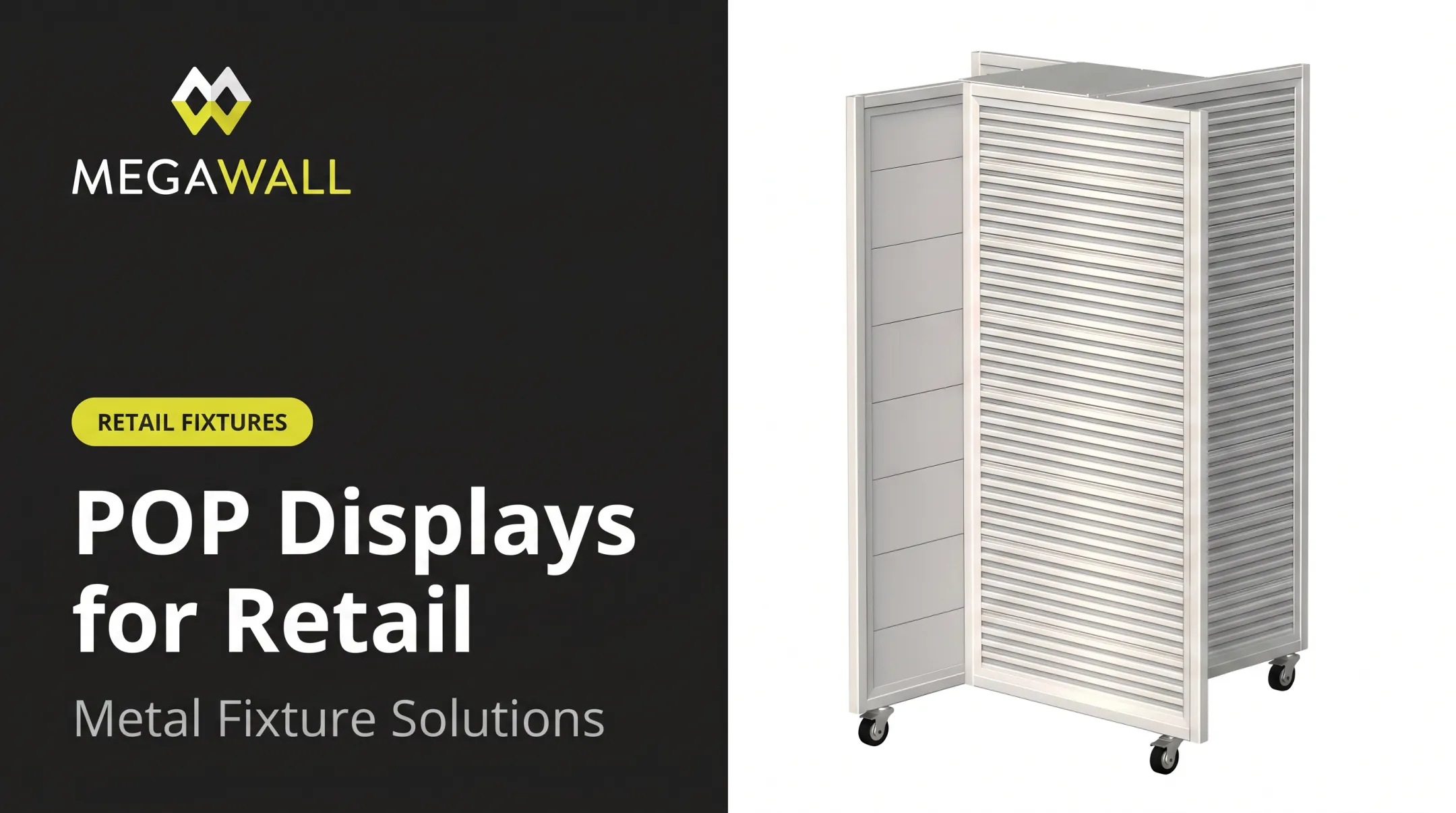
- T-Frame: two-sided, with horizontal slatwall on both faces
- Pinwheel: four vertical surfaces, lightweight and mobile, built for tight quarters

Why Physical Placement Matters
Display location has a measurable effect on purchase behavior. A 2022 study published in the Journal of Retailing analyzed grocery scanner data and found front endcaps drove the strongest category-purchase effect, while regular shelf placement had the largest influence on brand choice. For line of goods planning, where you put the full line matters as much as how you organize it.
Best Practices for Merchandising a Line of Goods Display
Group logically. Arrange by color, size, or style so shoppers can compare variations without hunting. Vertical color-blocking or striping techniques make a wall of product easier to scan in seconds rather than minutes.
Don't overcrowd the fixture. Research on assortment size shows larger selections can boost purchase likelihood when shoppers are still deciding whether to buy. Too many options during the which one stage tends to cause decision fatigue and regret, according to research published in the International Review of Retail, Distribution and Consumer Research.
There's no universal SKU cap, but the principle holds: give shoppers room to compare, not a wall of clutter.
Add context with signage. A header graphic or short callout communicating the line's story helps shoppers self-select faster.
Plan for restocking. Line of goods displays lose their impact fast if half the sizes are sold out. Build a rotation schedule tied to inventory turns and seasonal shifts.
Check the weight math. A fully stocked line, especially hardware or sporting goods, puts real load on a fixture. Confirm the system is rated for the products you're hanging, not just the empty display. Steel slatwall rated for 50+ lbs per linear foot gives dense line presentations the capacity they need without sagging or failure.

Benefits of an Effective Line of Goods Display
Organized, grouped merchandising pays off in a few concrete ways:
- Cross-selling gets easier: shoppers see the full range in one place instead of piecing it together across the store
- Decision fatigue drops: less searching means faster decisions and higher conversion
- Seasonal transitions get smoother: swapping in a new line is simpler when the fixture already supports modular changes
- Inventory management improves: a defined space for a full line makes gaps and overstock easy to spot
Research comes with a caveat: organization's effect on sales is conditional, not universal. One study on shelf displays found disorganization actually hurt purchase likelihood for juice but helped it for fabric softener, depending on brand familiarity (WashU research profile).
That finding does not undermine organized line of goods displays. It means the strategy works best when matched to your category. Apparel, hardware, and sporting goods, where shoppers actively compare sizes and variants, are where organization tends to pay off most.
Choosing the Right Fixtures for Your Line of Goods Display
A line of goods display is only as good as the fixture holding it up. Check these factors before you commit:
- Load capacity — holds a fully stocked line without bowing or sagging
- Clean face — no exposed screws or hardware breaking up the run
- Sustainability — recycled content and LEED credentials when required
- Fire code and egress — fixture ratings plus clear aisle access
- Design support — help adapting layouts to odd spaces or product mixes Load capacity. Fixtures need to support the full weight of a stocked product line without bowing or sagging. Megawall's steel and aluminum slatwall systems are both rated at over 50 pounds per linear foot. Steel uses heavy-gauge, formed and welded construction with 3-inch slat spacing. Aluminum offers spacing from 1 inch to 3 inches on center for finer configuration control. Appearance. Exposed screws and mounting hardware make even a well-organized line look cluttered. Megawall's concealed fastener slatwall, patented since the late 1980s as the first wall display system with hidden fasteners, keeps the face uninterrupted across sections up to 8 feet long. Aluminum panels interlock for a consistent, continuous look across longer runs. Sustainability. Megawall's aluminum slatwall contains over 50% recycled content and is LEED-certified, a useful fit for eco-conscious store build-outs. Fire code and safety. Both Megawall steel and aluminum slatwall systems meet fire codes, a baseline requirement for commercial fixture installs. Plan egress separately. The 2021 International Building Code requires clear aisle access around merchandise pads, with minimum accessway widths that vary by occupancy and configuration. Design support. In-house design and engineering support makes it easier to adapt a line of goods layout to an odd-shaped space or unusual product mix, instead of forcing the store into a stock configuration.

Frequently Asked Questions
What is a POS display?
A POS (point-of-sale) display is a merchandising fixture placed near checkout, designed to capture impulse purchases at the final stage of the shopping journey. It's typically small-format and stocked with low-consideration items.
What is the best way to display merchandise?
Group products by category or line, use clear signage, and maintain organized, uncluttered spacing. Choose fixtures durable enough to handle the actual weight of your product mix and suited to your store's layout.
How is a line of goods display different from an end cap display?
A line of goods display presents an entire product line together on an ongoing basis, while an end cap is a single high-visibility promotional placement at the end of an aisle, often temporary. Both drive attention, but they serve different merchandising goals.
What fixture types work best for a line of goods display?
Slatwall systems, gondola shelving, and modular spinner or freestanding fixtures are the most common options. The right choice depends on your product type, SKU count, and available floor space.
How often should retailers update a line of goods display?
Rotation should align with seasonal cycles, inventory turnover, and your promotional calendar. A display that isn't refreshed regularly risks looking stale or running low on key sizes and colors.
Can line of goods displays help with small retail spaces?
Yes. Vertical slatwall and modular fixtures like pinwheel or T-Frame units maximize limited floor space while still showcasing a full product line. These formats use height rather than footprint to present variety.