
Add in supply chain disruptions, growing digital competition, and shoppers who switch stores based on price and convenience, and it's clear that grocers need more than one lever to pull. This guide walks through customer understanding, merchandising, checkout efficiency, loyalty programs, omnichannel expansion, and technology, six areas that compound together to drive real sales growth.
Key Takeaways
- Personalized loyalty offers drive 4.3 times more annual spend among redeemers than non-redeemers
- Smart product placement and organized fixtures raise high-margin visibility and grow basket size
- One in five grocery shoppers now buy online monthly, so omnichannel presence is essential
- In-store experience upgrades paired with POS data and digital tools outperform any single sales tactic
Understand Your Grocery Shoppers
You can't sell more to shoppers you don't understand. Start with the data you already have.
Mine your sales and POS data to identify:
- Best-selling SKUs and categories by week, month, and season
- Underperforming products taking up valuable shelf space
- Basket patterns — what gets bought together, and when
Beyond transaction data, talk to shoppers directly. Capture feedback through:
- Checkout feedback forms
- Quick in-app surveys
- Social media mention monitoring
These channels surface dietary trends and unmet needs before competitors catch on. A shopper complaining online about a missing gluten-free option is free market research.
Personalization is now a baseline shopper expectation. McKinsey's research on grocery consumer behavior found that 80% of consumers are more likely to make a purchase when offered a personalized experience. Grocers that treat every shopper the same are leaving money on the table.
Optimize Store Layout & Visual Merchandising for Maximum Sales
Layout isn't decoration. It's a sales tool.
Strategic Placement Drives Purchase Decisions
Placing high-margin items at eye level and impulse products near checkout has long been standard grocery practice. Shelf placement alone rarely moves the needle. It works best when paired with pricing, promotion, and product rotation—not as a standalone tactic.
What still works reliably:
- Grouping complementary products (pasta next to sauce, chips next to salsa) to encourage cross-selling
- Creating clear sightlines that guide shoppers past high-margin categories
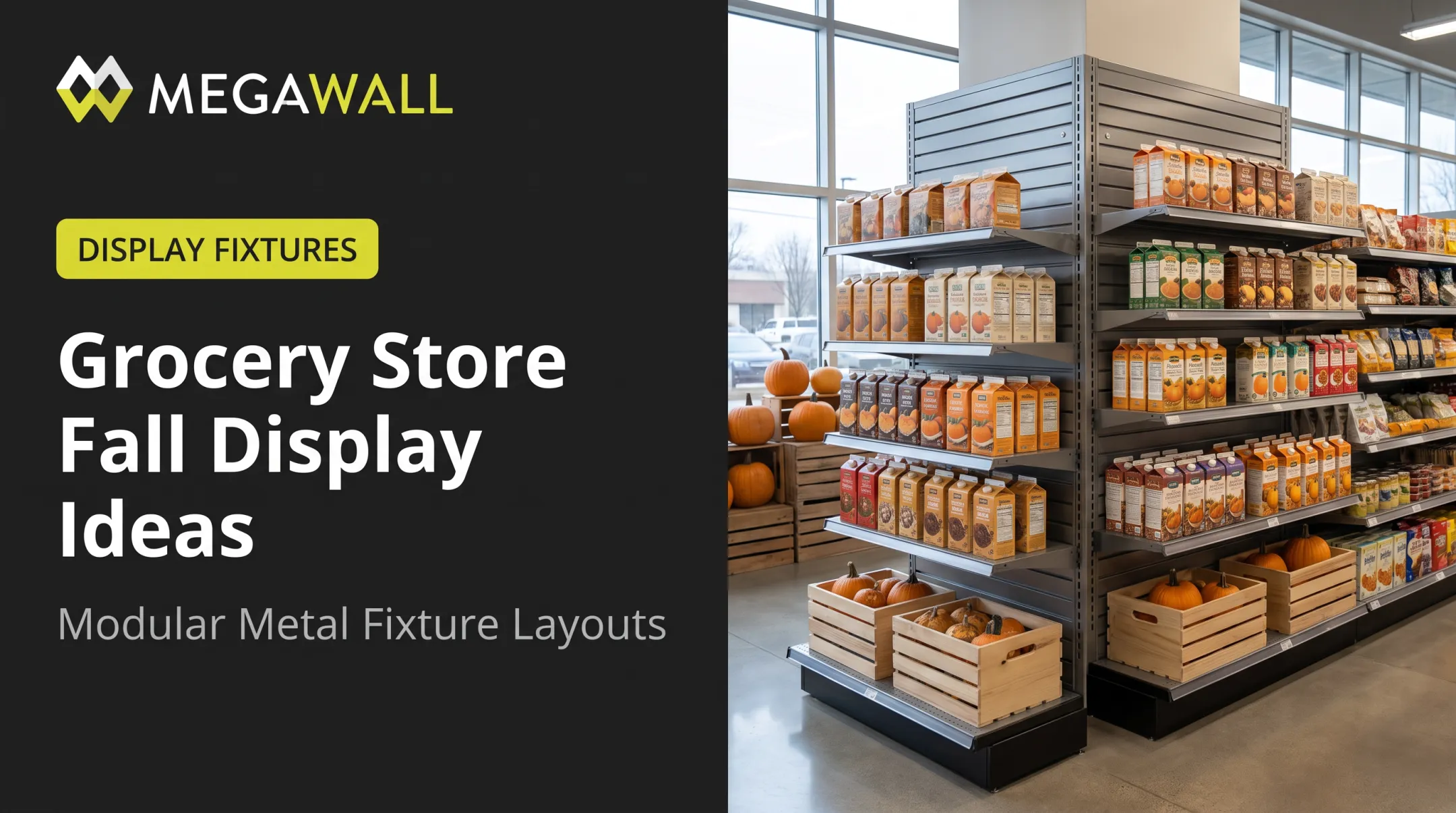
- Using endcaps for promotional and seasonal items
The Role of Display Fixtures
None of this works without fixtures that actually hold up. Flimsy MDF shelving warps, sags under weight, and looks worn within a year or two, which undercuts the polished store environment grocers need.
This is where slatwall systems come in. Megawall's steel and aluminum slatwall supports over 50 pounds per linear foot, using heavy-gauge, formed-and-welded steel construction with hidden fasteners for a seamless look across sections up to 8 feet. Retailers get:

- Concealed fastener design for a clean, professional appearance
- Modular spacing (1" to 3" on center for aluminum) to fit different product sizes
- Compatibility with shelves, brackets, and peg hooks for flexible configurations
Rotate Products and Refresh Seasonally
Shoppers stop "seeing" displays that never change. Periodic product rotation renews interest and drives impulse buys. Seasonal changeovers matter even more — capturing holiday spending spikes requires fixtures that adapt fast.
Megawall's modular H-Frame, L-Frame, T-Frame, and Pinwheel fixtures are built for this:
- H-Frame: four display sides on wheels for quick repositioning
- L-Frame: a focal point that guides traffic and sparks impulse buys
- T-Frame: two-sided horizontal slatwall for shelves and hooks
- Pinwheel: four vertical surfaces on casters for tight floor plans
Each accepts steel or aluminum slatwall, custom finishes, and multiple heights, so grocers can refresh a seasonal section without a full remodel.

Improve Checkout Speed & In-Store Efficiency
Slow checkout lines cost more than they seem to. A widely cited grocery shopper study found only 23% of shoppers were satisfied with checkout-line length, and more than half said they'd spend less or leave entirely to avoid a slow line.
That's a lot of lost revenue sitting in that line.
More recently, Supermarket News reported that 43% of shoppers now prefer self-checkout, rising to 53% among shoppers aged 18-44.
Practical fixes:
- Add mobile POS stations during peak hours instead of opening every fixed lane
- Keep self-checkout kiosks staffed lightly to handle errors quickly
- Stock enough carts and baskets near every entrance — running out sends shoppers away empty-handed
- Train staff on speed and friendliness; a fast but rude checkout still hurts loyalty

Build Loyalty Through Personalized Promotions
Loyalty programs remain one of the most effective tools grocers have. According to McKinsey's 2026 State of Grocery North America report, shoppers who redeem personalized loyalty offers spend 4.3 times more annually than those who don't. More than 80% of grocers now see loyalty programs as a primary driver of value.
How to make loyalty programs work harder:
- Segment customers into new, occasional, and regular shoppers — a first-time buyer needs a different offer than a weekly regular
- Send targeted SMS, email, or app notifications tied to birthdays, restocks, or expiring points
- Bundle slow-moving or complementary products into combo packs to lift average order value without deep discounting
Grocers currently personalize about 35% of promotions, and that share is expected to reach 55% within two to three years. Expanding personalization now helps you win repeat trips before competitors close the same gap.
Expand Shopping Channels: Curbside, Delivery & Omnichannel
Shoppers expect to buy groceries on their own terms now, not just in-store during business hours.
USDA's Economic Research Service found that about one in five household grocery shoppers bought groceries online at least once in the prior month, with pickup and delivery chosen almost equally. Online grocery is now a standard channel, not a niche.
Core omnichannel moves:
- Offer buy-online-pickup-in-store (BOPIS) and curbside pickup
- Build or partner on delivery for shoppers who can't or won't come in
- Sync online and in-store inventory and promotions so deals match in-app and in-aisle

When online prices differ from the floor, or out-of-stock items still show as available, trust erodes fast. Consistency across channels matters as much as the channels themselves.
Leverage Technology & Data for Smarter Decisions
Modern grocery POS systems do more than ring up sales. They provide real-time inventory tracking, sales reporting, and pricing data that guides restocking decisions before shelves go empty.
Data analytics built on top of that POS data can reveal:
- Which products are trending up or down by season
- Where current store operations create bottlenecks or waste
- Which categories deserve more shelf space based on turnover, not gut feeling
Grocery retailers are already acting on it. FMI and NielsenIQ's 2025 report found that 92% of retailers now use technology, including AI, to personalize shopping and marketing experiences both online and in-store.
That same tech stack should cover checkout. Offering multiple secure payment options (tap-to-pay, mobile wallets, traditional card) removes one more reason for a shopper to abandon a purchase at the register.
Frequently Asked Questions
What are the key rules and best practices to increase sales in a retail grocery store?
Focus on putting the customer first, smart merchandising, and efficient operations. Loyalty offers, clear displays, fast checkout, and connected online and offline channels drive bigger baskets and repeat visits.
How can I boost grocery store sales quickly?
Quick wins include bundling slow-moving products into combo deals, moving high-margin items to eye level, and sending targeted promotional notifications to loyalty members. These require minimal setup time and can show results within weeks.
What is the most profitable part of a grocery store?
Prepared foods and deli sections show strong and growing demand, with 68% of shoppers planning to keep buying deli-prepared items. Private-label products also typically carry higher margins than national brands.
How does store layout affect grocery sales?
Layout guides shopper flow and determines which products get the most visual exposure. Combined with proper display fixtures and product grouping, thoughtful layout increases exposure to high-margin and impulse items.
Why are supermarkets successful?
Convenience, competitive pricing, and consistent customer experience keep supermarkets competitive. FMI research found 40% of shoppers name supermarkets as their main store, compared to 32% for mass retailers, largely driven by value-seeking behavior.
What role does technology play in increasing grocery sales?
Technology enables real-time inventory tracking, sales data analysis, and personalized digital promotions. It also reduces checkout friction through flexible, secure payment options, which supports smarter restocking and pricing decisions.